

Direct Thermal vs. Thermal Transfer Printing: How to Choose



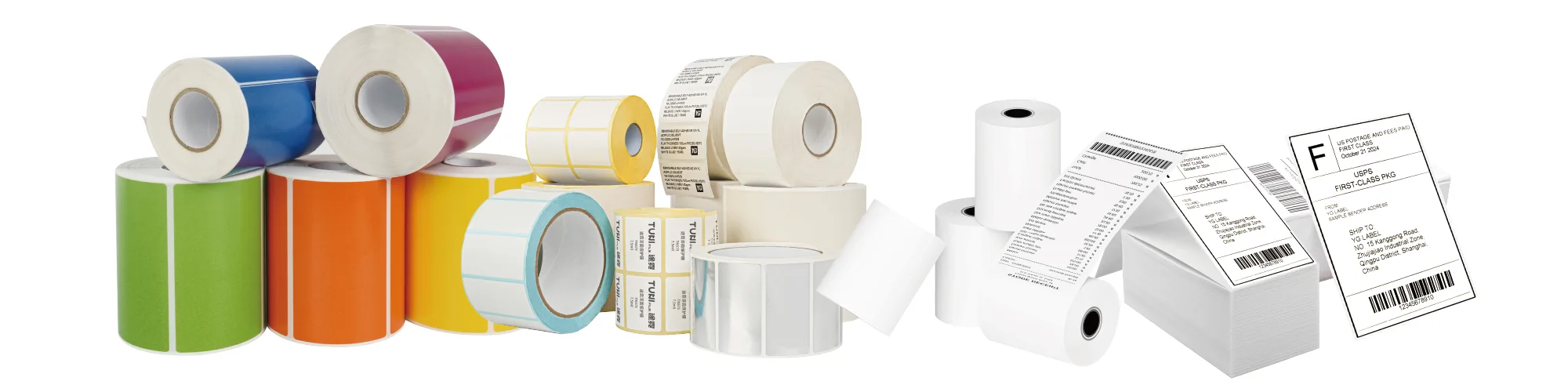
Direct thermal and thermal transfer are two widely used methods for printing barcodes, shipping information, product data and variable labels.
Both technologies use a heated printhead, but they create the image differently. Direct thermal printing activates a heat-sensitive coating on the label surface. Thermal transfer printing uses heat to transfer ink from a ribbon onto the label material.
In general, direct thermal printing is suitable for short-cycle, high-volume labels used in controlled environments. Thermal transfer printing is more appropriate when extended image durability or stronger resistance to abrasion, heat, moisture or specific chemicals is required.
Final performance also depends on the facestock, protective coating, ribbon, adhesive, release liner and application conditions.
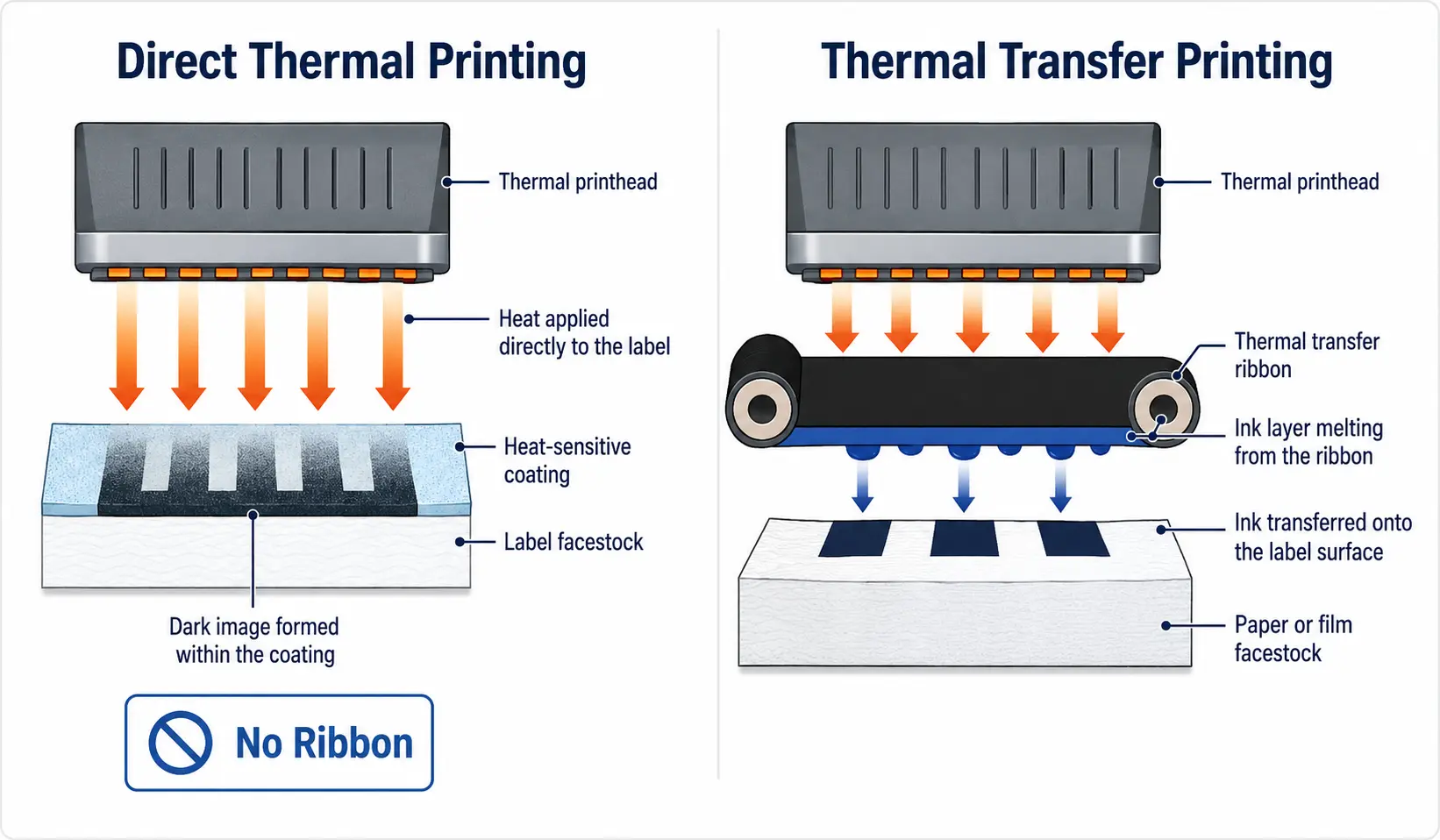
Direct thermal printing activates a heat-sensitive coating, while thermal transfer printing transfers ink from a ribbon onto the label surface.
Direct Thermal vs. Thermal Transfer: Quick Comparison
| Factor | Direct Thermal | Thermal Transfer |
|---|---|---|
| Image formation | Heat activates a thermal coating | Heat transfers ink from a ribbon |
| Ribbon required | No | Yes |
| Common materials | Direct thermal paper and suitable synthetic materials | Coated paper and compatible synthetic label films |
| Print durability | Typically selected for shorter use cycles | Selected when extended image durability is required |
| Environmental resistance | Depends on the facestock and protective coating | Can provide higher resistance with a matched ribbon and facestock |
| Operation | Simple consumable management | Requires ribbon installation and replacement |
| Common uses | Shipping, retail, weighing and temporary warehouse labels | Manufacturing, automotive, chemicals, assets and durable identification |
Neither method is better for every application. The decision should be based on image-life requirements, environmental exposure, printer compatibility and the application surface.
What Is Direct Thermal Printing?
Direct thermal printing uses a specially coated facestock that changes color when heated by the printer’s printhead.
It does not require ink, toner or a printing ribbon, making it suitable for fast, high-volume variable-data printing.
Common applications include:
- Shipping and courier labels
- E-commerce parcel labels
- Retail price and weighing labels
- Food delivery labels
- Temporary warehouse labels
- Event tickets and short-term tracking labels
The printed image remains sensitive to environmental exposure. Excessive heat, prolonged sunlight, friction, oil and certain chemicals may cause it to fade, darken or become difficult to scan.
Common Direct Thermal Label Materials
Non-top-coated direct thermal paper is a cost-effective option for short-term applications in controlled environments. Typical uses include local delivery, temporary identification and basic retail labels.
Top-coated direct thermal paper includes a protective surface layer. Depending on the coating formulation, it may provide improved resistance to moisture, oil, abrasion or transportation handling.
Synthetic direct thermal materials can provide better tear and moisture resistance than standard paper. YG Group's thermal synthetic paper may be evaluated for warehousing, cold-chain logistics, flexible packaging and other applications requiring improved physical durability.
Cold-chain suitability also depends on the adhesive, application temperature, service temperature, condensation and packaging surface.
A top coating improves protection but does not automatically make a label permanently waterproof, chemical-resistant or suitable for long-term outdoor use.
What Is Thermal Transfer Printing?
Thermal transfer printing uses a heated printhead to melt ink from a ribbon onto the label surface.
It can be used with coated paper and compatible synthetic label films, including selected PP and PET constructions. The film surface must be designed for thermal transfer printing, and the ribbon must be matched to the facestock to achieve reliable ink adhesion and durability.
Common applications include:
- Manufacturing traceability
- Automotive component identification
- Chemical container labels
- Electronics and equipment labels
- Fixed-asset identification
- Long-term warehouse labels
- Garment care labels
- Outdoor equipment identification
Thermal Transfer Ribbon Types
| Ribbon Type | Commonly Matched Materials | General Performance |
| Wax | Coated and uncoated paper | Cost-effective for general barcode and shipping labels |
| Wax-resin | Coated paper and selected synthetic materials | Balanced print quality and resistance |
| Resin | Compatible PP, PET and specialty label films | Higher resistance to abrasion, heat and selected chemicals |
A resin ribbon alone does not guarantee outdoor or chemical resistance. The facestock, adhesive, UV exposure, contact chemicals and possible need for overlamination must also be evaluated.
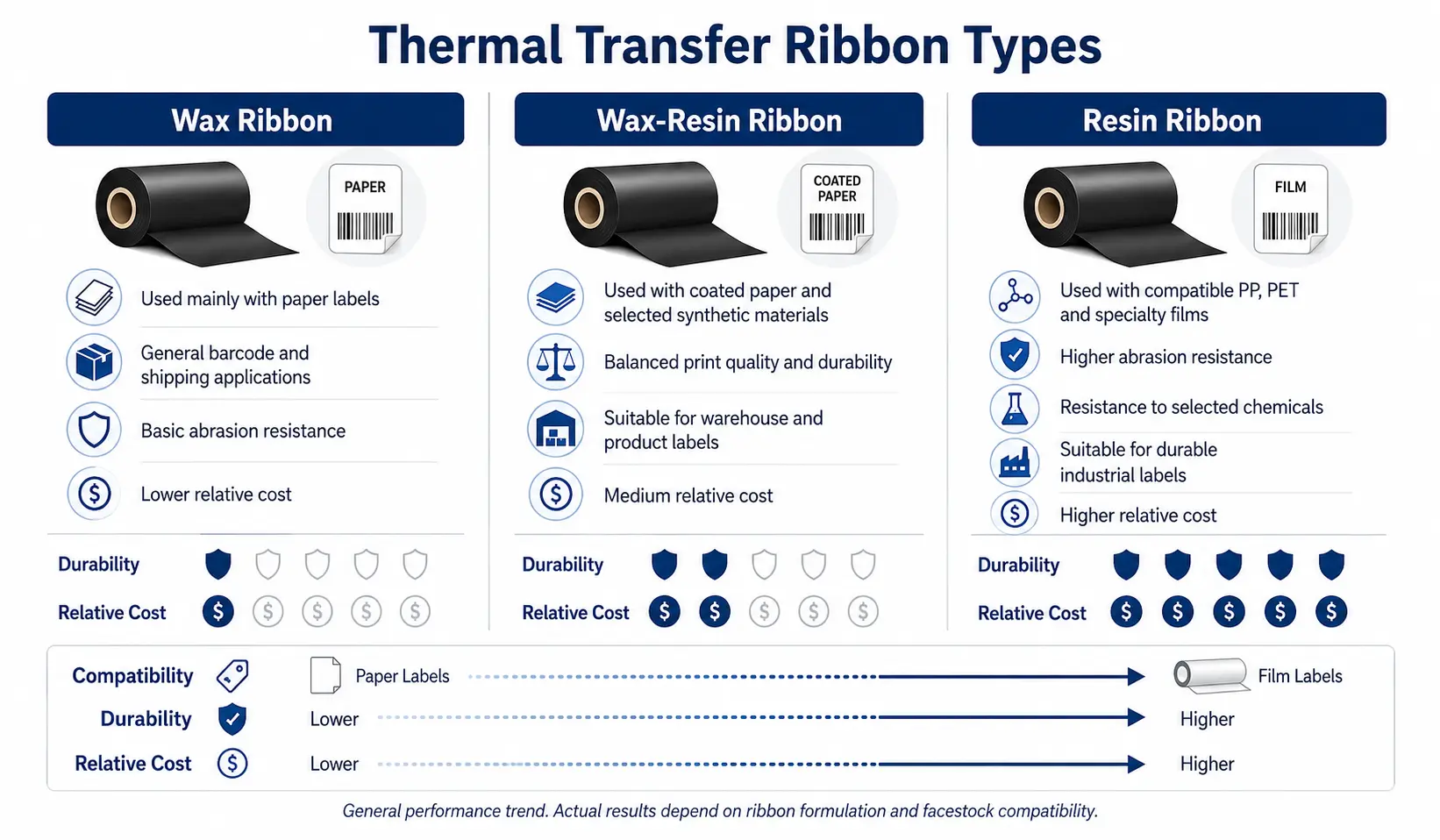
Wax, wax-resin, and resin ribbons provide different levels of durability and must be matched with the label facestock.
How to Choose the Right Printing Method
Consider the following four factors before selecting direct thermal or thermal transfer labels.
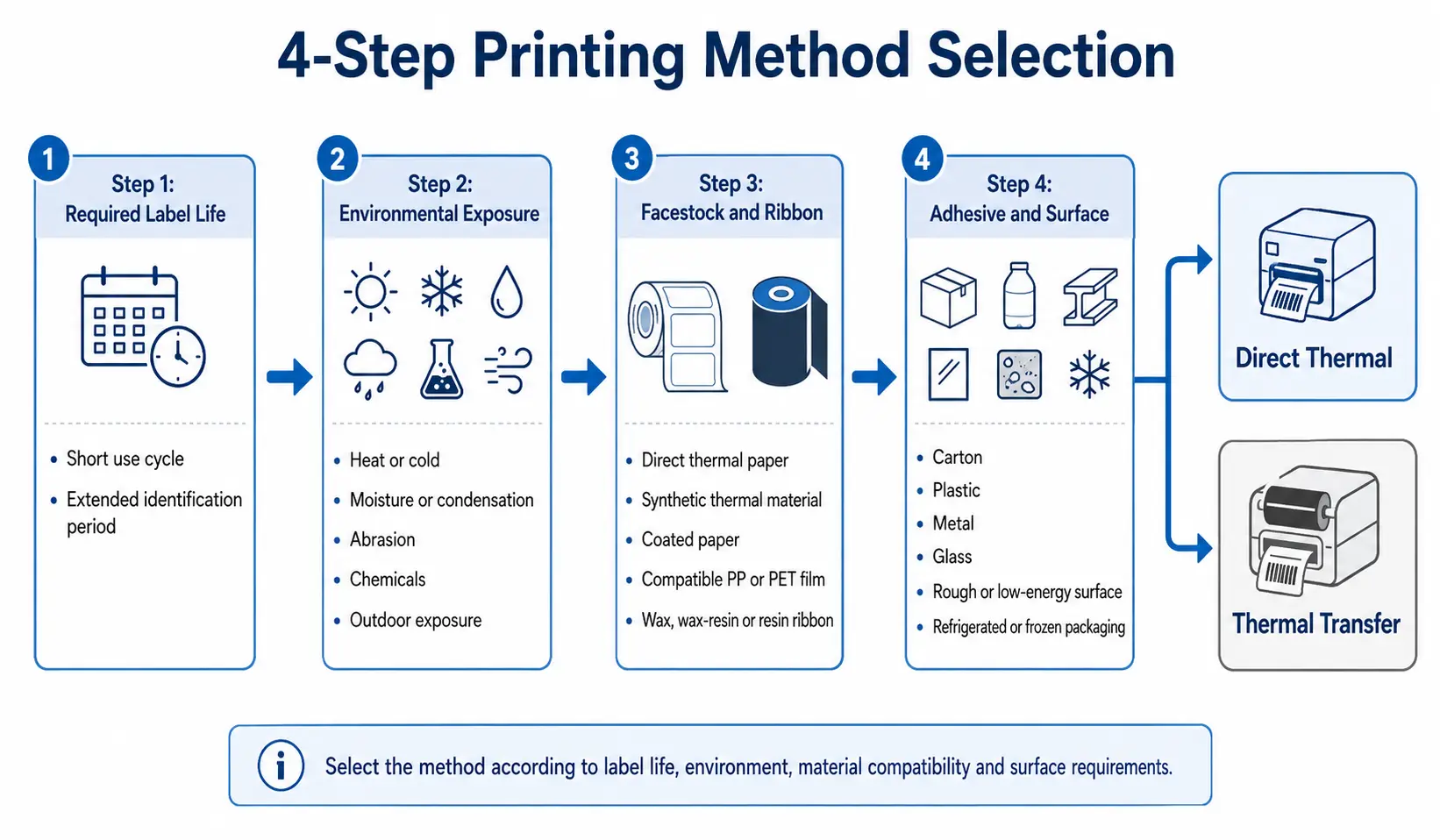
Evaluate image life, exposure conditions, material compatibility and adhesive requirements before selecting a printing method.
1. Required Label Life
First, determine how long the printed information must remain readable.
Direct thermal printing is often sufficient when the label completes its purpose within a shipping, retail or short inventory cycle. Examples include parcel labels, weighing labels and temporary warehouse identification.
Thermal transfer printing should be considered when the label must remain readable during extended storage, repeated handling, equipment use or the service life of a product.
Avoid relying on fixed claims such as “this label lasts one year.” Actual image life depends on the facestock, coating, print density, temperature, sunlight, chemical exposure and storage conditions.
2. Environmental Exposure
Check whether the label may encounter:
- Sunlight or UV exposure
- High or low temperatures
- Water or condensation
- Oil, grease or cleaning agents
- Repeated rubbing or scratching
- Outdoor weather or long-distance transportation
Non-top-coated direct thermal paper is generally suitable for short-term use in controlled environments.
Top-coated direct thermal paper or suitable synthetic materials may be more appropriate when improved moisture, tear or handling resistance is required.
For severe abrasion, extended outdoor exposure or contact with specific chemicals, a validated thermal transfer construction is usually the safer option.
3. Facestock and Ribbon Compatibility
Direct thermal printing requires a heat-sensitive facestock. The material should be selected according to print sensitivity, required durability and application conditions.
For thermal transfer printing, the facestock and ribbon must be selected together.
Common combinations include:
- Paper labels with wax ribbons
- Coated paper with wax or wax-resin ribbons
- Synthetic label materials with wax-resin or resin ribbons
- Compatible PP or PET label films with matched resin ribbons
An unsuitable combination may cause smudging, weak ink adhesion, poor barcode readability or insufficient resistance.
Sample printing should use the actual printer, ribbon and label material whenever possible.
4. Adhesive and Application Conditions
A clearly printed label can still fail if its adhesive does not match the application surface.
Consider:
- Surface material and texture
- Application temperature
- Service temperature
- Moisture or condensation
- Permanent or removable adhesion requirements
- Whether the surface is curved, dusty or low-energy
A general-purpose adhesive may work well on clean cartons but perform poorly on rough recycled cardboard, frozen packaging or low-energy plastics.
For refrigerated and frozen applications, distinguish between:
- Application temperature: The temperature when the label is first applied
- Service temperature: The temperature experienced after application
A label applied at room temperature before entering a freezer may require a different construction from one applied directly to an already-frozen package.
YG Group's cold-chain label materials can be customized according to facestock, adhesive and temperature requirements.
Consider the Total Operating Cost
Direct thermal printing eliminates ribbon purchasing and replacement, simplifying daily operation. However, it requires a specially coated facestock and may result in reprinting when used under unsuitable conditions.
Thermal transfer printing requires a ribbon and additional setup, but it supports a broader range of materials and can provide better durability when correctly matched.
Total cost should include:
- Label and ribbon consumption
- Printer operation and maintenance
- Printhead wear
- Reprinting and label replacement
- Barcode scanning failures
- Traceability risks
Direct thermal media contacts the printhead directly, while a thermal transfer ribbon sits between the printhead and label surface. Actual printhead life still depends on media quality, dust, heat settings, printing speed and maintenance.
The lowest-priced label is therefore not always the lowest-cost solution.
Application Recommendations
| Application | Recommended Direction | Main Consideration |
| Local parcel delivery | Non-top-coated direct thermal paper | Short use cycle and controlled conditions |
| E-commerce and express delivery | Top-coated direct thermal paper | Moisture, abrasion and transportation handling |
| Cold-chain logistics | Validated top-coated direct thermal paper or synthetic thermal material | Condensation, application temperature and service temperature |
| Long-term warehouse identification | Thermal transfer paper or film | Extended storage and repeated scanning |
| Chemical container labels | Compatible film, adhesive and ribbon validated against the actual chemical and container | Chemical exposure and applicable labeling requirements |
| Automotive and equipment labels | Durable thermal transfer construction | Heat, abrasion and long-term traceability |
| Outdoor asset labels | Weather-resistant facestock, adhesive and ribbon | UV exposure, moisture and possible overlamination |
These recommendations are general starting points.
Final material selection must be validated using the actual printer, ribbon, application surface and exposure conditions.
For standard shipping and warehouse applications, review YG Group's logistics label materials.
Common Selection Mistakes
Choosing Only by Price
A lower-priced material may lead to unreadable barcodes, lifting edges, reprinting or shipment delays.
Evaluate the total application cost rather than only the price per roll or square meter.
Assuming All Direct Thermal Labels Are Waterproof
Standard direct thermal paper is not automatically waterproof.
Top-coated paper and synthetic materials may offer improved water resistance, depending on the construction and exposure conditions.
Ignoring Adhesive Performance
The printing method determines how the image is created, but not whether the label remains attached.
The adhesive must match the surface, application temperature and service environment.
Skipping Printer and Application Testing
Different direct thermal coatings may require different darkness and speed settings. Thermal transfer materials also require ribbon compatibility testing.
Test the material using the actual printer, ribbon, packaging surface and operating conditions before bulk production.
Frequently Asked Questions
How can I tell whether a label is direct thermal?
Scratch the label surface firmly with a fingernail or another blunt object. If the area develops a dark mark, the material is likely direct thermal.
The supplier’s specification should be used for final confirmation.
How long do direct thermal labels remain readable?
There is no universal lifespan.
Image life depends on the thermal coating, protective layer, print density, temperature, sunlight, friction, chemical exposure and storage conditions.
Are direct thermal labels waterproof?
Standard direct thermal paper is not automatically waterproof. Top-coated paper and synthetic materials may offer improved water resistance, depending on the construction and exposure conditions.
Which printing method is better for shipping labels?
Direct thermal printing is generally suitable for short-cycle parcel and e-commerce labels.
Thermal transfer may be preferred when the information must remain readable during extended storage or more demanding handling conditions.
Which ribbon should I use for thermal transfer labels?
Wax ribbons are generally used with paper labels. Wax-resin ribbons provide additional resistance, while resin ribbons are commonly matched with compatible synthetic label films.
The final combination should be tested with the actual facestock, printer settings and application conditions.
Request a Thermal Label Recommendation
YG Group supplies customizable direct thermal and thermal transfer label materials.
Material selection can be based on the printer, facestock, ribbon, adhesive, application surface and environmental conditions. Samples can be provided for customer printing and application testing before bulk production.
To request a material recommendation, sample or quotation, please share:
- Printing method or printer model
- Label size and application surface
- Application environment and temperature
- Required durability
- Estimated order volume
YG Group can help match the facestock, adhesive and release liner to your printing process and application requirements.