

Butyl Tape: Properties, Uses, and Application Tips



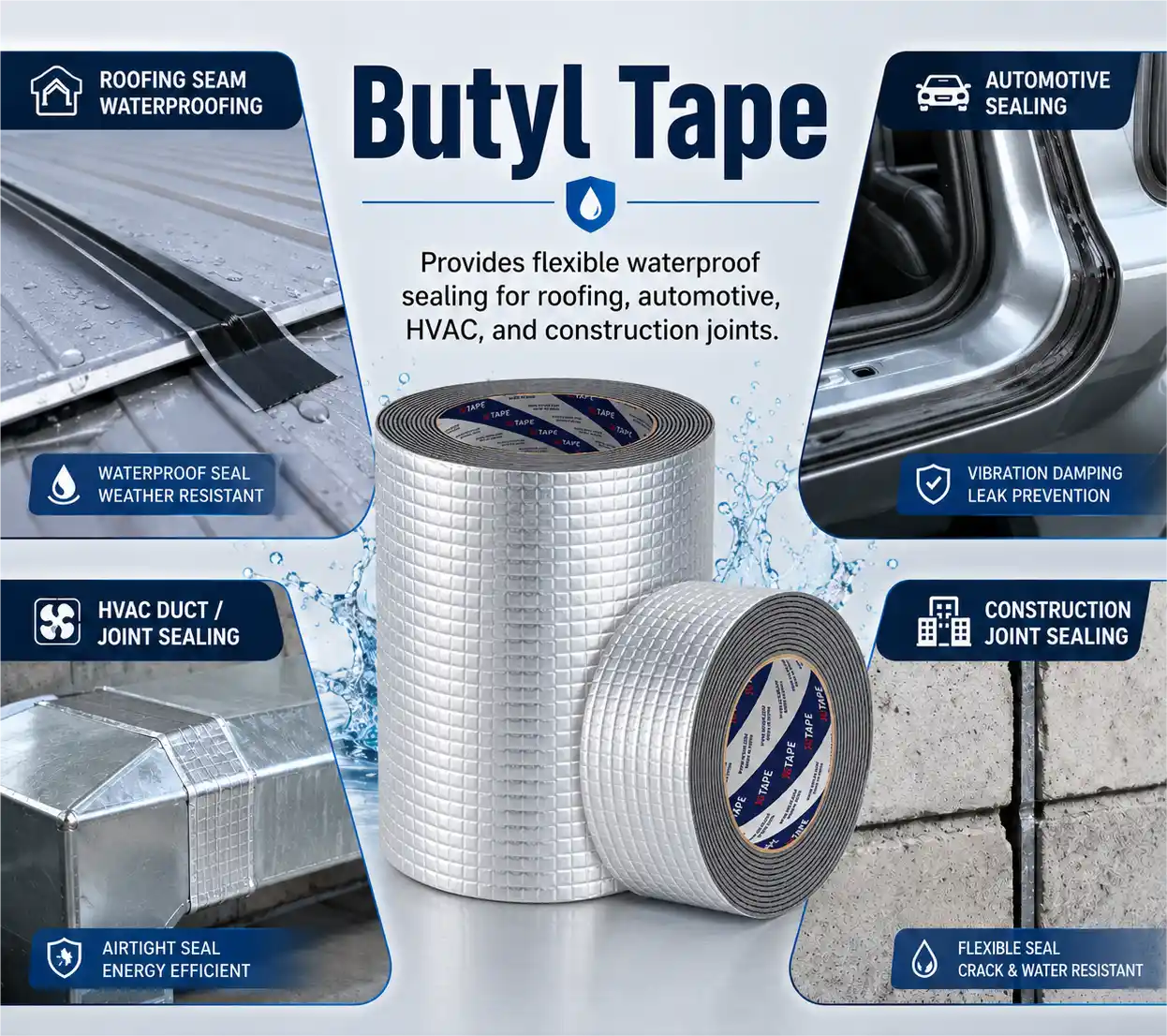
Butyl tape is a flexible sealing tape used for waterproofing, air sealing, vibration reduction, and gap filling. It is widely used in roofing, construction, automotive, HVAC, window installation, and industrial assembly.
Unlike liquid sealants, butyl tape is easy to apply, clean to use, and ready for bonding after pressure is applied. It can conform to uneven surfaces and maintain a tight seal under outdoor exposure, moisture, and temperature changes.
For distributors, contractors, and OEM buyers, choosing the right butyl tape is not only about adhesion. It also depends on tape thickness, width, backing material, liner type, surface condition, application temperature, and long-term sealing requirements.
What Is Butyl Tape?
Butyl tape is a pressure-sensitive sealing tape made with a butyl rubber adhesive compound. It is designed to create a waterproof and airtight seal between two surfaces.
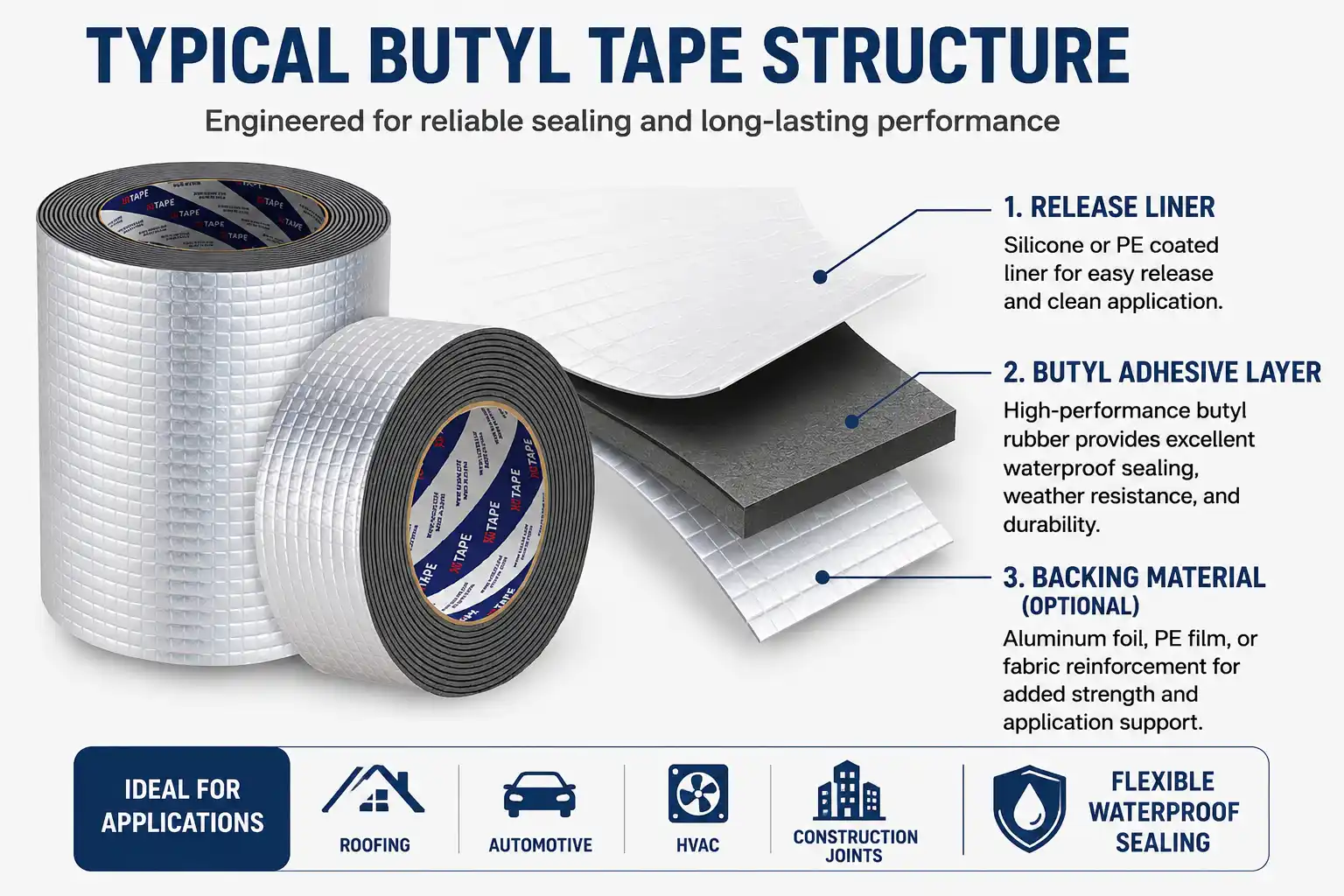
The tape usually includes:
- A butyl adhesive layer
- A release liner
- Optional backing material, such as aluminum foil, PE film, non-woven fabric, or other protective films
Butyl tape is soft, tacky, and highly conformable. It can fill small gaps and irregular surfaces better than many rigid sealing materials. This makes it suitable for joints, seams, overlaps, edges, and areas where water or air leakage may occur.
How Does Butyl Tape Work?
Butyl tape works through pressure-sensitive adhesion and surface contact. When the tape is pressed onto a clean surface, the butyl adhesive flows slightly into small gaps, textures, and surface irregularities.
This helps create:
- A waterproof barrier
- An airtight seal
- A flexible bonding layer
- A vibration-damping effect
- Long-term gap filling performance
For best results, the surface should be clean, dry, and free from dust, oil, rust, release agents, or loose particles. Strong pressure is also important during application.
Key Properties of Butyl Tape
1. Waterproof Sealing
Butyl tape is commonly used in areas exposed to rain, moisture, and humidity. It helps block water penetration around joints, seams, edges, and overlaps.
Typical applications include roof seams, gutter joints, window frames, wall openings, and vehicle body seams.
2. Long-Term Flexibility
Butyl rubber remains flexible after application. It can absorb small movements caused by thermal expansion, vibration, or structural movement.
This is important for metal roofing, RV panels, window frames, and automotive parts.
3. Strong Surface Conformability
The soft adhesive layer can fit uneven, rough, or slightly irregular surfaces. This makes butyl tape suitable for metal, glass, plastic, concrete, wood, coated panels, and composite materials.
Actual adhesion depends on surface type, cleanliness, and application pressure.
4. Weather Resistance
Butyl tape can support outdoor sealing applications. It helps resist moisture, air, and environmental exposure.
For long-term UV exposure, buyers should choose a suitable backing material or use the tape in protected areas. Aluminum foil butyl tape is often used when better surface protection is required.
5. Clean and Efficient Application
Compared with liquid sealants, butyl tape is easier to handle. It does not require mixing, curing, or special dispensing tools.
This helps improve work efficiency in construction, repair, assembly, and OEM production.
Common Types of Butyl Tape
Different applications require different butyl tape structures. The most common types include:
Bare Butyl Tape
Bare butyl tape has no surface backing. It is mainly used for hidden sealing, gap filling, panel bonding, and assembly joints.
It is suitable when the tape will be compressed between two surfaces.
Aluminum Foil Butyl Tape
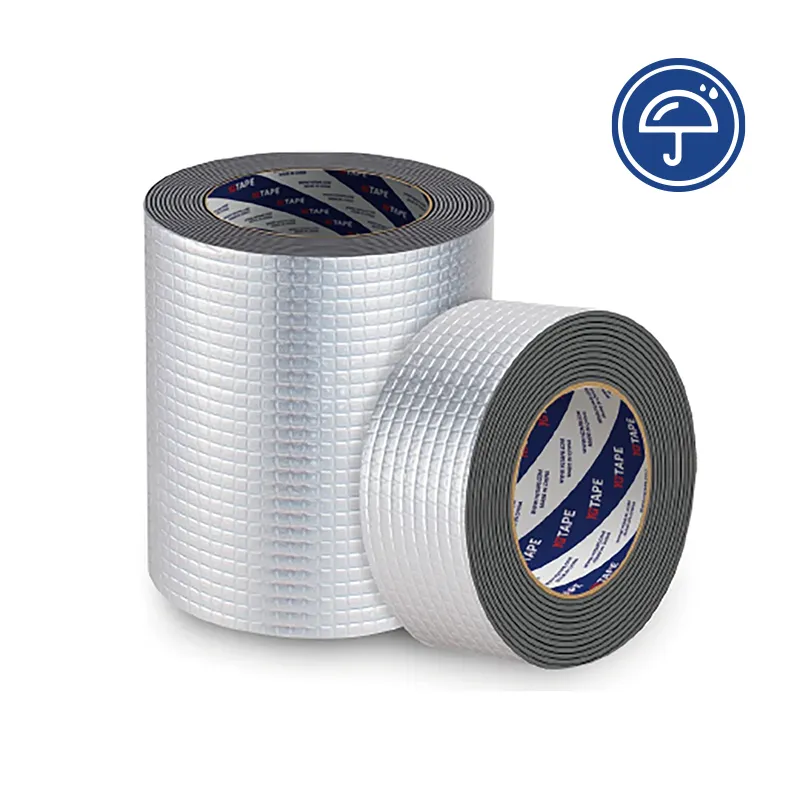
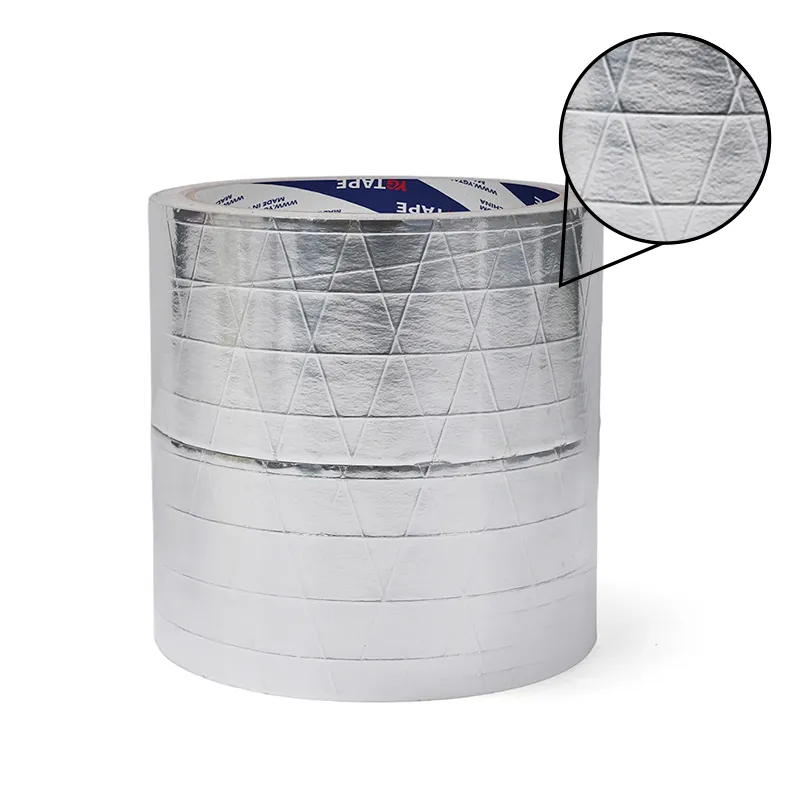
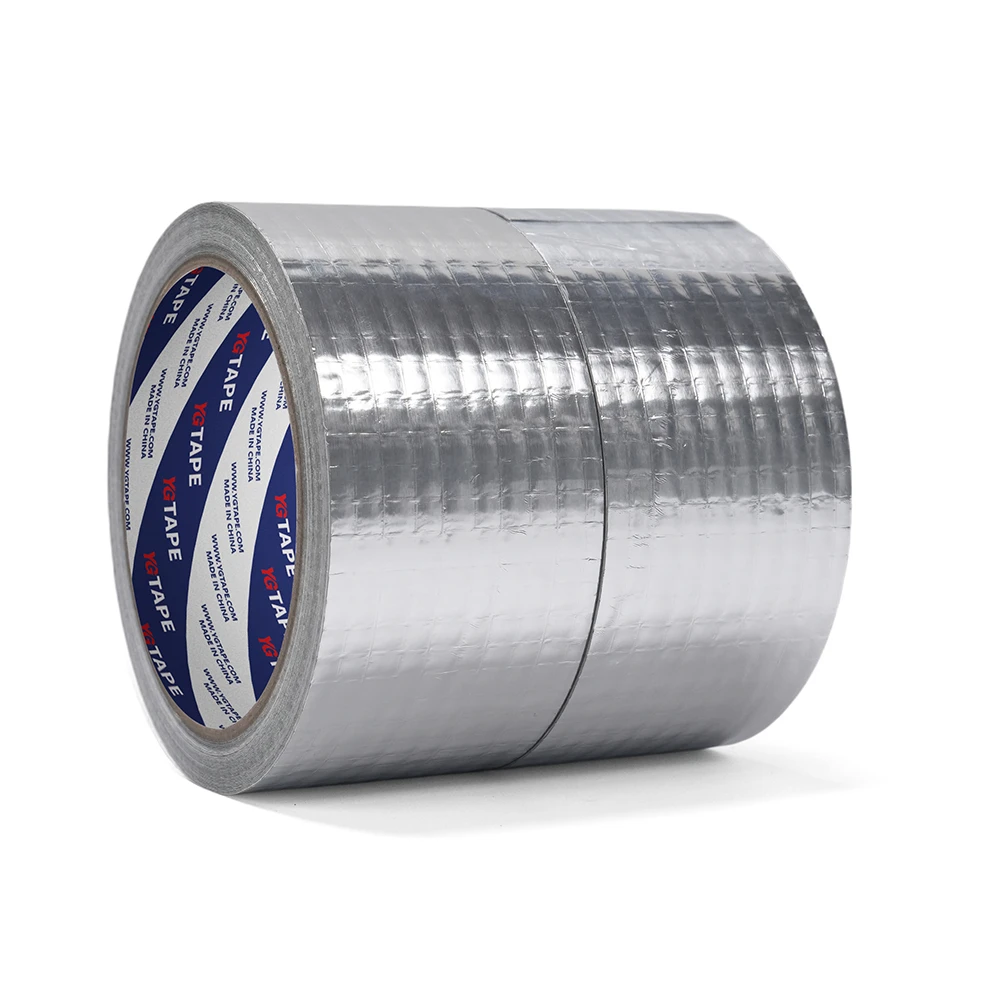
Aluminum foil butyl tape has a foil backing. It provides better surface protection and is often used for roofing, flashing, pipe sealing, duct sealing, and outdoor waterproofing.
It is a common choice for construction and HVAC applications.
Double-Sided Butyl Sealing Tape
Double-sided butyl tape is used between two substrates. It is suitable for panel joints, vehicle parts, window systems, and industrial sealing applications.
It provides sealing and bonding at the same time.
Butyl Flashing Tape
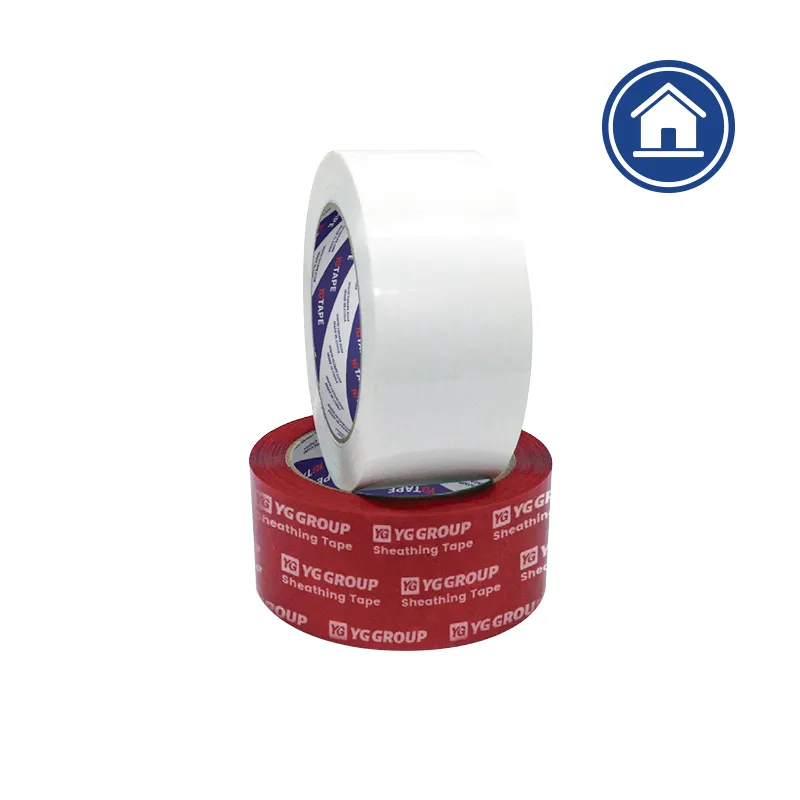
Butyl flashing tape is designed for building envelope applications. It is used around windows, doors, wall openings, roof edges, and waterproofing details.
It helps improve moisture control and air barrier performance.
Main Applications of Butyl Tape
Roofing and Metal Building Sealing
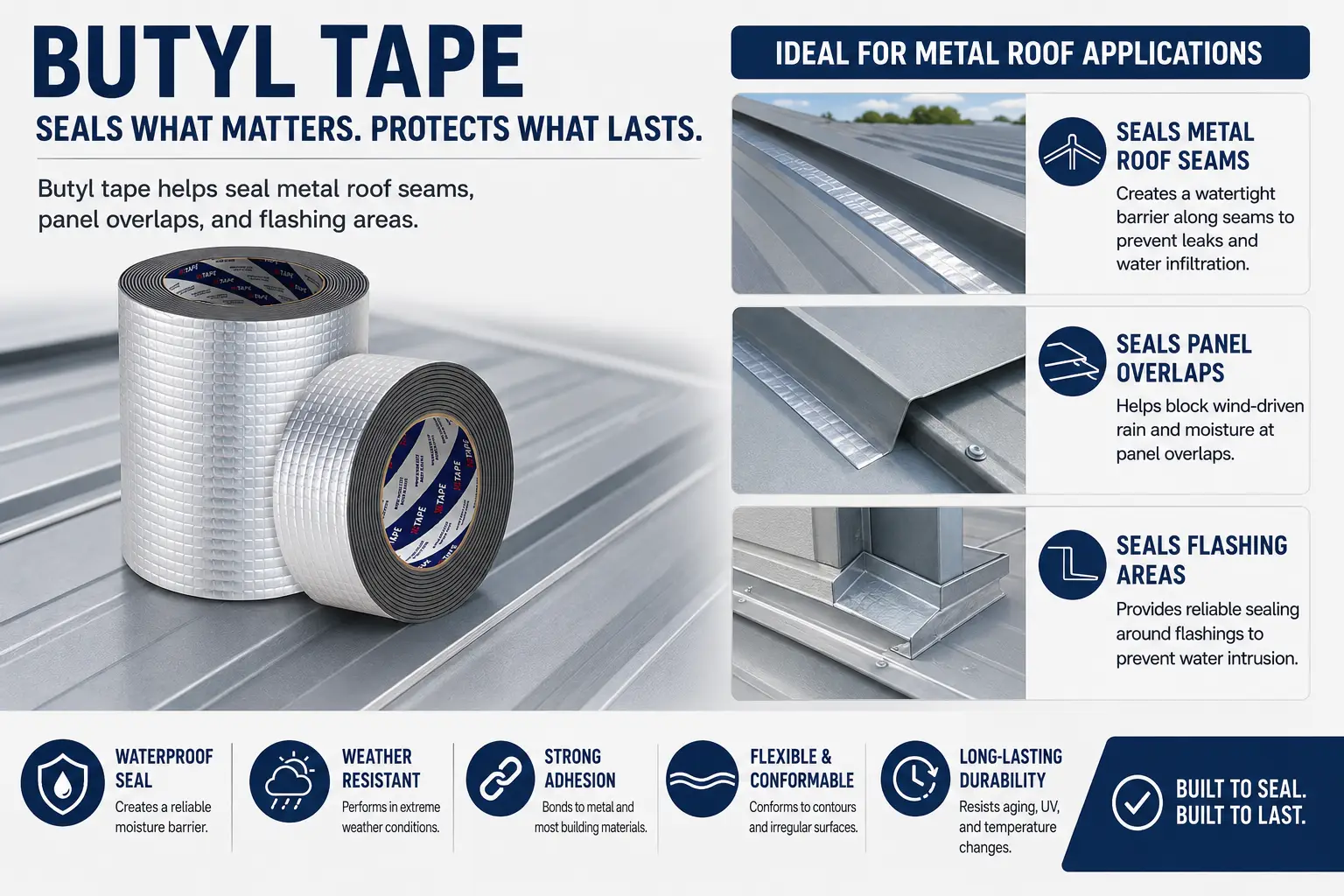
Butyl tape is widely used in roofing and metal building systems. It helps seal overlaps, seams, fastener areas, and flashing details.
Common uses include:
- Metal roof panel overlaps
- Roof flashing
- Gutter joints
- Skylight sealing
- Roof edge waterproofing
- Screw penetration sealing
For roofing applications, the tape should have good weather resistance, stable tack, and reliable sealing performance under outdoor conditions.
Window and Door Installation
Butyl tape is also used around window and door frames. It helps prevent air leakage and water penetration around wall openings.
Common uses include:
- Window frame sealing
- Door frame sealing
- Wall opening waterproofing
- Glass and panel edge sealing
- Construction joint sealing
For this application, conformability and long-term flexibility are important.
Automotive and RV Sealing
In automotive, trailer, and RV applications, butyl tape helps seal body joints, panels, lamps, trims, and roof seams.
Common uses include:
- RV roof seam sealing
- Caravan panel sealing
- Windshield or glass edge sealing
- Door panel sealing
- Tail lamp sealing
- Interior vibration reduction
Butyl tape can also help reduce noise and vibration in certain assembly areas.
HVAC and Duct Sealing
Butyl tape can be used in HVAC systems to seal joints, ducts, flanges, and insulation areas.
Common uses include:
- Air duct joint sealing
- HVAC flange sealing
- Pipe insulation sealing
- Moisture barrier repair
- Air leakage control
For HVAC applications, buyers often choose foil-backed butyl tape because it provides surface protection and better handling.
Construction and Industrial Assembly
Butyl tape is useful in many construction and industrial sealing applications. It can be used for temporary or permanent sealing, depending on the tape structure and application environment.
Common uses include:
- Concrete joint sealing
- Metal panel sealing
- Prefabricated building assembly
- Waterproof repair
- Equipment sealing
- Industrial gap filling
Butyl Tape vs. Butyl Sealant
Both butyl tape and butyl sealant are used for sealing. However, they are not the same.
| Item | Butyl Tape | Butyl Sealant |
|---|---|---|
| Form | Pre-formed tape | Liquid or paste sealant |
| Application | Peel and apply | Dispense with tool |
| Curing | Usually no curing required | May need skinning or curing time |
| Thickness control | More consistent | Depends on application skill |
| Cleanliness | Cleaner application | May be messy |
| Best for | Seams, overlaps, joints, panels | Irregular gaps, detailed filling |
Butyl tape is often better when users need clean application, consistent thickness, and fast installation. Butyl sealant may be better for complex gaps or areas where tape cannot fit easily.
Butyl Tape vs. Flashing Tape
Flashing tape is a broader category. Some flashing tapes use butyl adhesive, while others may use asphalt, acrylic, or other adhesive systems.
| Item | Butyl Tape | Flashing Tape |
|---|---|---|
| Main function | Sealing and waterproofing | Building envelope waterproofing |
| Adhesive | Butyl rubber adhesive | Butyl, asphalt, acrylic, or other systems |
| Common use | Roofing, automotive, HVAC, construction | Windows, doors, wall openings, roof details |
| Structure | Can be bare or backed | Usually backed with film, foil, or membrane |
| Selection focus | Adhesion, thickness, flexibility | Building code, weather barrier, substrate compatibility |
If the project requires window or wall opening waterproofing, butyl flashing tape may be more suitable. If the project requires general waterproof sealing, standard butyl tape may be enough.
How to Choose the Right Butyl Tape
Choosing the right butyl tape requires more than checking the tape name. Buyers should confirm the following details before placing an order.
1. Application Surface
Different surfaces need different adhesive performance. Confirm whether the tape will be used on:
- Metal
- Glass
- Plastic
- Concrete
- Wood
- Coated panels
- Painted surfaces
- Composite materials
A sample test is recommended before bulk orders, especially for low-energy plastic surfaces or coated substrates.
2. Tape Thickness
Thicker butyl tape can fill larger gaps and uneven joints. Thinner tape is easier to apply in narrow spaces and smooth joints.
Common selection logic:
- Thin tape: smooth surfaces and narrow gaps
- Medium thickness: general sealing and construction joints
- Thick tape: rough surfaces, panel overlaps, and larger gaps
The final thickness should be selected according to the joint design and compression requirement.
3. Tape Width
Tape width should match the joint width, overlap area, and sealing requirement.
For roofing and construction, wider tape may provide better coverage. For automotive and industrial assembly, narrow tape may be preferred for precise application.
4. Backing Material
The backing material affects protection, strength, appearance, and outdoor durability.
Common options include:
- Aluminum foil backing
- PE film backing
- Non-woven backing
- No backing
- Customized backing materials
Aluminum foil backing is often used for roofing, HVAC, and outdoor sealing. Bare butyl tape is often used for hidden joints and compression sealing.
5. Liner Type
The release liner affects production efficiency and application convenience.
Common liner options include:
- Silicone paper liner
- PE film liner
- Glassine liner
- Customized liner
For automatic or semi-automatic application, liner stability and release force should be confirmed in advance.
6. Outdoor Exposure
If the tape will be exposed to sunlight, rain, heat, or cold, the buyer should confirm weather resistance and backing suitability.
For exposed outdoor use, foil-backed or film-backed butyl tape may be more suitable than bare butyl tape.
7. Packaging and Roll Format
For wholesale and OEM buyers, packaging is also important.
Common customization options include:
- Roll width
- Roll length
- Core size
- Carton packing
- Private label
- Printed inner core
- Customized box design
- Pallet packing for export
How to Apply Butyl Tape Correctly
Proper application is important for sealing performance.
Step 1: Clean the Surface
Remove dust, oil, rust, water, and loose particles. The surface should be clean and dry.
Step 2: Measure and Cut
Cut the tape to the required length. Avoid stretching the tape during application.
Step 3: Remove the Liner
Peel off the release liner carefully. Do not touch the adhesive surface too much.
Step 4: Apply the Tape
Place the tape on the target area. Keep the tape straight and aligned with the joint.
Step 5: Press Firmly
Use hand pressure, a roller, or a pressing tool. Strong pressure improves adhesive contact and sealing performance.
Step 6: Check the Seal
Make sure there are no wrinkles, gaps, air pockets, or loose edges.
Common Application Mistakes
Avoid these problems when using butyl tape:
- Applying tape on dusty or oily surfaces
- Applying tape on wet surfaces
- Stretching the tape during installation
- Using tape that is too narrow for the joint
- Not applying enough pressure
- Using bare butyl tape in exposed UV conditions without protection
- Ignoring surface compatibility testing
- Selecting the wrong thickness for large gaps
These mistakes may cause poor adhesion, edge lifting, water leakage, or early sealing failure.
When Should You Not Use Butyl Tape?
Butyl tape is highly useful, but it is not suitable for every situation.
It may not be the best choice when:
- The surface is heavily contaminated
- The joint has continuous heavy movement
- The area is exposed to strong solvents
- The substrate has very low surface energy
- The tape is used without enough compression
- The application requires structural bonding strength
For demanding applications, buyers should test samples before mass production or field installation.
Why Choose YG Group as Your Butyl Tape Supplier?
YG Group provides adhesive tape solutions for global B2B customers. We support distributors, construction material suppliers, automotive part manufacturers, HVAC product suppliers, and industrial users with customized tape products.
Our butyl tape solutions can be customized based on application needs.
We can support:
- Custom width and length
- Custom thickness
- Different backing materials
- Different release liners
- OEM and private label packaging
- Export carton and pallet packing
- Sample testing support
- Technical document support based on project needs
- Bulk supply for wholesale and industrial orders
With integrated adhesive manufacturing experience and global supply capability, YG Group helps buyers improve product consistency, reduce sourcing complexity, and build stable long-term supply.
Need custom butyl tape for roofing, automotive, HVAC, or construction sealing?
Contact YG Group to request samples, specifications, and a customized quotation.
FAQ About Butyl Tape
Is butyl tape waterproof?
Yes. Butyl tape is commonly used for waterproof sealing. It helps block water penetration around joints, seams, overlaps, and edges. Actual performance depends on surface condition, tape structure, and application quality.
Does butyl tape need curing time?
Most butyl tapes do not need curing like liquid sealants. They bond by pressure-sensitive adhesion. However, strong pressure is needed to improve contact and sealing performance.
Can butyl tape be used outdoors?
Yes. Butyl tape can be used outdoors, especially for roofing, flashing, gutter, and construction sealing. For long-term sunlight exposure, a suitable backing material is recommended.
What surfaces can butyl tape stick to?
Butyl tape can bond to many surfaces, including metal, glass, plastic, concrete, wood, and coated panels. Surface testing is recommended before bulk use.
Is butyl tape the same as flashing tape?
Not exactly. Butyl tape refers to tape made with butyl rubber adhesive. Flashing tape is a broader building waterproofing tape category. Some flashing tapes use butyl adhesive, while others use different adhesive systems.
Can butyl tape be removed?
Butyl tape can often be removed, but it may leave adhesive residue depending on the surface, application time, temperature, and tape formulation. For sensitive surfaces, test first.
What information should I provide for a quotation?
Please provide:
- Application
- Surface material
- Required width
- Required thickness
- Roll length
- Backing material
- Liner requirement
- Order quantity
- Packaging requirement
- Target market or standard requirement
This helps us recommend a suitable butyl tape structure.