

Cellulose Tape vs OPP Tape: Technical Comparison for Industrial Applications



Cellulose tape and OPP tape are both used for packaging. They are also used in office, retail, and light industrial applications.
They may look similar. But they are made from different materials. Their strength, moisture resistance, and best uses are also different.
For B2B buyers, the right tape should not be chosen by appearance only. Buyers should check:
- Backing film
- Adhesive type
- Tape thickness
- Tensile strength
- Peel adhesion
- Application surface
- Storage environment
- Shipping conditions
This guide compares cellulose tape and OPP tape in a simple and technical way. It helps packaging buyers, distributors, converters, and private label brands choose the right product.
What Is Cellulose Tape?
Cellulose tape is also called cellophane tape. It usually uses a cellulose-based transparent film.
Cellulose film often comes from plant-based sources. This gives the tape a more natural material profile than many plastic film tapes.
YG Group’s Cellophane Tape uses plant-based cellulose film. It is coated with water-based or water-soluble adhesive.
It is suitable for:
- Light packaging
- Retail packaging
- Office use
- Artwork
- Handcraft projects
- Small carton sealing
Cellulose tape is known for:
- High transparency
- Easy hand tear
- Clean appearance
- Good fit for paper packaging
- Plant-based material positioning
- Better sustainability potential
However, not all cellulose tapes are automatically biodegradable or compostable. Environmental claims should be supported by clear material information and proper certification.
What Is OPP Tape?
OPP tape is made from oriented polypropylene film. In packaging, it is often called BOPP packing tape or carton sealing tape.
OPP tape is one of the most common tapes for carton sealing. It is widely used in:
- E-commerce packaging
- Warehouse packing
- Export shipping
- Wholesale packaging
- Logistics cartons
- Machine packing lines
YG Group’s Super Clear Packing Tape uses clear BOPP film. It can be made with different adhesive systems, such as:
- Water-based adhesive
- Hot melt adhesive
- Solvent-based adhesive
- Natural rubber adhesive
OPP tape is known for:
- High tensile strength
- Strong carton sealing
- Good moisture resistance
- High elongation
- Good machine use
- Lower cost for bulk orders
- Wide adhesive choices
Material Structure Comparison
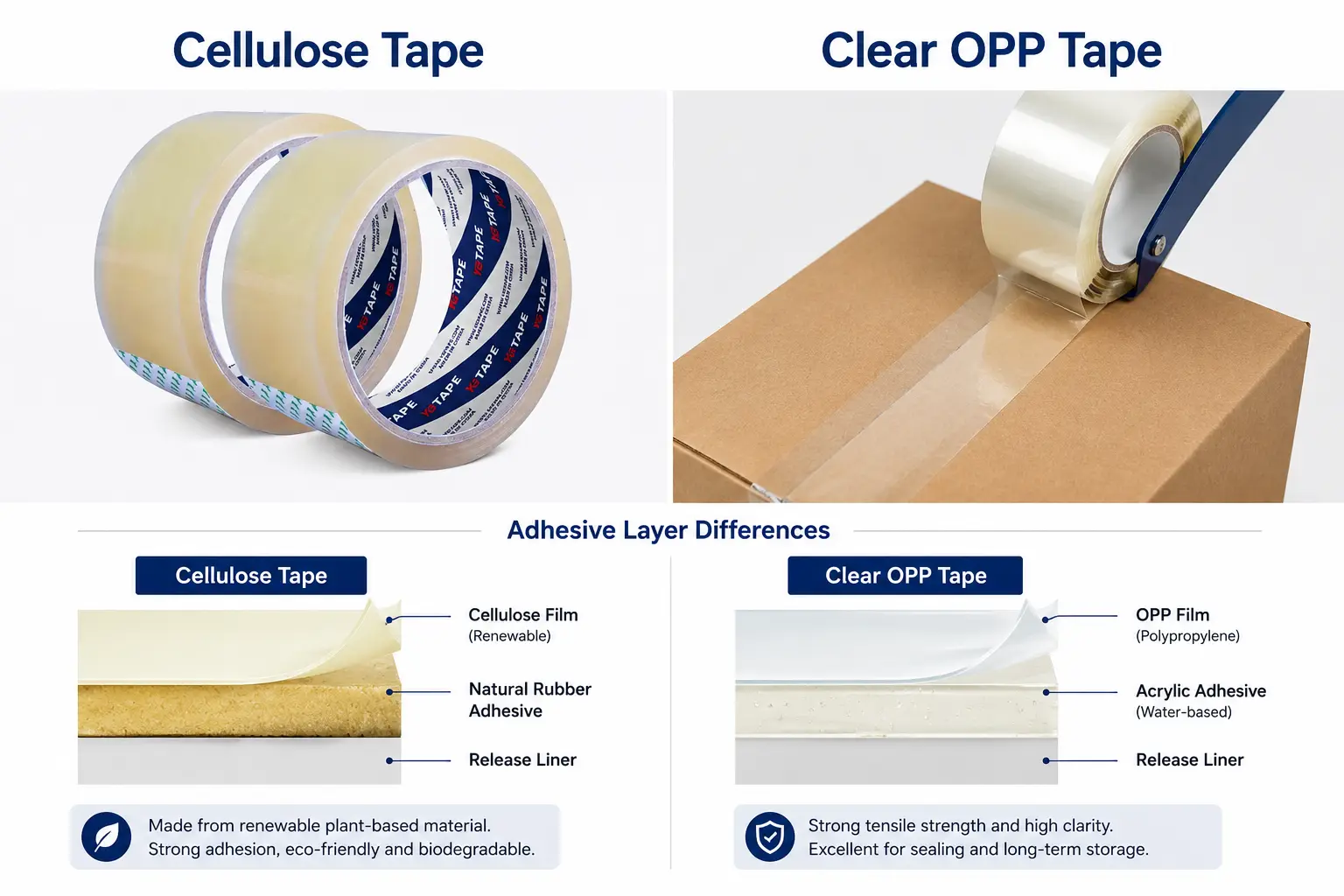
| Item | Cellulose Tape | OPP Tape |
|---|---|---|
| Backing Material | Cellulose-based transparent film | Oriented polypropylene film |
| Adhesive Type | Water-based, water-soluble, acrylic, or rubber adhesive | Water-based acrylic, hot melt, solvent-based, or rubber adhesive |
| Appearance | Clear and neat | Clear and glossy |
| Tearability | Easy to tear by hand | Usually needs a dispenser or blade |
| Strength | Light-duty | Standard to heavy-duty |
| Moisture Resistance | Medium | Better |
| Main Use | Office, retail, handcraft, light packaging | Carton sealing, logistics, industrial packaging |
Choose cellulose tape for neat appearance and light packaging.
Choose OPP tape for stronger carton sealing and shipping.
Adhesive Types and Performance
The adhesive system is very important. The same film can perform differently with different adhesives.
For example, OPP tape can use several adhesive types. Each one has a different use.
| Adhesive Type | Main Feature | Common Use |
|---|---|---|
| Water-based acrylic adhesive | Balanced performance and good aging resistance | General carton sealing |
| Hot melt adhesive | Strong initial tack | Heavy cartons and rough surfaces |
| Solvent-based adhesive | Better heat and weather resistance | Export shipping and demanding environments |
| Natural rubber adhesive | Strong bonding in cold or humid conditions | Cold storage and difficult surfaces |
| Water-soluble adhesive | More eco-positioned | Light packaging with cellulose film |
B2B buying tip:
Do not only ask for “clear tape” or “OPP tape.”
Give the supplier more details, such as:
- Adhesive type
- Tape thickness
- Carton weight
- Carton surface
- Storage temperature
- Shipping condition
- Target order quantity
This helps the supplier recommend the right tape and quote more accurately.
Mechanical Performance Comparison
| Performance Factor | Cellulose Tape | OPP Tape |
|---|---|---|
| Tensile Strength | Medium | Medium to high |
| Elongation | Low to medium | High |
| Tear Resistance | Easy to tear | Harder to tear |
| Carton Sealing Strength | Light-duty | Standard to heavy-duty |
| Machine Packing | Limited | Good |
| Long-distance Shipping | Limited | Good |
| Bulk Cost Efficiency | Medium | Strong |
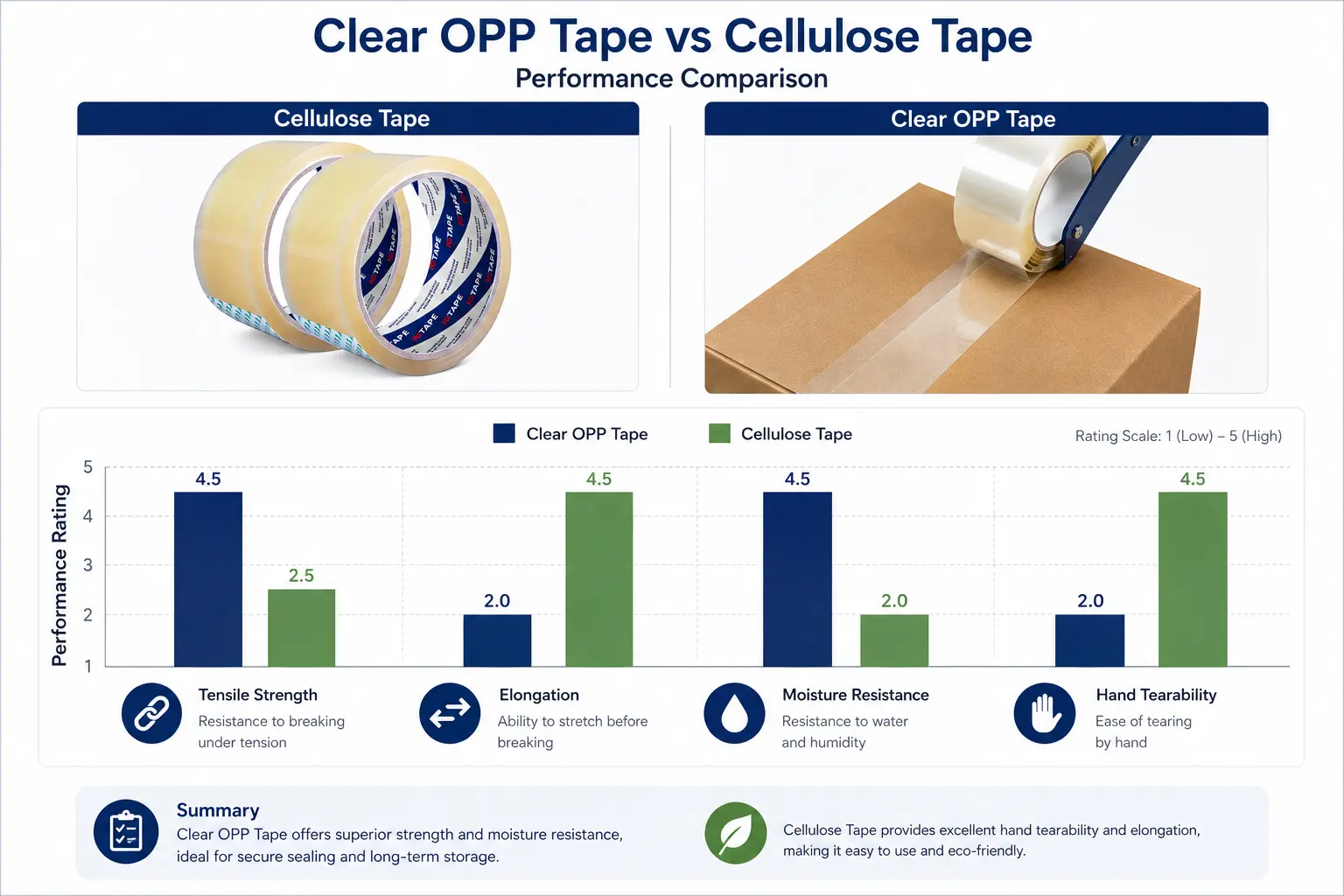
OPP tape is better for cartons that face pulling, vibration, and handling during shipping.
Cellulose tape is better for lighter use. It is not mainly designed for heavy stress. Its value is in clean appearance, easy use, and light packaging.
Temperature, Humidity, and Storage Conditions
Temperature and humidity can affect tape performance. This is important for export shipping, warehouse storage, and cold-chain logistics.
| Condition | Better Choice | Reason |
|---|---|---|
| Office use | Cellulose Tape | Easy to tear and clean-looking |
| Retail packaging | Cellulose Tape | Neat and clear finish |
| Standard carton sealing | OPP Tape | Better strength and cost |
| Long-term warehouse storage | OPP Tape with acrylic adhesive | Better aging resistance |
| Rough cartons | OPP Tape with hot melt adhesive | Stronger initial tack |
| Cold storage | OPP Tape with rubber adhesive | Better low-temperature bonding |
| Humid shipping | OPP Tape with solvent-based or rubber adhesive | Better moisture resistance |
| Eco-positioned light packaging | Cellulose Tape | Plant-based film positioning |
Simple recommendation:
Use cellulose tape for light and indoor applications.
Use OPP tape for shipping, logistics, and stronger sealing.
Sustainability Comparison
Sustainability is one major reason buyers compare these two tapes.
Cellulose tape has a stronger plant-based material story. It may support biodegradable or compostable claims if the full tape structure is tested and certified.
OPP tape is plastic-based. It is not biodegradable. But it is strong, cost-effective, and widely used for bulk carton sealing.
| Sustainability Factor | Cellulose Tape | OPP Tape |
|---|---|---|
| Material Source | Plant-based cellulose film | Polypropylene film |
| Biodegradability | Possible with proper formulation and certification | No |
| Compostability | Needs verified testing | No |
| Recyclability | Depends on local system and tape structure | Depends on PP recycling stream |
| Best Sustainable Use | Eco-positioned light packaging | Efficient carton sealing |
Important note:
Do not claim a tape is biodegradable or compostable unless the finished product has proper testing or certification.
Application Guide: Which Tape Should You Choose?
Choose Cellulose Tape If You Need:
- Light packaging tape
- Office tape
- Retail packaging tape
- Handcraft tape
- Easy-tear transparent tape
- Clean-looking sealing
- Plant-based material positioning
Recommended product: Cellophane Tape
Choose OPP Tape If You Need:
- Carton sealing tape
- E-commerce packing tape
- Warehouse packaging tape
- Export shipping tape
- Machine packing tape
- Custom printed packing tape
- High-strength transparent tape
- Cost-effective wholesale tape
Recommended products:
B2B Buying Checklist
Before ordering, buyers should confirm the following details.
Product Structure
- Backing material
- Adhesive type
- Total thickness
- Width and length
- Core size
Performance Requirements
- Tensile strength
- Peel adhesion
- Elongation
- Temperature resistance
- Moisture resistance
Application Details
- Carton weight
- Carton surface
- Storage time
- Shipping route
- Indoor or outdoor use
- Manual or machine application
Customization Needs
- Logo printing
- Core printing
- Carton design
- Private label packaging
- Color requirements
- Sample requirements
Summary: Cellulose Tape vs OPP Tape
| Decision Factor | Recommended Tape |
|---|---|
| Light packaging | Cellulose Tape |
| Office and handcraft use | Cellulose Tape |
| Retail gift packaging | Cellulose Tape |
| Standard carton sealing | OPP Tape |
| Heavy-duty shipping | OPP Tape |
| Long-distance export packaging | OPP Tape |
| Cold or humid storage | OPP Tape with rubber adhesive |
| Rough recycled cartons | OPP Tape with hot melt adhesive |
| Eco-positioned light packaging | Cellulose Tape |
| Large-volume cost efficiency | OPP Tape |
Cellulose tape and OPP tape are not the same product.
Cellulose tape is better for light-duty, clean-looking, easy-tear, and eco-positioned packaging.
OPP tape is better for carton sealing, shipping, logistics, industrial packaging, and large-volume supply.
For B2B buyers, the best choice depends on the full tape structure and use environment. Always compare:
- Film material
- Adhesive type
- Tape thickness
- Tensile strength
- Peel adhesion
- Storage condition
- Shipping requirement
FAQ
1. Is cellulose tape the same as OPP tape?
No. Cellulose tape uses cellulose-based film. OPP tape uses oriented polypropylene film. They are different in material, strength, moisture resistance, and best use.
2. Is cellulose tape biodegradable?
It may be more sustainable than normal plastic tape. But biodegradability depends on the full tape structure. Buyers should check material details and certification.
3. Is OPP tape good for heavy cartons?
Yes. OPP tape is widely used for carton sealing and shipping. For heavy cartons, hot melt, solvent-based, or rubber adhesive may be better.
4. Which tape is better for e-commerce packaging?
OPP tape is usually better. It has higher strength, good sealing performance, and better cost efficiency for large orders.
5. Which tape is better for eco-friendly packaging?
Cellulose tape is better for eco-positioned light packaging. But environmental claims should be supported by proper testing or certification.
6. Can OPP tape be customized with printing?
Yes. OPP tape can be printed with logos, colors, warning text, and private label designs. It is widely used for branded carton sealing.
Need Help Choosing the Right Packaging Tape?
YG Group supplies cellulose tape, BOPP packing tape, printed packing tape, and customized packaging tape for global B2B buyers.
We can help you choose the right tape based on:
- Carton weight
- Sealing surface
- Storage temperature
- Shipping route
- Adhesive type
- Width and length
- Printing needs
- Private label requirements
- Cost target
Explore more solutions: