

Types of Packing Tape: How to Choose the Right One for Shipping



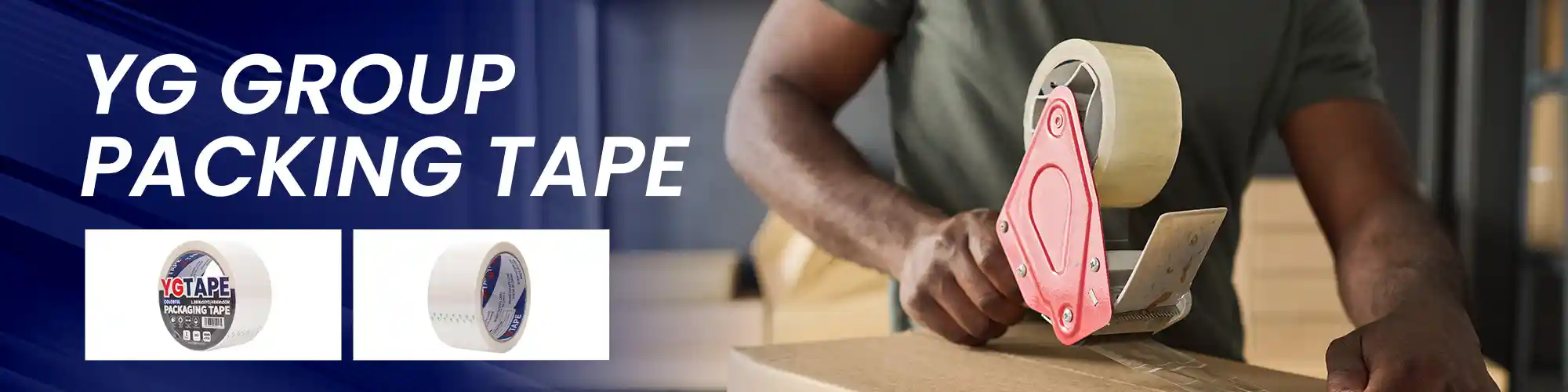
The right packing tape should match the carton surface, package weight, application method, and shipping environment.
For standard cartons, water-based BOPP tape offers a practical balance of adhesion, strength, and cost. Rough or recycled cartons may need hot melt tape, while cold, humid or high-temperature conditions may require a specialized adhesive grade.
Packing tape is a pressure-sensitive or water-activated material used to seal, reinforce or identify cartons during storage and transportation. Its performance depends mainly on the backing, adhesive and overall construction.
Quick Packing Tape Selection Guide
| Packaging requirement | Recommended tape |
|---|---|
| General carton sealing | Water-based BOPP tape |
| Rough or recycled cartons | Hot melt BOPP tape |
| Cold or humid packaging | Natural rubber tape validated for the application |
| High-temperature conditions | Solvent-based packing tape |
| Easy-tear sealing | PVC packing tape |
| Paper-based sealing with visible signs of opening | Water-activated kraft tape |
| Quiet packing areas | Low-noise tape |
| Branded cartons | Printed packing tape |
| Automatic sealing lines | Machine roll tape |
| Bundling or reinforcement | Filament tape |
These are starting recommendations. Final performance depends on the specific tape grade, carton surface and application conditions.
For freezing environments, confirm the tape grade’s minimum application temperature and service temperature before use.
Need help selecting packing tape?
Share your carton material, package weight, temperature conditions and required roll size. YG Group can recommend a suitable construction for testing.
How Is Packing Tape Classified?
Packing tape can be classified in three ways:
- Backing or reinforcement: BOPP, PVC, kraft paper or fiber-reinforced construction
- Adhesive system: Water-based, hot melt, natural rubber or solvent-based
- Function or roll format: Low-noise, printed, clear, recycled or machine roll
These categories can overlap. For example, a printed machine roll may use a BOPP backing with hot-melt adhesive.
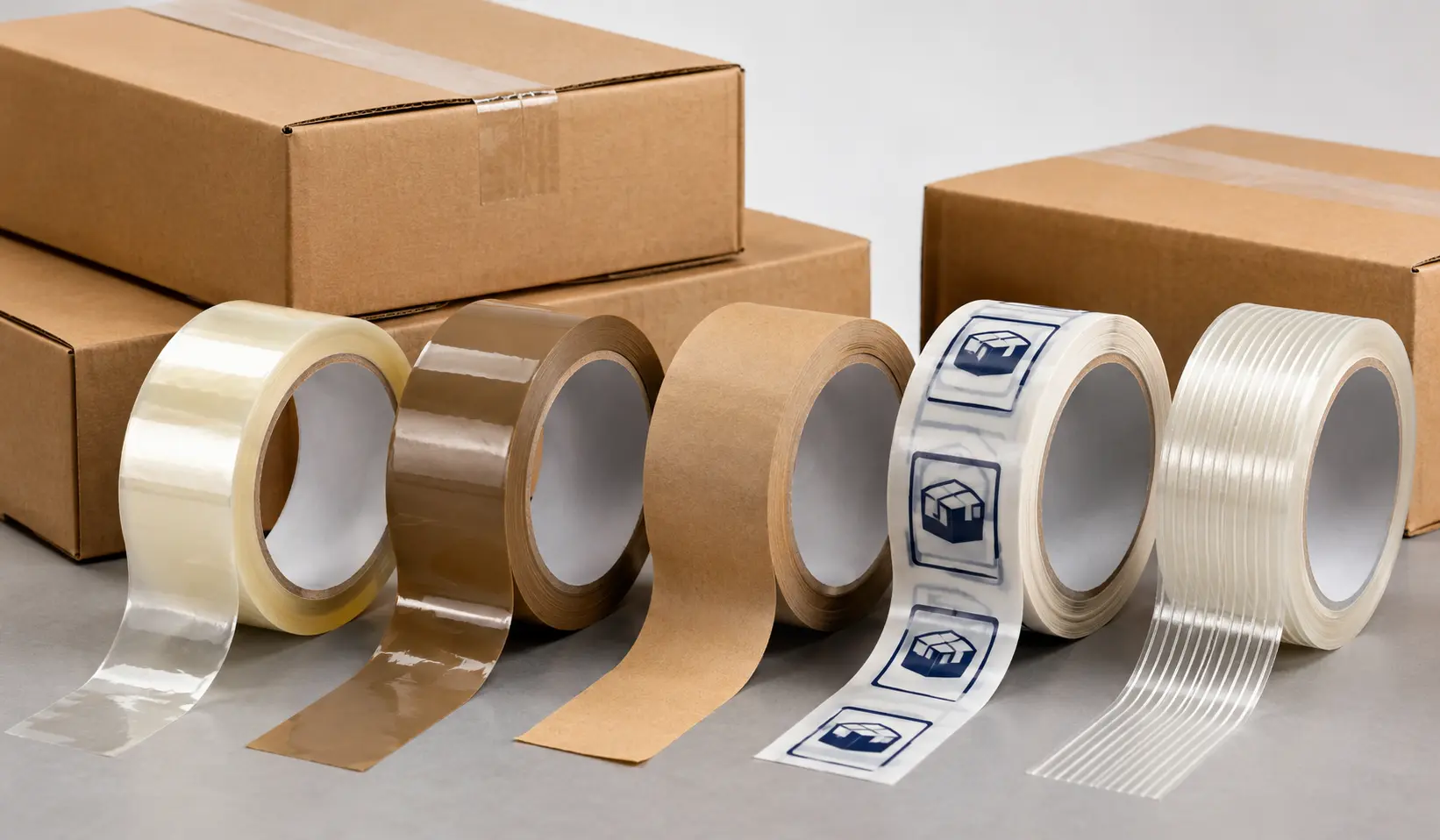
Main Types of Packing Tape
1. BOPP Packing Tape
BOPP, or biaxially oriented polypropylene, is one of the most common materials used for carton sealing tape.
It provides:
- Good tensile strength
- Flexibility
- Moisture resistance
- Transparency
- Cost efficiency
- Compatibility with different adhesives
BOPP tape can be clear, brown, printed, colored, low-noise, or supplied as a machine roll. Its final performance also depends on the adhesive, coating weight and total thickness.
Explore YG Group’s packing tape range.
2. PVC Packing Tape
PVC packing tape commonly uses PVC film with a rubber-based adhesive.
It may provide good dimensional stability, strong adhesion, and convenient hand tearing. Common uses include carton sealing, bundling, fixing and packaging where easy tearing is important.
PVC tape is usually selected for its handling and performance rather than for the lowest packaging cost.
3. Kraft Paper Packing Tape
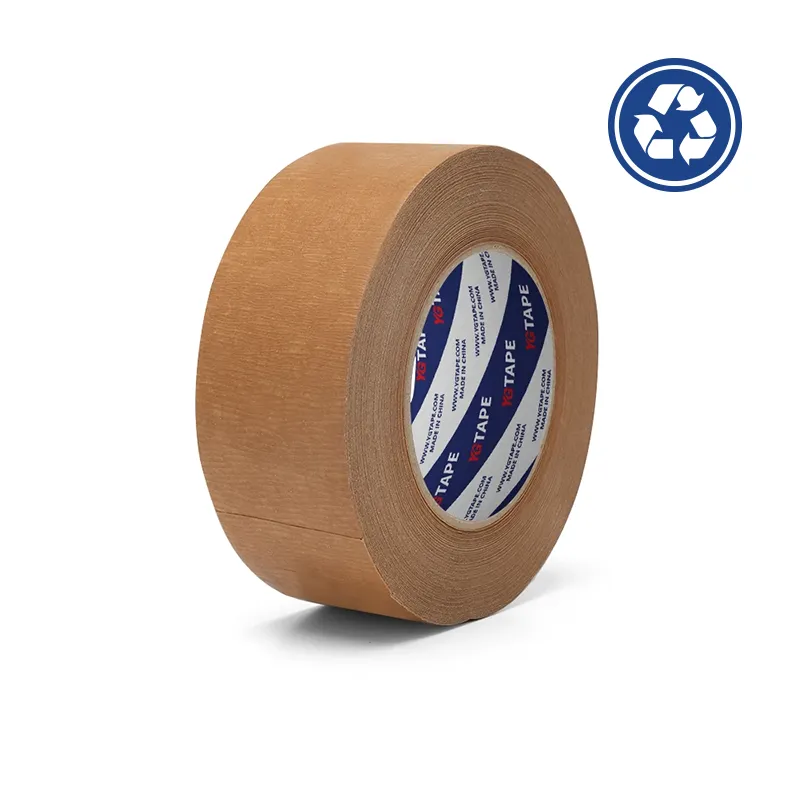
Kraft packing tape is available in water-activated and self-adhesive constructions.
Water-activated kraft tape bonds closely to compatible corrugated cartons after its adhesive is moistened. Opening the box usually damages or visibly disturbs the paper seal.
It is commonly used for:
- E-commerce cartons
- Paper-based packaging
- Printed or writable seals
- Cartons where previous opening should remain visible
This visible disturbance should not be confused with certified security tape or VOID tape.
Paper backing also does not automatically make every construction recyclable. Adhesive, reinforcement and local recycling requirements must be considered.
4. Filament-Reinforced Tape
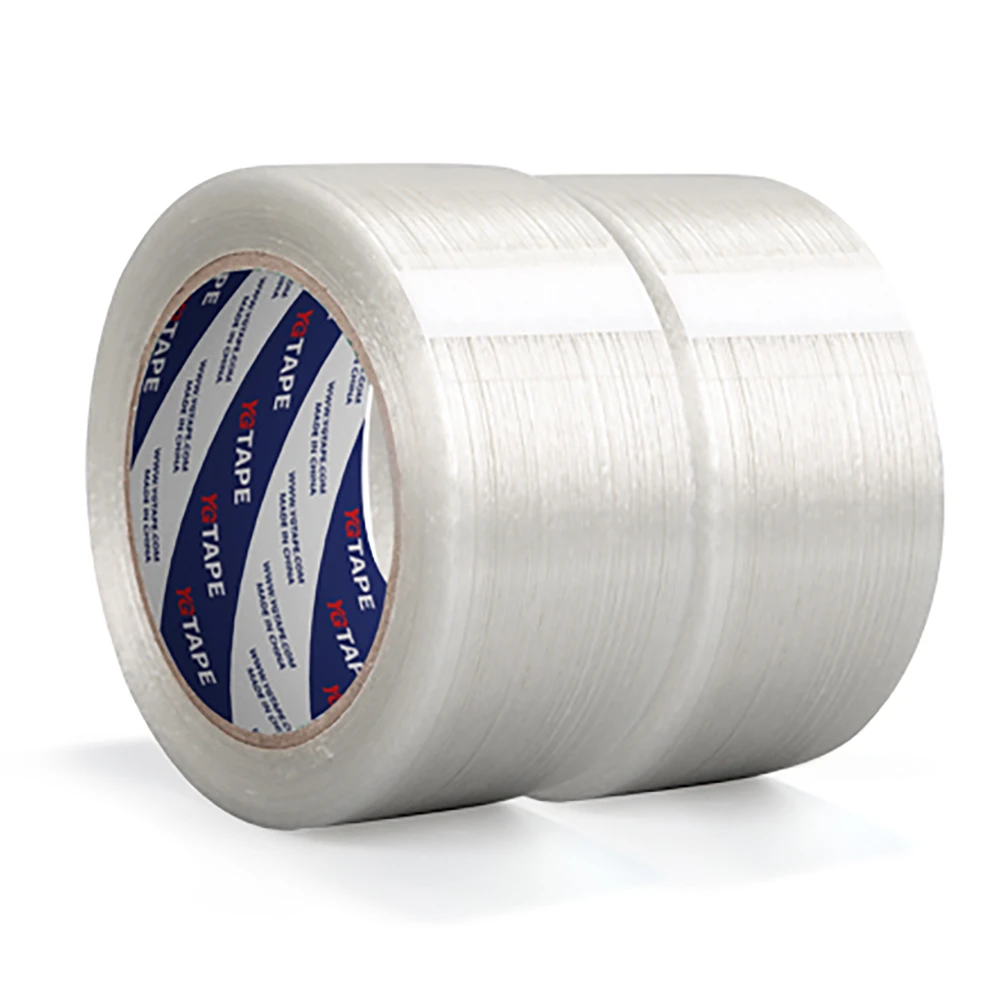
Filament tape combines a film backing with reinforcing fibers to increase tensile strength.
It is mainly used for:
- Heavy product bundling
- Carton reinforcement
- Appliance packaging
- Securing industrial components
It can supplement standard carton sealing but should not automatically replace pallet stretch film or industrial strapping.
BOPP Packing Tape by Adhesive Type
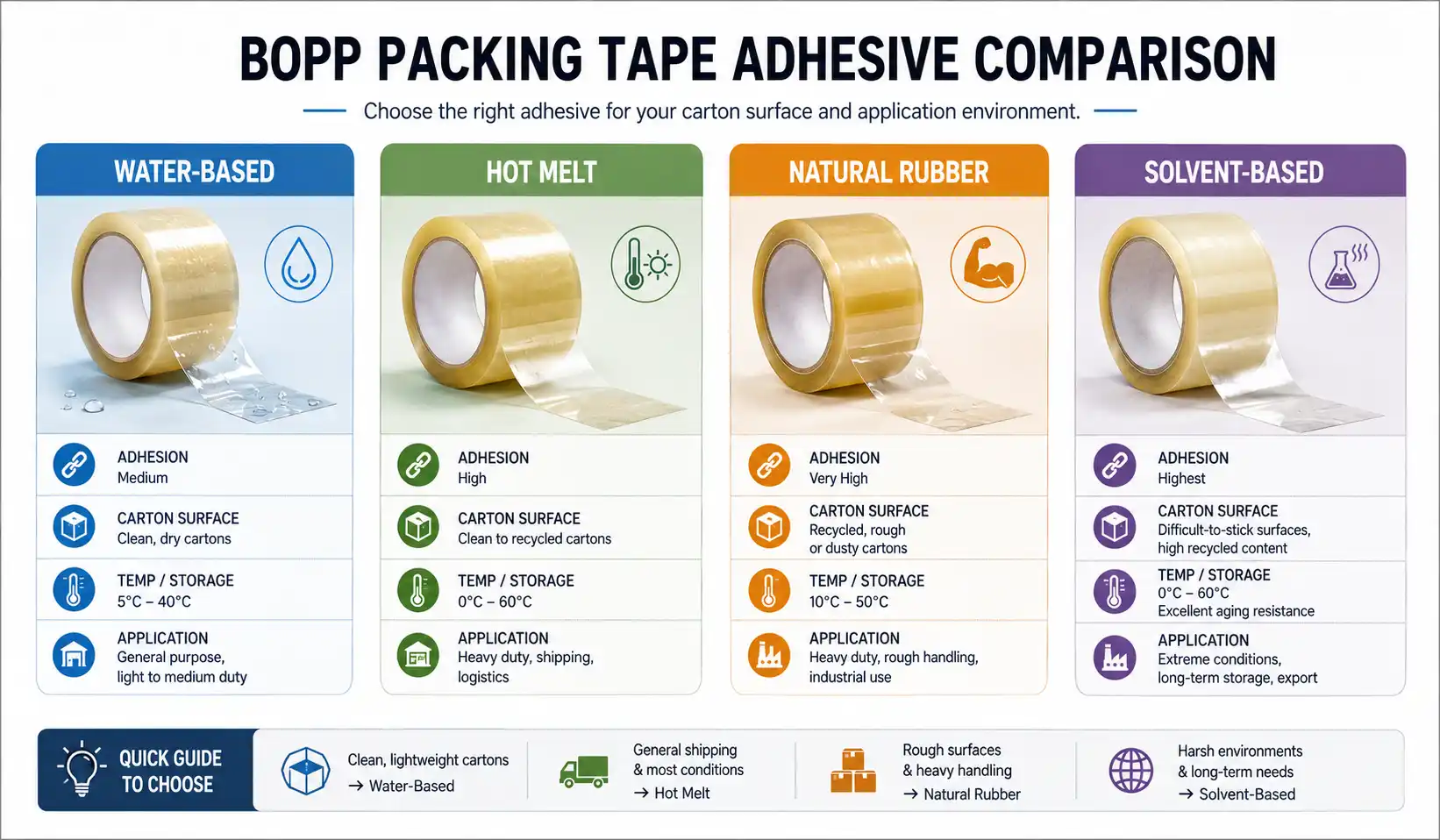
BOPP describes the film backing. Water-based, hot melt, natural rubber and solvent-based describe the adhesive coated onto the film.
Water-Based Packing Tape
Water-based packing tape is widely used for clean, standard corrugated cartons.
Depending on the grade, it may use a water-based acrylic adhesive. It offers balanced cost, clarity and general sealing performance.
It is commonly used for e-commerce packaging, indoor storage and light- to medium-duty boxes. Rough or dusty cartons may require a higher-tack adhesive.
Hot Melt Packing Tape
Hot melt packing tape provides strong initial tack and fast bonding.
It is often selected for:
- Rough cartons
- Recycled cartons
- Fast packing lines
- Medium- to heavy-duty packages
Some grades may perform well in moderately cold conditions, but suitability for refrigerated applications should be confirmed separately.
Natural Rubber Packing Tape
Natural rubber packing tape is commonly considered for difficult surfaces and cold or humid packaging.
It provides strong initial adhesion and good bonding to many challenging carton surfaces.
Not every grade has the same low-temperature performance. Always confirm:
- Application temperature: when the tape is applied
- Service temperature: what the sealed carton experiences afterward
For freezing conditions, test the specific grade at both temperatures.
Solvent-Based Packing Tape
Solvent-based packing tape is designed for applications requiring strong adhesion and additional environmental resistance.
It may be considered for:
- Heavy-duty packaging
- High-temperature conditions
- Indoor and outdoor use
- Export applications requiring additional temperature or environmental resistance
Final suitability should be confirmed through carton and environmental testing.
YG Group Packing Tape Comparison
| Adhesive type | Main selection reason | Common starting application | Available thickness |
| Water-based | Balanced cost and performance | Standard carton sealing | 34–90 μm |
| Hot melt | Strong initial tack | Rough and recycled cartons | 38–50 μm |
| Natural rubber | Grade-dependent cold and humidity performance | Refrigerated or difficult packaging | 45–63 μm |
| Solvent-based | Temperature and environmental resistance | Heavy-duty applications | 43–65 μm |
Thickness ranges represent current standard product options. Not every grade within a range is designed for the same temperature or application. Confirm the final construction before ordering.
Functional and Specialty Packing Tape Options
First select the appropriate backing and adhesive system. Then choose functional features such as printing, transparency, low-noise unwinding or machine-roll format.
Low-Noise and High-Clarity Options
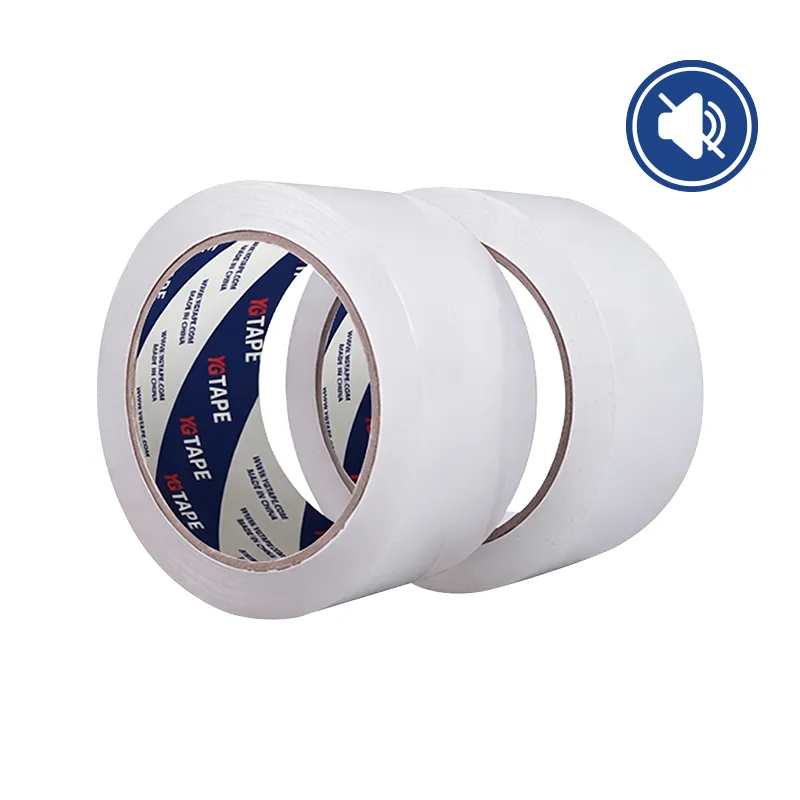
Low-noise tape reduces the sharp sound produced during unwinding, making it suitable for offices, retail stores and indoor packing areas.
Super clear tape keeps carton graphics, labels and barcodes visible. Its adhesion and temperature performance still depend on the adhesive system.
Printed and Colored Tape
Printed tape can display logos, handling instructions or warning messages. Colored tape can support product identification and warehouse classification.
Printing adds communication value but does not determine sealing strength.
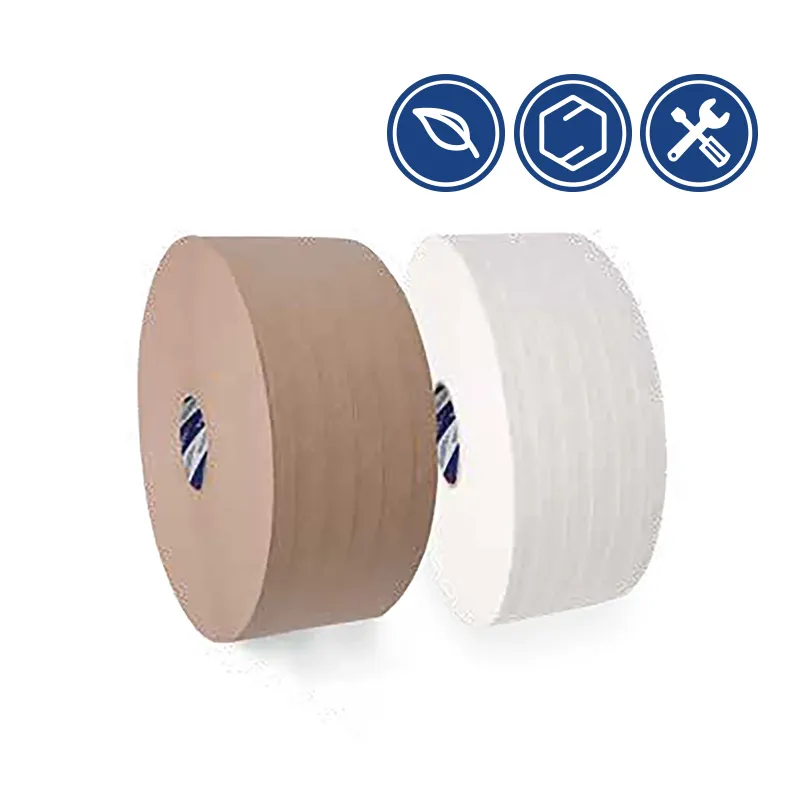
Machine Roll Tape
Machine roll tape is supplied in longer lengths for automatic or semi-automatic carton sealing.
Before ordering, confirm:
- Width and roll length
- Core diameter
- Winding direction
- Machine model and speed
- Required adhesive system
Recycled BOPP Tape
Recycled BOPP tape contains recycled polypropylene in the film backing.
Selection should consider recycled content, film consistency, tensile strength, adhesive performance and supporting documentation. Recycled content should not replace performance testing, especially for machine application or heavy cartons.
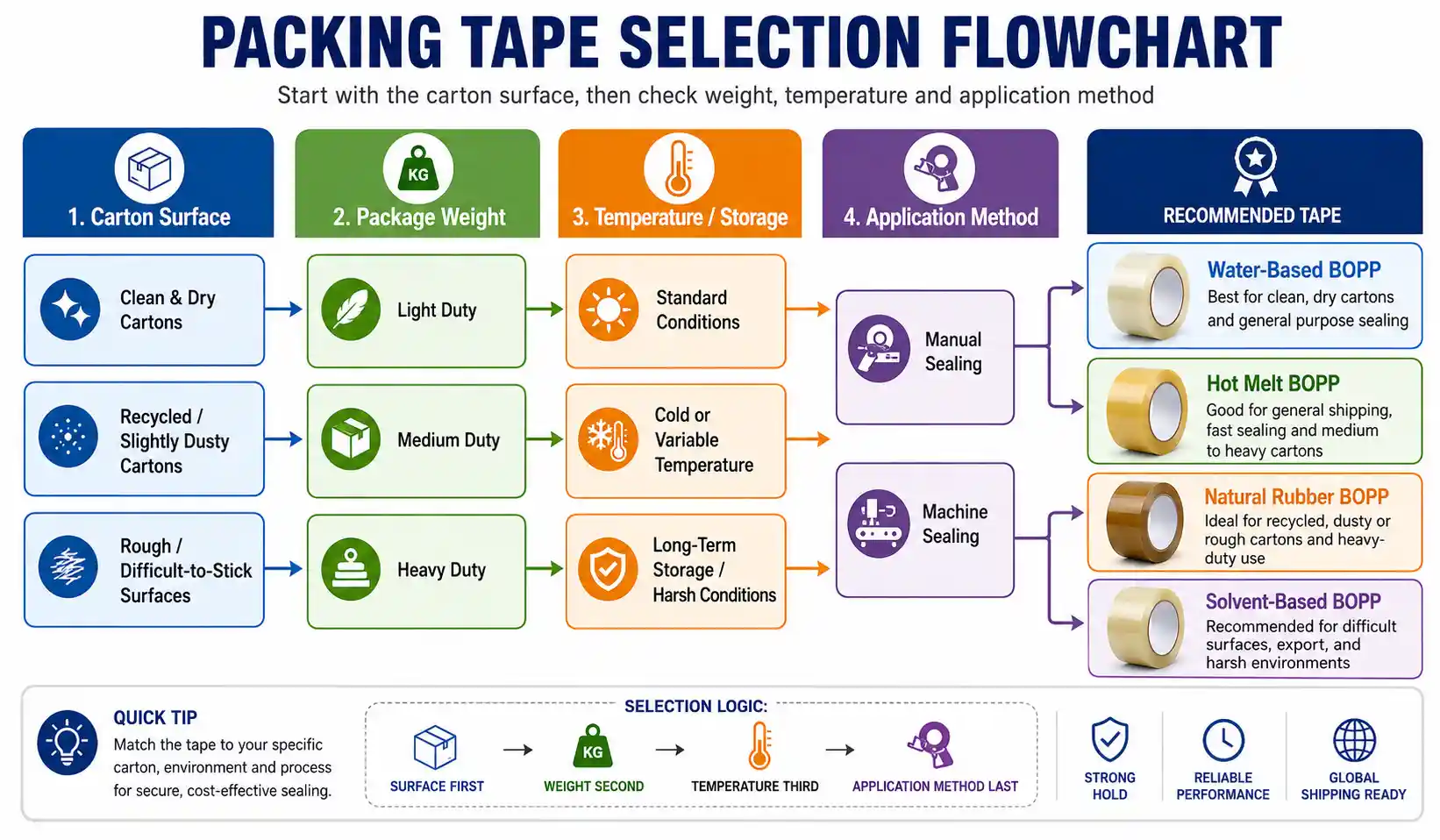
How to Choose the Right Packing Tape
1. Evaluate the Carton and Package
Check the carton surface, recycled content, package weight and box strength.
Rough or recycled cartons may need a higher-tack adhesive. Heavy packages may require wider tape, greater tensile strength, H-sealing or additional reinforcement.
Tape should not compensate for an unsuitable carton.
2. Confirm the Application Environment
Check the application and service temperatures, along with humidity, condensation and temperature changes.
A tape may withstand low storage temperatures but still require warmer conditions during application.
3. Select Hand or Machine Application
Hand rolls should fit the dispenser and unwind smoothly.
Machine rolls require stable winding, suitable core dimensions and compatibility with the carton sealer.
4. Review Shipping, Branding and Sustainability Requirements
Consider storage time, stacking, vibration and transportation duration.
For ocean freight and changing destination climates, read our guide to choosing packing tape for international shipping.
Also confirm whether the package requires custom printing, recycled content or a paper-based construction.
Is Thicker Packing Tape Always Better?
No. A thicker film may improve tensile strength and tear resistance, but it does not automatically provide better adhesion.
Performance also depends on:
- Adhesive formulation
- Coating weight
- Film quality
- Holding power
- Carton surface
- Application pressure
- Storage conditions
Compare the complete technical data instead of choosing by thickness alone.
How Should Packing Tape Be Tested?
Before ordering:
- Apply the tape to the actual carton using firm, even pressure.
- Check immediate tack and initial adhesion.
- Allow the supplier-recommended dwell time, then recheck edge lifting and holding performance.
- Test under the expected application and service temperatures.
- Confirm dispenser or machine compatibility.
- Evaluate the sealed carton after storage or transportation simulation.
Testing should cover the complete package, not only the tape.
Frequently Asked Questions
What Is the Best Packing Tape for General Shipping Boxes?
Water-based BOPP tape is a common starting choice for clean, standard cartons. Rough or recycled cartons may need a higher-tack grade.
Is Water-Based or Hot Melt Tape Better?
Water-based tape suits general sealing. Hot melt tape provides stronger initial tack for many rough or recycled cartons.
What Tape Is Suitable for Refrigerated Packaging?
A natural rubber grade validated for the application is commonly considered. Confirm both application and service temperatures before testing.
Is Kraft Tape Better Than BOPP Tape?
Kraft tape suits paper-based packaging and shows visible signs of opening. BOPP tape is widely used for moisture-resistant, high-volume carton sealing.
Request a Packing Tape Recommendation
For a suitable recommendation, sample or quotation, please provide:
- Carton material and package weight
- Application and service temperatures
- Tape width and roll length
- Hand or machine application
- Printing requirements
- Destination market or shipping route
- Estimated monthly or annual volume
YG Group can recommend a suitable adhesive, construction and supply format for testing and quotation.
Sample availability is confirmed after specification review. Sample rolls are generally provided free of charge, while courier costs are normally borne by the buyer.