


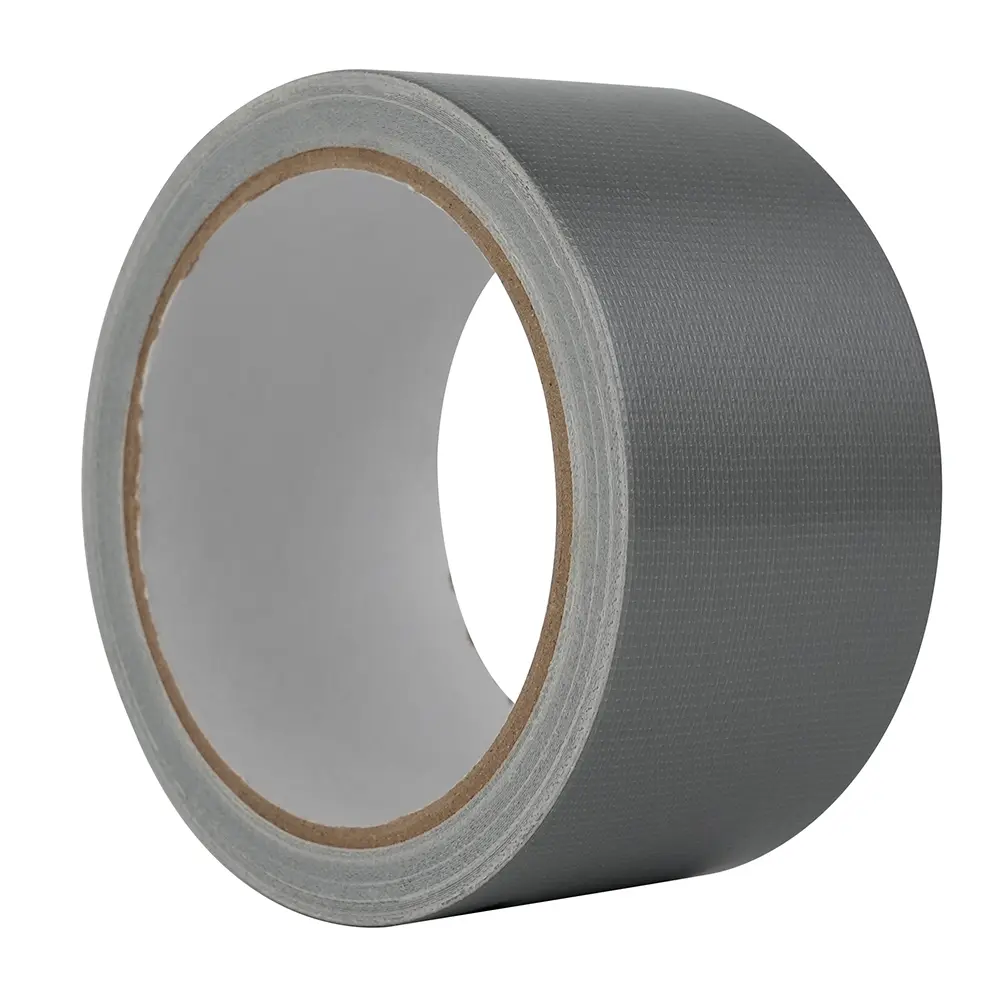
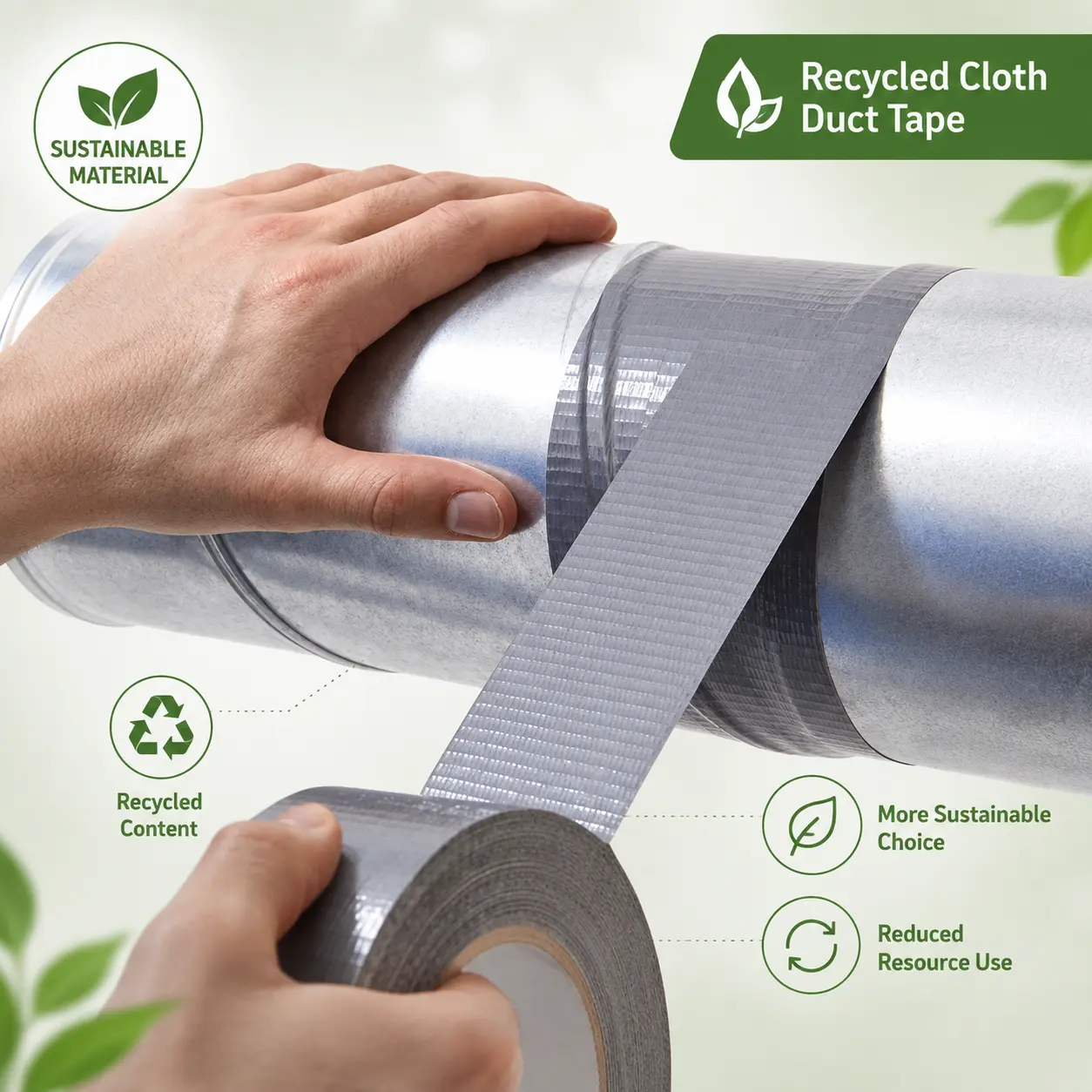
Recycled Cloth Duct Tape
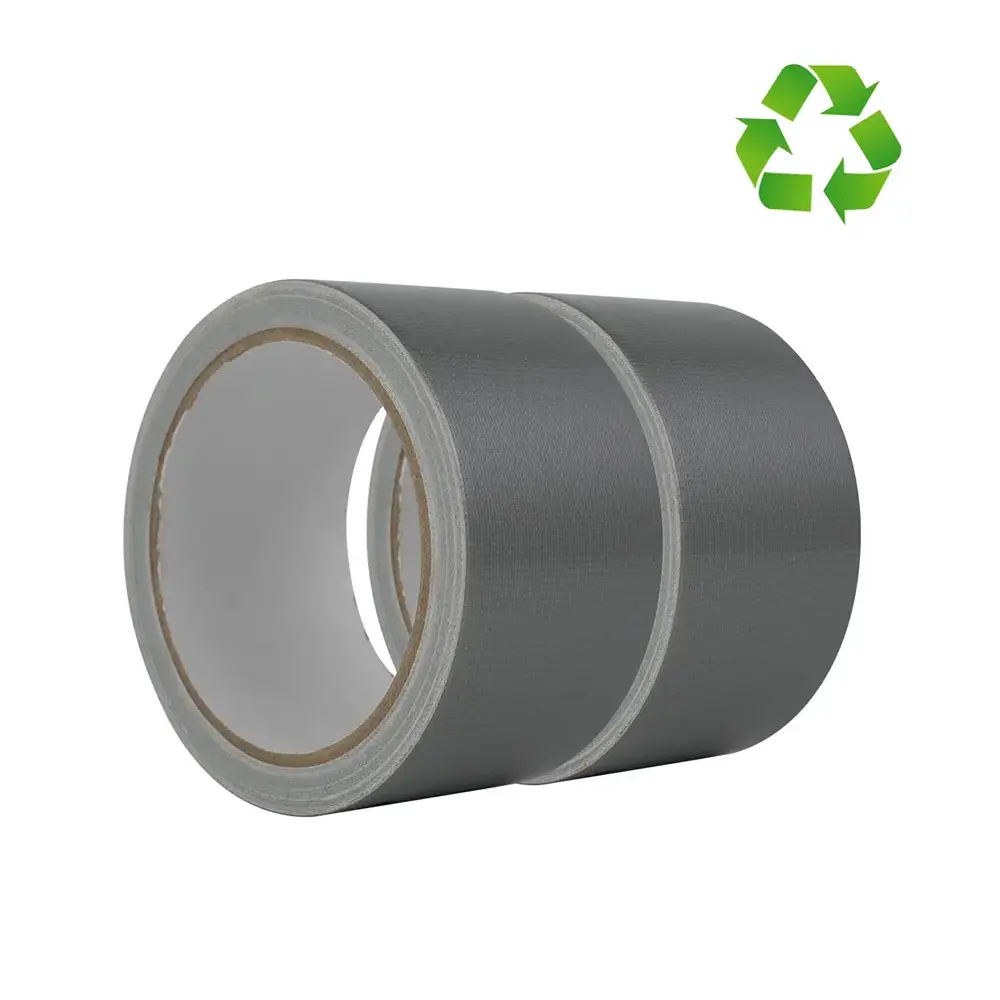
Recycled Cloth Duct Tape is a durable cloth-backed adhesive tape made with a fabric backing, recycled polyethylene (RPE) coating, and hot melt adhesive. It contains ≥30% recycled content and is designed for DIY repair, bundling, sealing, maintenance, and general-purpose fixing, helping reduce reliance on virgin plastics while supporting greater use of recycled materials.
Features:
1. ≥30% Recycled Content
2. Recycled PE (RPE) Coating
3. Durable Fabric-Reinforced Construction
4. Designed for Repair, Sealing & Fixing
5. Reduced Reliance on Virgin Plastics
Applications:
- DIY Repair
- Bundling
- Sealing
- Maintenance
- General-Purpose Fixing

Available Specifications & Custom Options
| Model | Material System |
Adhesive |
Total Thickness | Initial Tack |
Peel Adhesion | Tensile Strength |
| R-DEB170-5 |
Fabric Backing + Recycled PE (RPE) Coating |
Hot Melt | 170 μm |
≥21#
|
≥9 N/in | ≥80 N/in |
*Custom options are available, including:
Width, length, total thickness, color, printing, core size, packaging, and branding.
Why Choose Recycled Cloth Duct Tape?
Fabric-Reinforced Construction
The fabric backing provides reinforcement for everyday repair, bundling, sealing, maintenance, and general-purpose fixing applications.
Hot Melt Adhesive
The tape uses a hot melt adhesive designed to provide reliable bonding for common repair, sealing, and fixing applications.
Defined Technical Performance
The R-DEB170-5 model has a 170 μm total thickness, ≥21# initial tack, ≥9 N/in peel adhesion, and ≥80 N/in tensile strength, providing clear technical data for product evaluation.
Practical Multi-Purpose Use
Designed for repair, bundling, sealing, maintenance, and general-purpose fixing, the tape provides a practical recycled-content option for everyday cloth duct tape applications.
Recycled Content & Environmental Information
≥30% Recycled Content
Recycled Cloth Duct Tape contains ≥30% recycled content, providing a measurable recycled-material option for customers looking to reduce the use of virgin plastics.
Recycled PE (RPE) Coating
The recycled polyethylene is incorporated into the PE coating layer, clearly identifying where the recycled material is used in the tape construction.
Recycled-Content Claim in Line with ISO 14021
The ≥30% recycled-content claim is stated in line with ISO 14021 requirements for environmental claims and supporting evaluation and documentation.
Recycled Cloth Duct Tape vs. Conventional Cloth Duct Tape
| Item | Recycled Cloth Duct Tape | Conventional Cloth Duct Tape |
| Fabric Reinforcement | Yes | Yes |
| PE Coating | Recycled PE (RPE) | Conventional PE |
| Recycled Content | ≥30% | Typically not a core material feature |
| Virgin PE Use | Reduced | Greater reliance on virgin PE |
| Main Applications | Repair, bundling, sealing, maintenance & fixing | Similar general-purpose applications |
The key difference is the PE coating. Recycled Cloth Duct Tape incorporates recycled polyethylene into this layer, helping reduce reliance on virgin PE.
Recycled Content vs. Recyclability
Recycled content does not automatically mean that the finished tape is recyclable.
Recyclability depends on the complete tape construction and the collection, sorting, and recycling systems available after use.
Recycled Cloth Duct Tape FAQ
What is Recycled Cloth Duct Tape?
What is Recycled Cloth Duct Tape made of?
Where is the recycled material used?
How much recycled content does the tape contain?
How is it different from conventional cloth duct tape?
What are the main specifications of Recycled Cloth Duct Tape?
Related Cloth Duct Tape Products
Need a Custom Solution?
Duct Tape Insights
View More
_28eff.webp)