

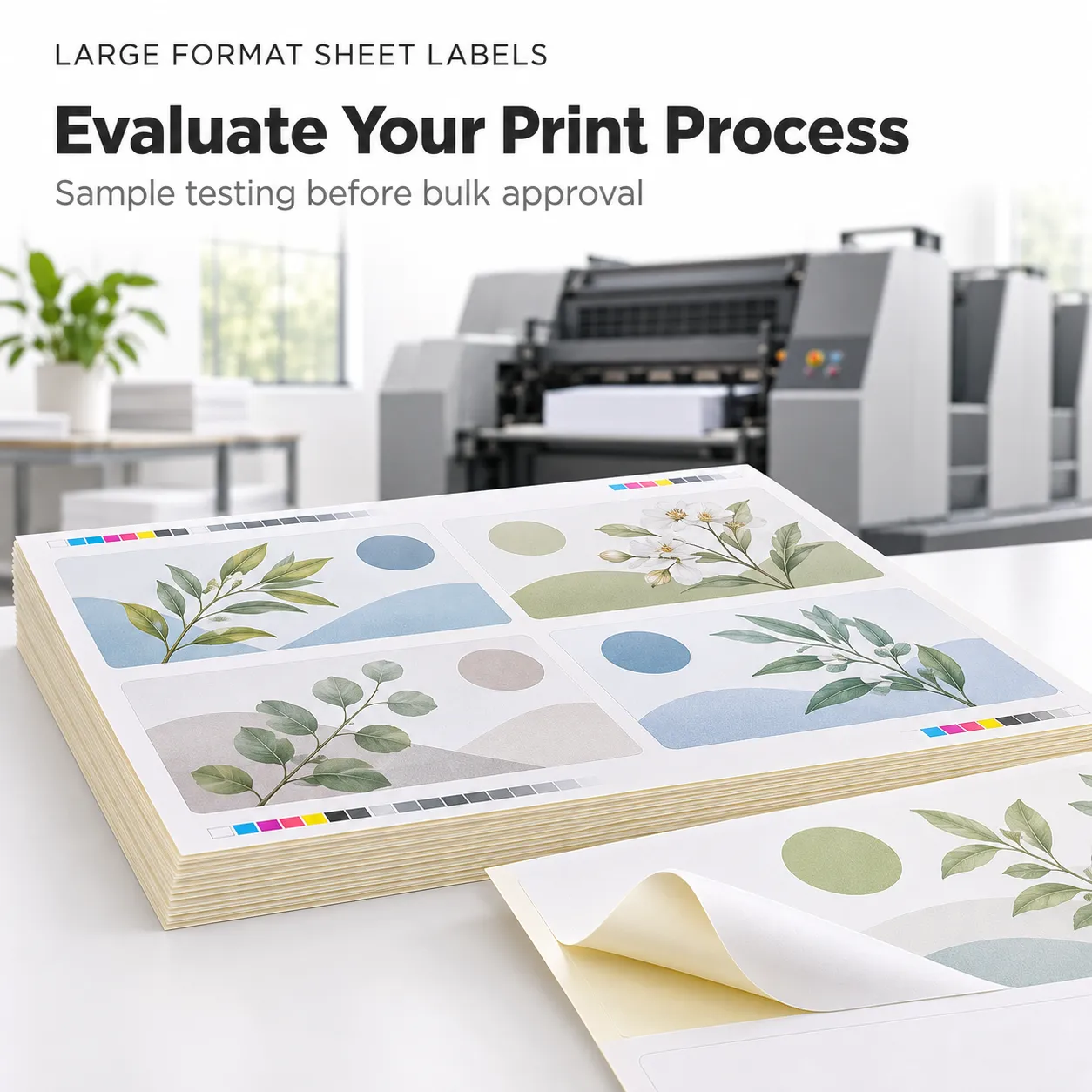
Large Format Sheet Labels
Features:
-
Custom Sheet Sizes
-
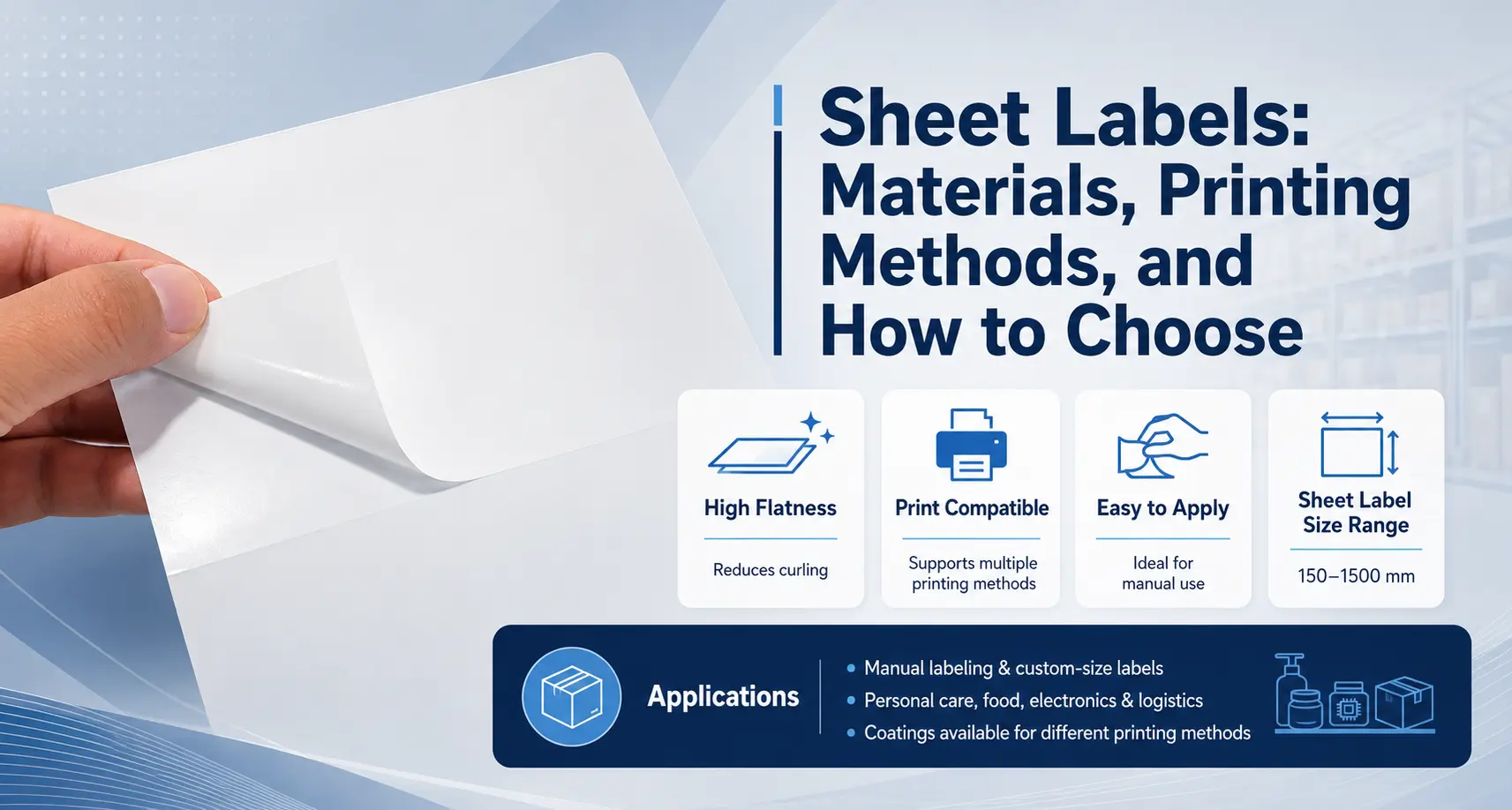
High Flatness
-
Multiple Material Options
-
Process-Matched Constructions
Applications:
-
Packaging Labels
-
Product Identification
-
Multi-Label Sheet Printing
-
Manual Labeling

What Are Large Format Sheet Labels?
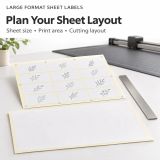
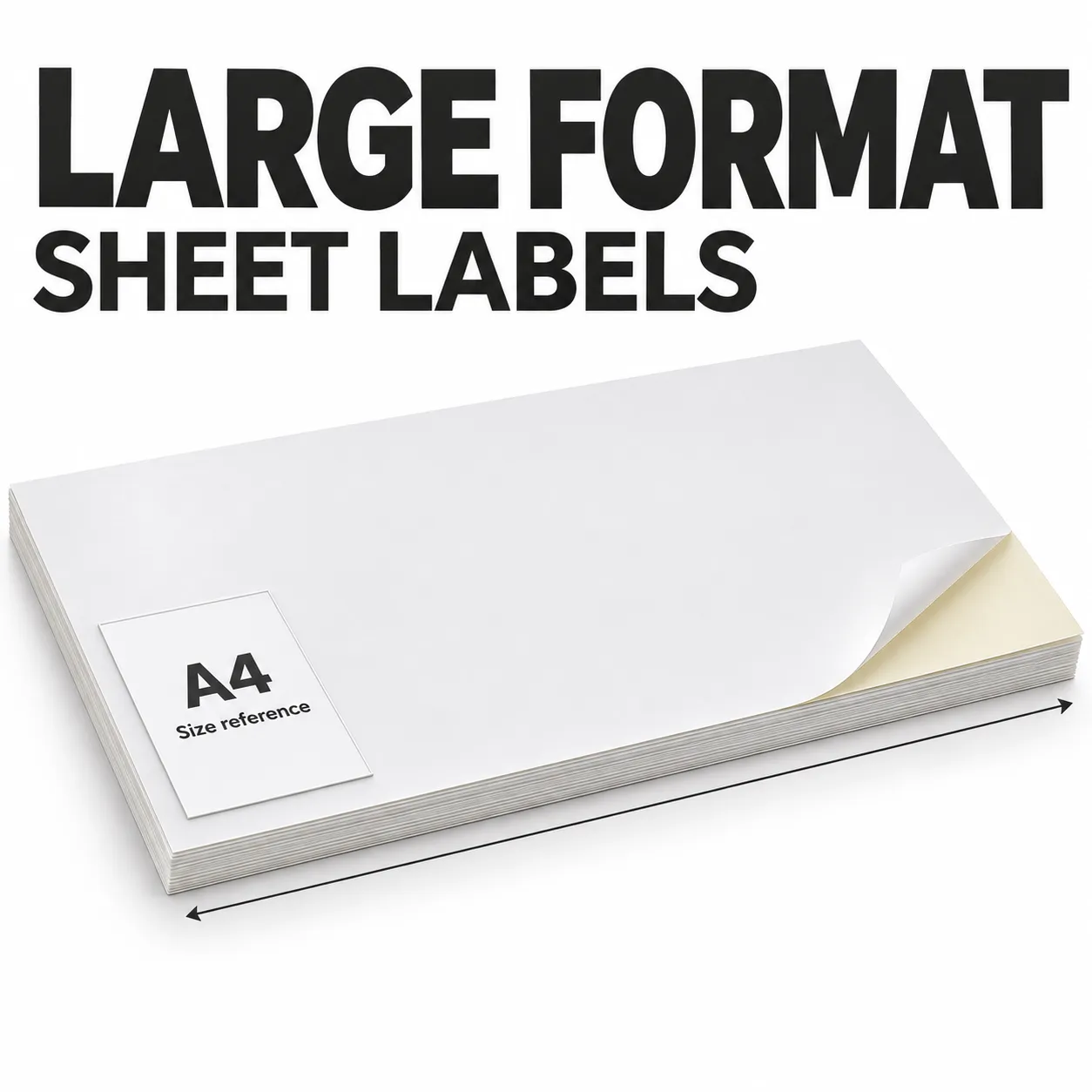
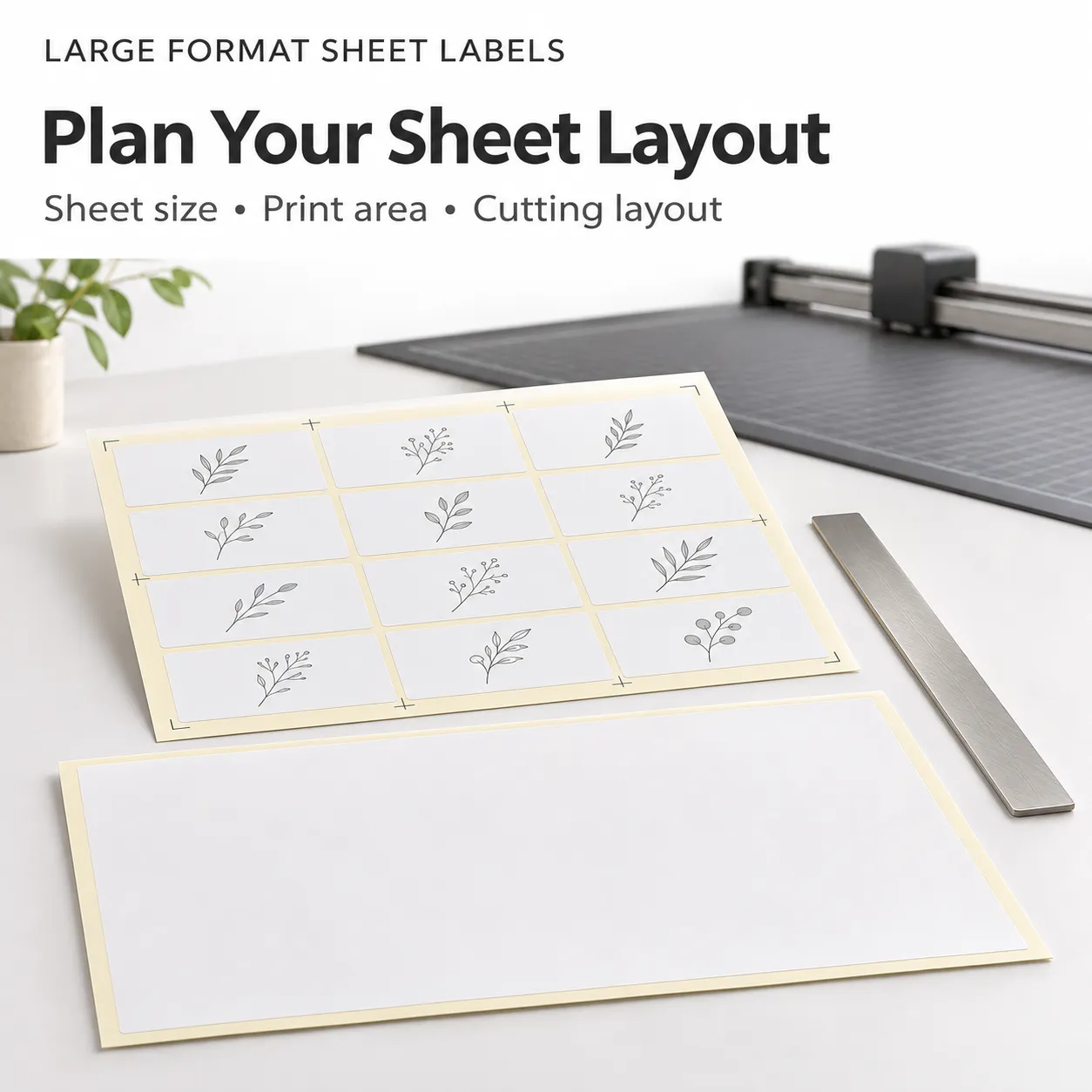
Large format sheet labels are self-adhesive materials supplied in larger flat sheets for printing and subsequent converting. A sheet may be processed into one large label or multiple smaller labels, depending on the artwork and cutting layout.
Sheet dimensions and finished label dimensions are different specifications. Buyers should confirm both, together with the printing area, trim allowance and converting requirements.
Key Features
-
Project-specific sheet format: Review sheet width and length against your printing and cutting equipment.
-
Material selection: Compare paper, synthetic and film facestocks according to print appearance and end-use requirements.
-
Adhesive matching: Select the adhesive around the application surface, labeling temperature and service conditions.
-
Liner selection: Evaluate liner stiffness, release behavior and sheet flatness for handling and converting.
-
Process-based print matching: Confirm the facestock surface or coating against the intended printing technology.
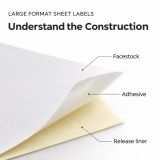
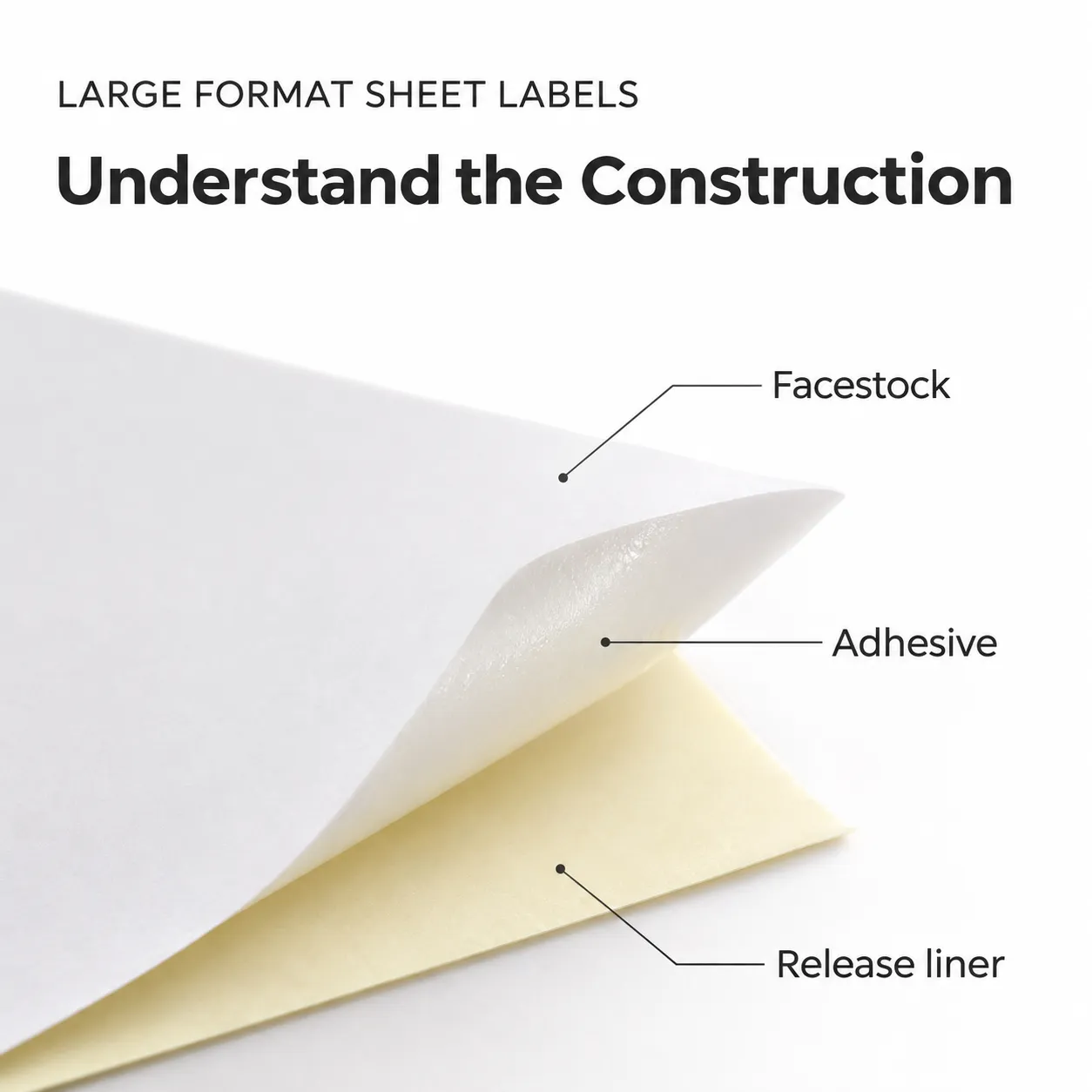
Material and Construction Options
The following options are drawn from YG’s broader sheet label range. Availability in your required large format dimensions should be confirmed for the selected construction.
| Component | Options to Discuss | Selection Criteria |
|---|---|---|
| Paper facestock | Semi-gloss paper; wood-free paper | Print finish, appearance and application conditions |
| Synthetic and film facestock | Synthetic paper; gloss white PP; matt silver PET | Appearance, moisture exposure and durability requirements |
| Adhesive | Water-based; hot melt; freezer hot melt; solvent-based | Substrate, application temperature and service environment |
| Release liner | PEK or CCK constructions | Sheet stability, release requirements and converting process |
Specifications to Confirm Before Ordering
| Item | Required Specification |
|---|---|
| Sheet dimensions | Width × length in mm, with required dimensional tolerance |
| Facestock | Material, finish and basis weight or thickness |
| Adhesive | Type, target substrate and bonding requirements |
| Release liner | Material, basis weight and any back-slit requirement |
| Total caliper | Complete construction thickness for equipment compatibility |
| Printing process | Press or printer model, ink system and curing or drying conditions |
| Converting | Cutting method, layout, trim allowance and delivery format |
| Application conditions | Labeling temperature, service temperature and expected exposure |
| Order quantity | Trial quantity, production quantity and repeat-order forecast |
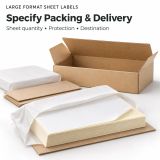
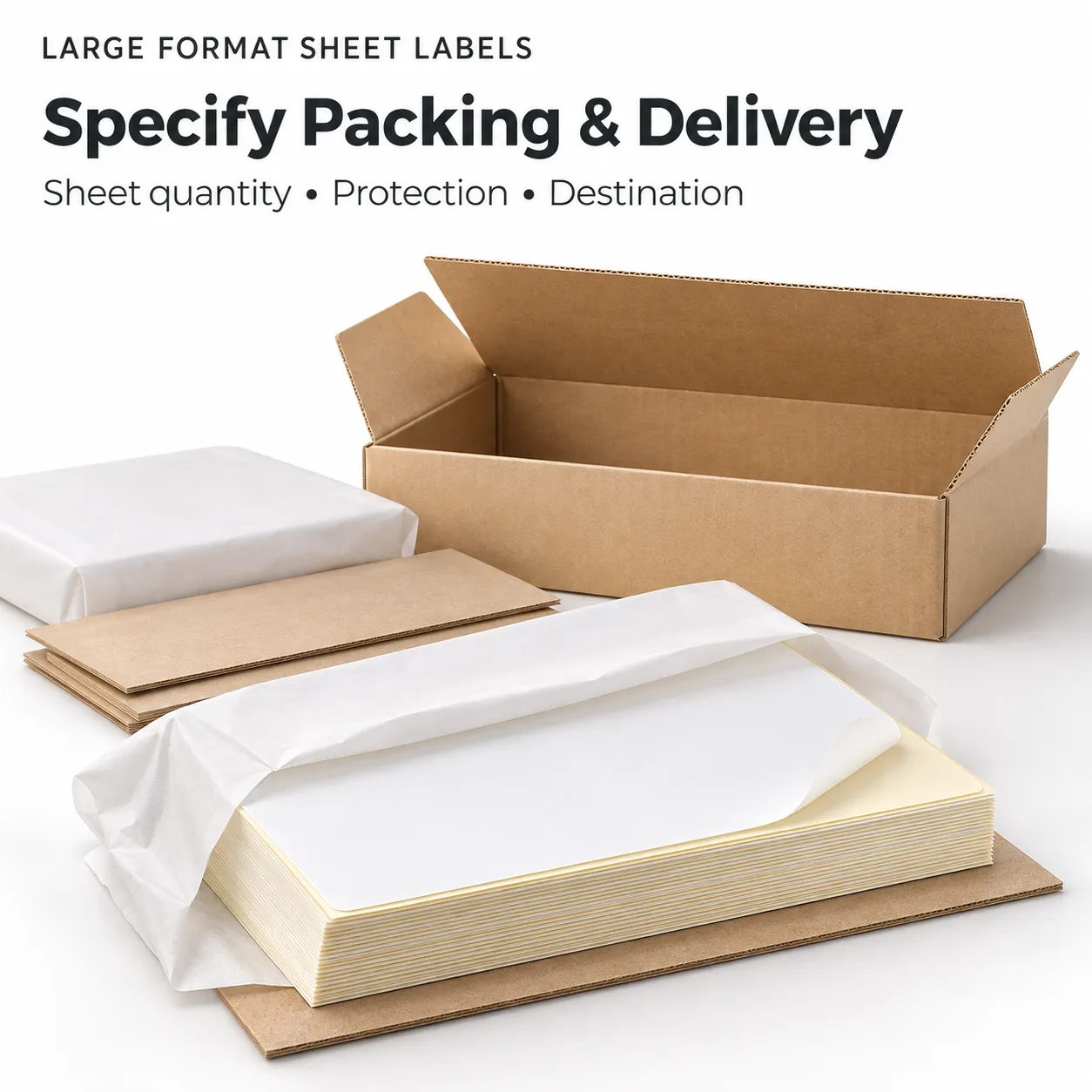
| Packing and delivery | Sheets per pack, destination and required delivery date |
Final specifications should be agreed for the selected material and sheet format before a production order is placed.
Printing and Converting Compatibility
Printing compatibility depends on the facestock, surface treatment or coating, adhesive, liner and complete material thickness.
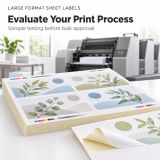
For offset, digital, UV inkjet or water-based inkjet projects, provide your equipment model and ink system so a suitable construction can be evaluated. A material selected for one printing process should not be assumed suitable for another.
For cutting and die-cutting, also confirm sheet orientation, cutting layout and liner requirements. Trial the proposed material through the actual production process before approving bulk supply.
Flatness and Feeding: What Should Buyers Check?
Sheet flatness affects stacking, feeding, print handling and cutting. For large format projects, assess the complete material construction at the intended sheet dimensions.
During sample evaluation, check:
-
Curl and stack condition after unpacking and conditioning.
-
Feeding behavior on the intended press or printer.
-
Print quality, ink adhesion and registration.
-
Cutting accuracy and liner integrity.
-
Label release, application and edge lifting on the actual substrate.
Agree the acceptance conditions with the supplier so the sample result can serve as a reference for production approval.
Large Format Sheet Labels Related Products
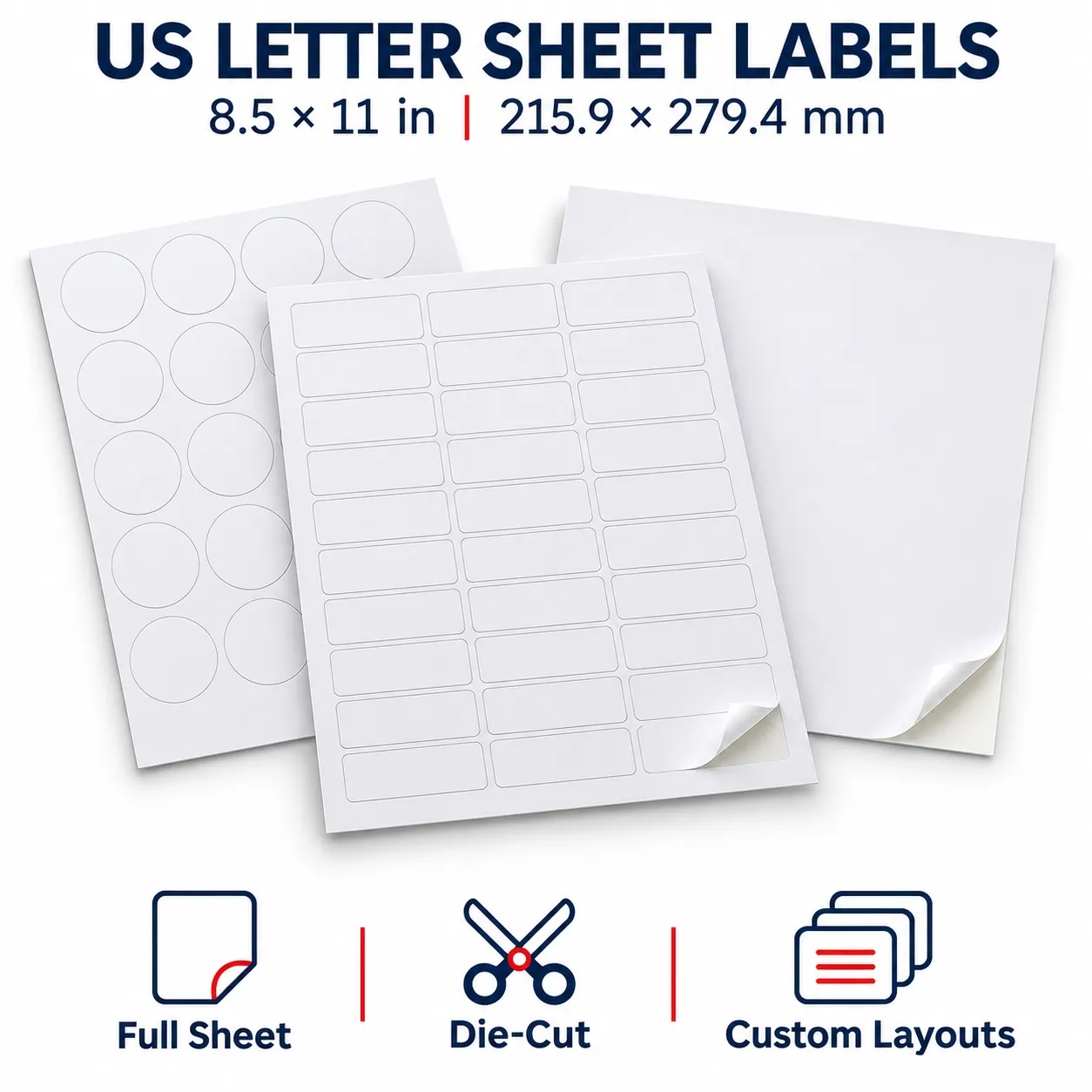
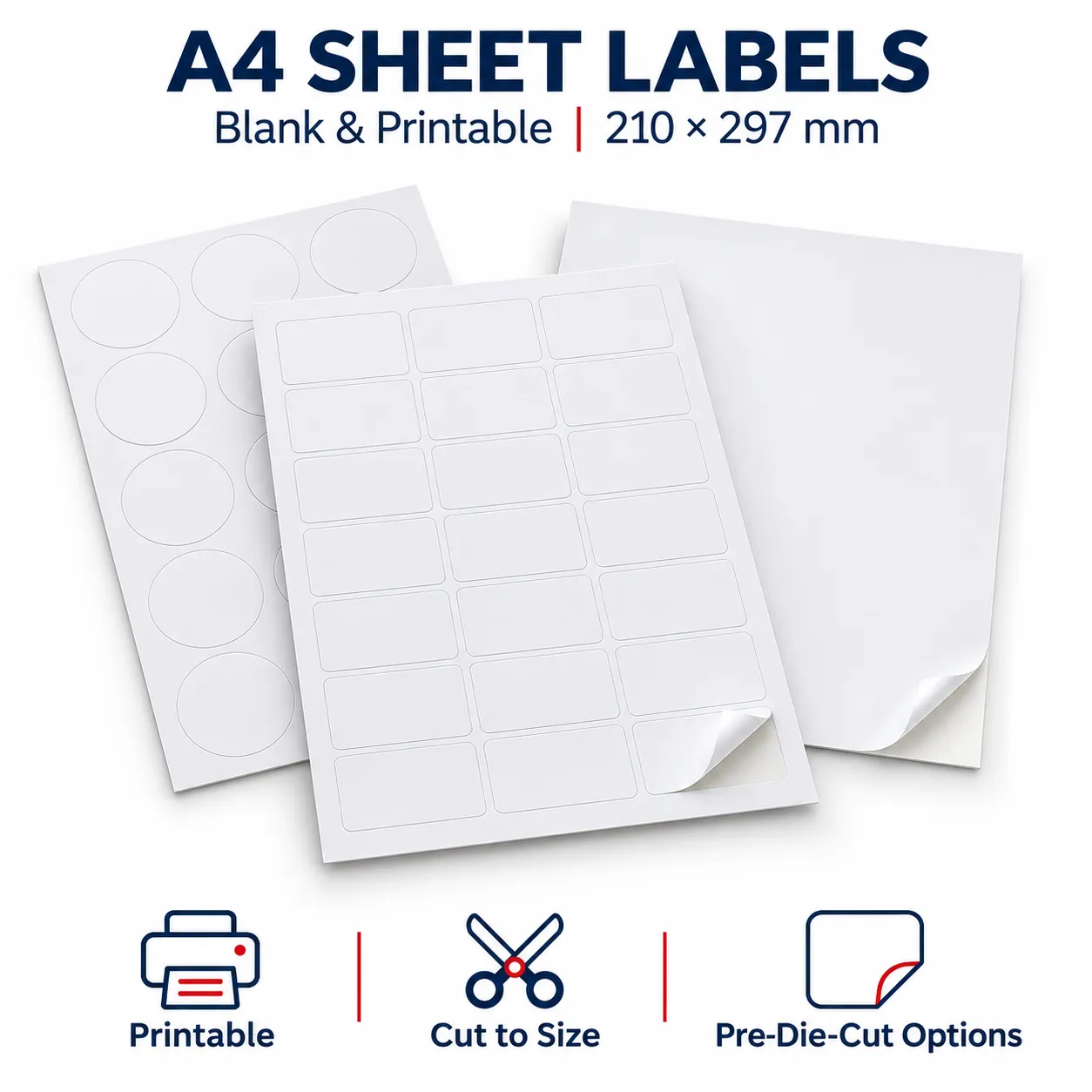
Large Format Sheet Labels FAQ
How are large format sheet labels different from A4 sheet labels?
What sheet sizes can I order?
Are large format sheet labels waterproof?
Can I request a sample before bulk ordering?
What is the minimum order quantity, and how do I get a price?
How long will production and delivery take?
Request Sheet Labels Samples or a Quote
Related Articles
View More