


What Is Thermal Paper? How It Works, Common Uses, and Buying Guide



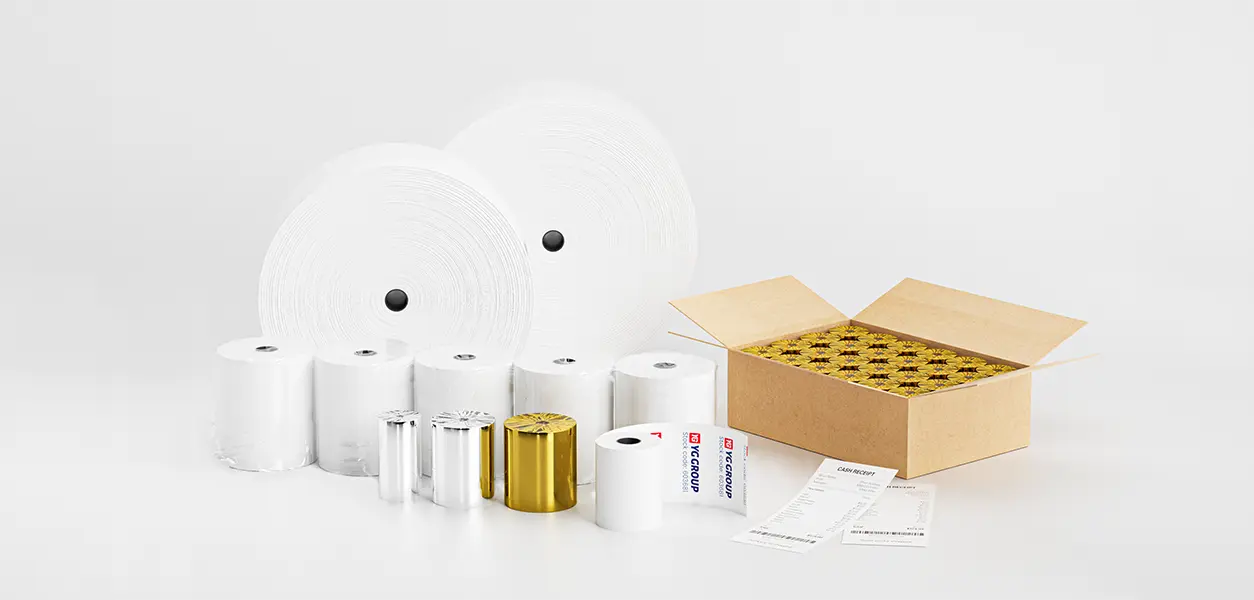
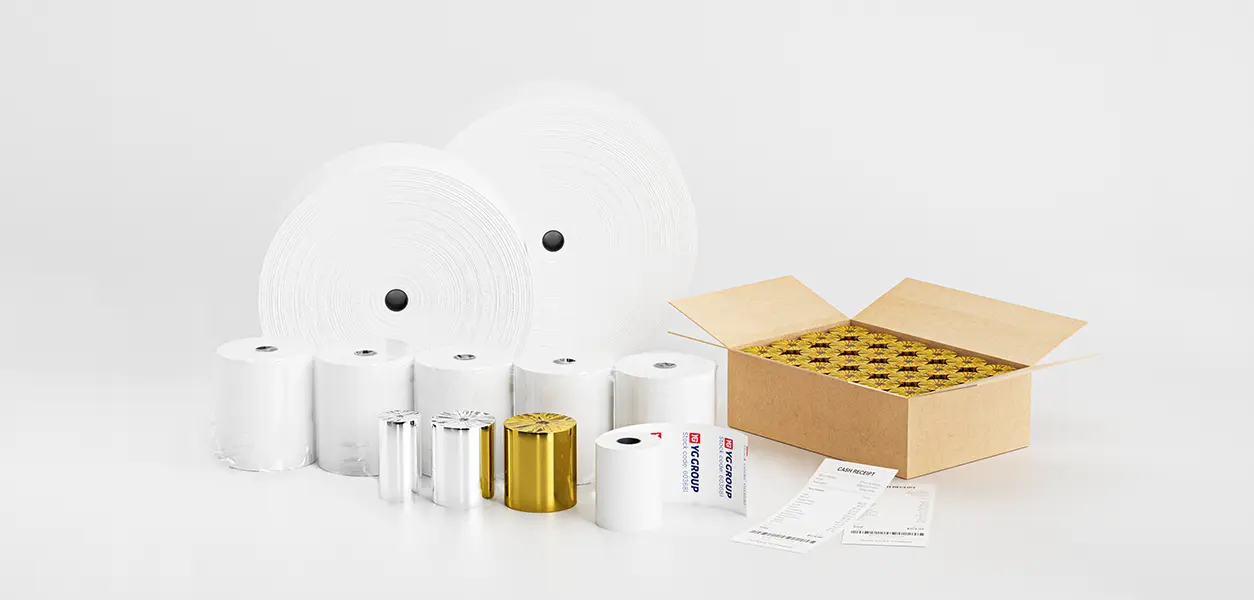
Thermal paper is widely used in retail, logistics, food service, healthcare, and commercial labeling because it supports fast, clean, and efficient printing. From supermarket receipts to barcode labels, it remains one of the most practical materials for high-volume printing applications.
But what is thermal paper exactly, how does it work, and what should buyers evaluate before sourcing it in bulk?
This guide explains what thermal paper is, how thermal printing works, where thermal paper is used, and how to choose the right material and supplier for commercial applications.
Watch: How Thermal Paper Works
Want a quicker overview first? Watch our short video to see how thermal paper is used in real production and commercial applications.
Watch the full video on YouTube: Thermal Ppaper
What Is Thermal Paper?
Thermal paper is a special heat-sensitive paper coated with a chemical layer that reacts when exposed to heat. When the paper passes through a direct thermal printer, the printhead applies heat to selected areas, and those areas turn dark to form text, numbers, barcodes, or images.
Unlike traditional printing methods, direct thermal printing does not require ink, toner, or ribbon. This makes thermal paper a practical choice for businesses that need fast output, simple printer maintenance, and consistent print clarity.
Thermal paper is commonly used for:
- POS receipts
- shipping labels
- barcode labels
- weighing labels
- queue tickets
- medical and pharmacy labels
How Does Thermal Paper Work?
The working principle of thermal paper is simple: heat activates the coating.
A thermal printhead generates heat in a precise pattern. The heat-sensitive coating on the paper reacts instantly, creating the printed content. Because the image is formed through heat rather than ink transfer, the printing process is clean, efficient, and easy to manage.
For many commercial users, this means:
- faster printing speed
- lower daily maintenance
- reduced consumable use
- more stable workflow in high-volume environments
This is why thermal paper is widely used in supermarkets, logistics centers, convenience stores, restaurants, and healthcare systems.
Common Uses of Thermal Paper
Thermal paper is used across many industries because it helps businesses improve printing efficiency, readability, and operational speed.
Retail Receipts
One of the most common applications of thermal paper is cash register and POS receipts. In busy checkout environments, thermal paper supports quick output and clear printing.
Logistics and Shipping Labels
Thermal materials are also widely used for shipping labels, barcode tracking, warehouse labels, and inventory management.
Food and Beverage Labeling
In food service and retail packaging, thermal materials are often used for weighing labels, shelf labels, takeaway labels, and internal tracking labels.
Healthcare and Pharmacy
Hospitals, labs, and pharmacies use thermal materials for patient identification, sample tracking, and prescription labeling.
Banking and Ticketing
Thermal paper is also commonly used for ATM receipts, transaction records, queue tickets, and service slips.
Key Advantages of Thermal Paper
For many businesses, thermal paper is not just a printing material. It is also a way to improve daily efficiency and operating convenience.
No Ink or Toner Required
Direct thermal printing does not rely on ink or toner, which helps simplify printer management and reduce consumable-related maintenance.
Fast Printing Speed
Thermal paper supports rapid printing, making it suitable for environments with frequent transactions or large print volumes.
Clear Print Quality
When matched with the right printer and application, thermal paper can deliver sharp text, clear barcodes, and readable images.
Lower Maintenance
Because the printing method is relatively simple, businesses often benefit from less downtime and easier operation.
Cost Efficiency for Suitable Applications
For many short- to medium-term uses, thermal paper can be a cost-effective printing solution.
Thermal Paper vs. Thermal Transfer: What Is the Difference?
Many buyers confuse thermal paper with thermal transfer materials, but they are not the same.
Thermal Paper
Thermal paper is used in direct thermal printing. The paper itself has a heat-sensitive coating, so no ribbon is needed.
Thermal Transfer Materials
Thermal transfer printing uses a ribbon. Heat from the printhead transfers ink from the ribbon onto the label surface.
Which One Should Buyers Choose?
In general:
- choose thermal paper for receipts, short-cycle labels, and fast daily printing
- choose thermal transfer materials when longer image durability or stronger resistance is required
For buyers, the right option depends on storage time, application environment, handling conditions, and printer compatibility.
Types of Thermal Paper Buyers Should Know
Not all thermal paper products perform the same. Different grades are designed for different usage conditions.
Top Coated Thermal Paper
This type offers better resistance to moisture, oil, scratching, and handling, making it more suitable for applications that require stronger print durability.
Economy Top Thermal Paper
This option provides a balance between surface protection and cost control. It is often selected for commercial applications that need moderate performance at a competitive price.
Economy Thermal Paper
Economy thermal paper is usually used in short-term and cost-sensitive applications where basic print performance is sufficient.
Thermal Synthetic Paper
For more demanding environments, thermal synthetic materials can offer better tear resistance and stronger resistance to water, oil, and surface damage.
What to Check Before Buying Thermal Paper in Bulk
For distributors, importers, brand owners, and OEM buyers, the real buying standard should not be price alone. It should be application fit, product consistency, and supply reliability.
Application Type
First, confirm whether the material will be used for receipts, shipping labels, barcode labels, food labels, or industrial labeling.
Required Durability
Ask how long the print needs to remain readable and whether the material will face friction, moisture, oil, or frequent handling.
Printer Compatibility
Before ordering, buyers should check roll width, roll length, core size, face stock, and printer requirements.
Surface Resistance
In some markets, resistance to smudging, scratching, oil, or water is an important buying factor.
Customization Needs
Many buyers need custom roll dimensions, private label packaging, back printing, or die-cut formats.
Supplier Stability
A qualified supplier should be able to provide stable quality, sample support, export experience, and scalable production capacity.
Why Supplier Selection Matters
When thermal paper is sourced for large-volume commercial use, consistency matters as much as performance.
A stable supplier can help buyers reduce quality variation, avoid supply disruption, and improve long-term procurement planning. This is especially important for private label projects, wholesale distribution, OEM supply, and export business.
If your market requires customized thermal paper rolls or labels, supplier capability becomes even more important. Production flexibility, coating consistency, converting accuracy, and packaging support all affect final delivery quality.
Custom Thermal Paper Solutions for B2B Buyers
For many B2B buyers, standard products are not enough. Different markets often require different specifications, packaging methods, and application performance.
Custom thermal paper solutions may include:
- custom roll width and length
- different core sizes
- private label packaging
- back printing
- die-cut label formats
- bulk export packaging
For wholesalers and brand owners, customization helps improve product-market fit, purchasing efficiency, and brand consistency.
Final Thoughts
Thermal paper remains an essential material for modern printing because it combines speed, simplicity, and practical cost efficiency. From supermarket receipts to logistics labels, it supports a wide range of commercial applications.
However, choosing the right thermal paper is not only about finding a lower price. Buyers should evaluate application fit, print durability, product consistency, and supplier capability before making a purchasing decision.
If you are sourcing thermal paper rolls or thermal labels for wholesale, OEM, or export business, it is worth comparing product grades, testing samples, and working with a supplier that can support both quality stability and scalable delivery.
FAQ
What is thermal paper used for?
Thermal paper is commonly used for POS receipts, shipping labels, barcode labels, queue tickets, and medical labels.
How does thermal paper work?
Thermal paper works through a heat-sensitive coating. When heat from the printhead touches the paper, the coated area changes color and forms the printed content.
Is thermal paper the same as thermal transfer paper?
No. Thermal paper is used in direct thermal printing and does not require a ribbon. Thermal transfer printing uses a ribbon to transfer ink onto the material.
What is the difference between top coated and economy thermal paper?
Top coated thermal paper generally offers better resistance to moisture, oil, and scratching, while economy thermal paper is more suitable for short-term and cost-sensitive applications.
How should buyers choose thermal paper?
Buyers should evaluate application type, durability requirement, printer compatibility, customization needs, and supplier consistency before purchasing.