Receipt Paper: Types, Uses, Sizes & Buying Guide


Receipt paper is used in retail stores, restaurants and payment systems every day.
However, not every receipt paper roll fits every printer.
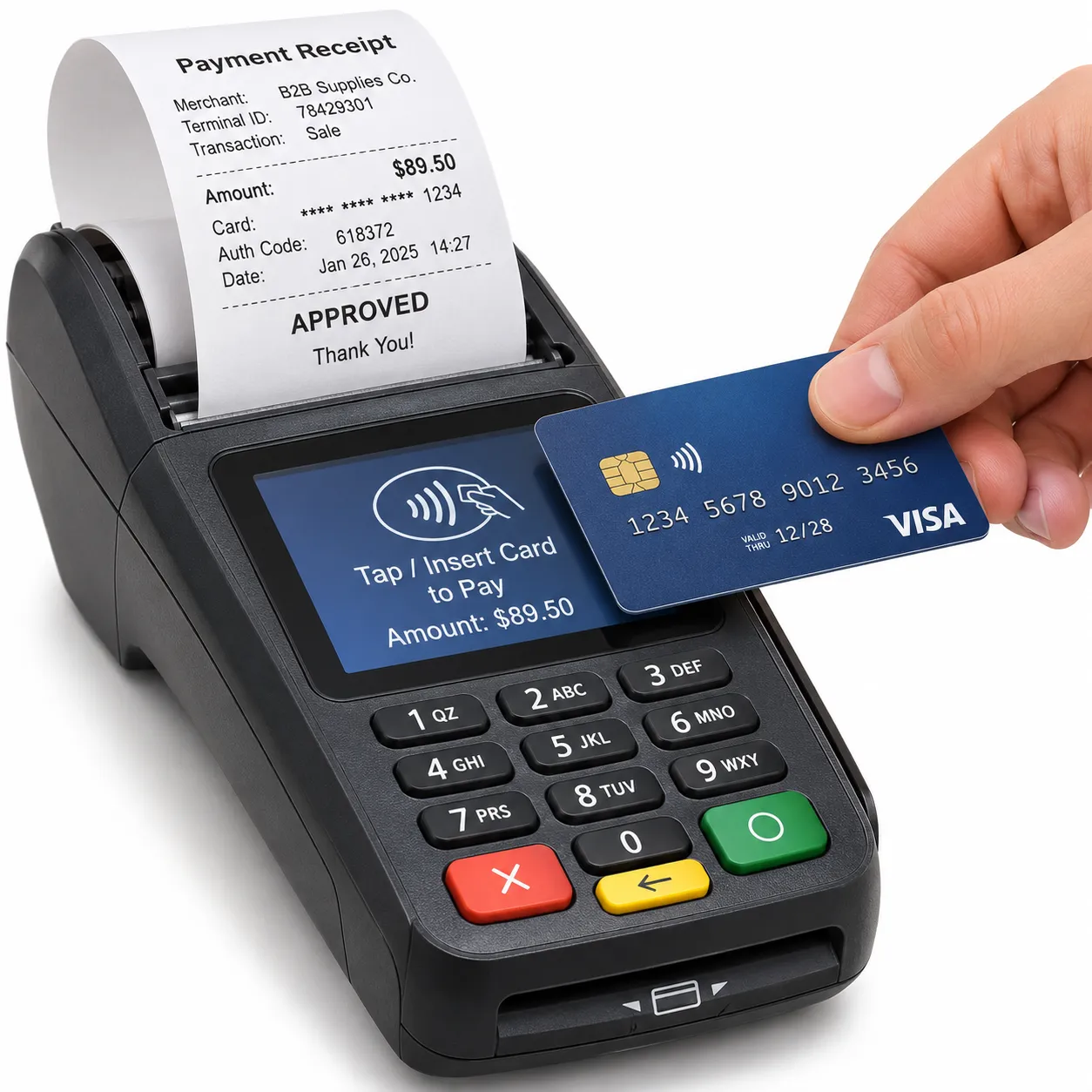
Thermal receipt paper is widely used in modern POS and cash-register systems. It prints through heat, so it does not need ink or ribbons.
Some buyers also need BPA free receipt paper. Others need specific roll sizes, paper weights or chemical requirements.
So, how do you choose the right receipt paper ?
Start with:
Printer → Paper Type → Width → Roll Diameter → Core → Paper Grade
This guide explains receipt paper types, common sizes and key buying factors.
Quick Answer: How Do You Choose the Right Receipt Paper?
The right receipt paper depends on your printer and application.
Before ordering, check these key specifications:
- Paper type: Thermal or non-thermal
- Paper width: Commonly 57 mm or 80 mm
- Roll diameter: Must fit the printer
- Core size: Must match the printer holder
- Paper grammage: Select according to printer and roll requirements
- Paper grade: Standard, BPA-free or other specified grades
Common receipt paper roll sizes include 57 × 40 mm, 57 × 50 mm, 80 × 70 mm and 80 × 80 mm.
Always confirm the printer specifications before placing a bulk order.
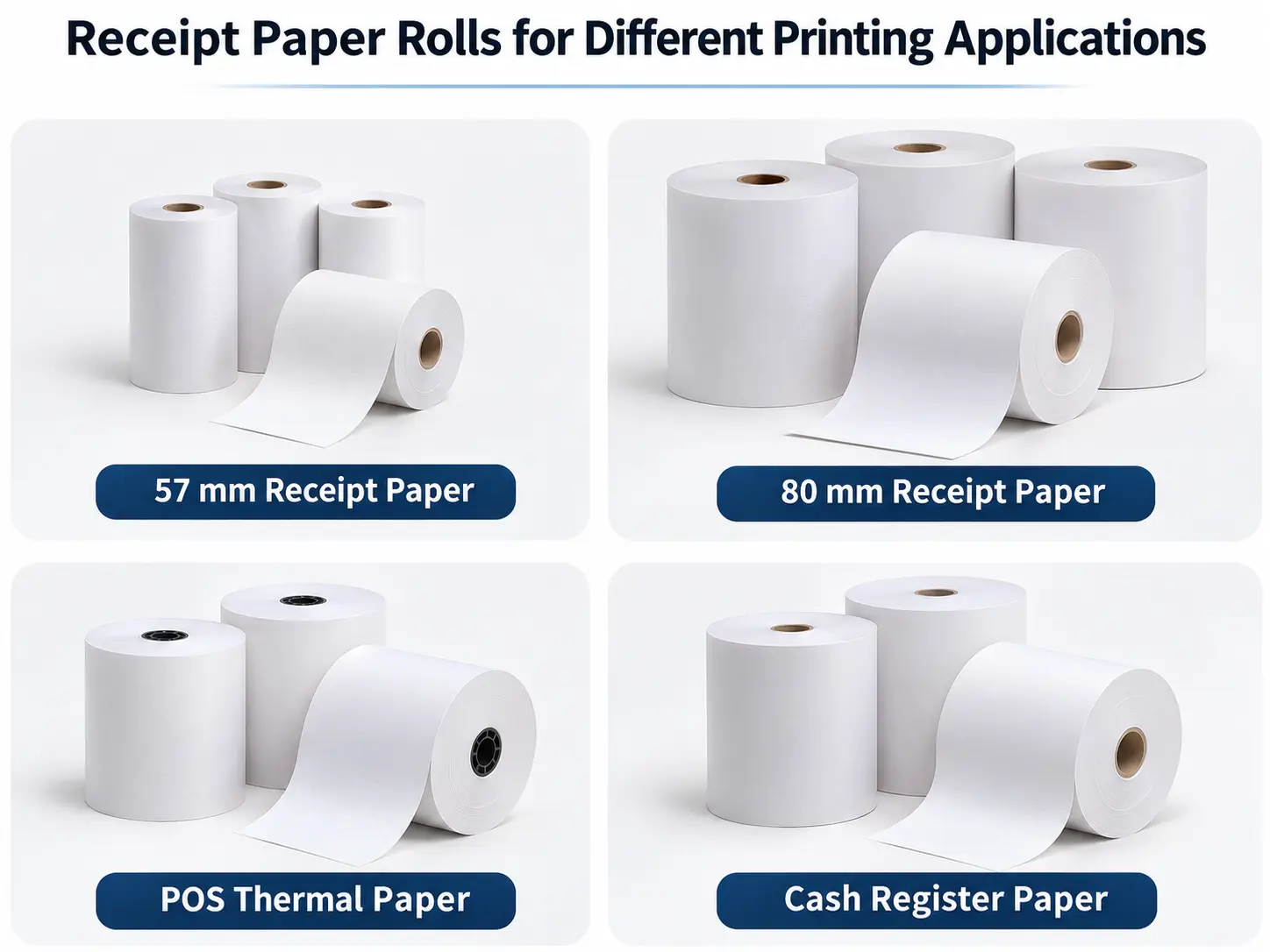
What Is Receipt Paper?
Receipt paper is paper used to print transaction records, payment details and order information.
Common applications include:
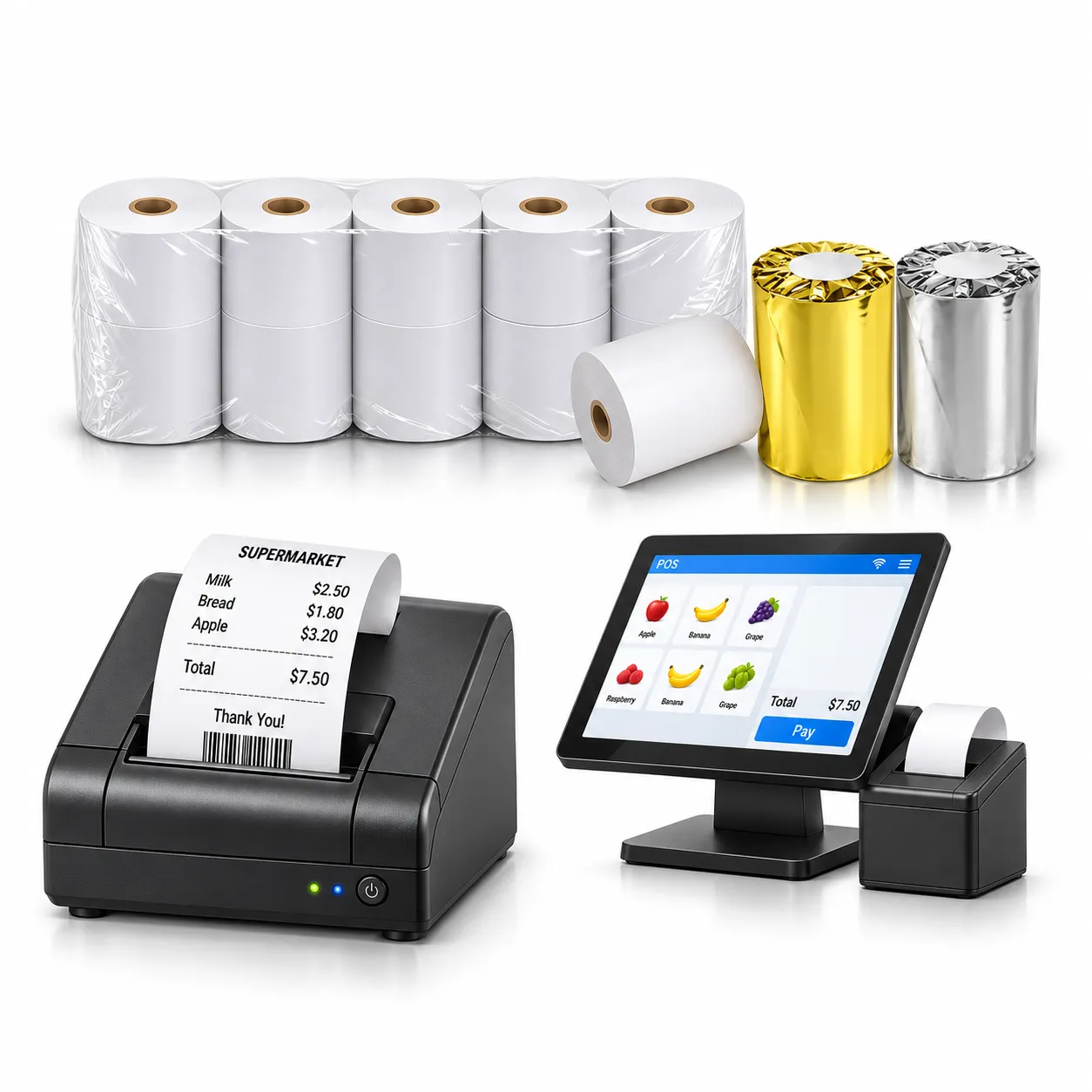
- Retail stores and supermarkets
- Restaurants and food service
- POS systems
- Payment terminals
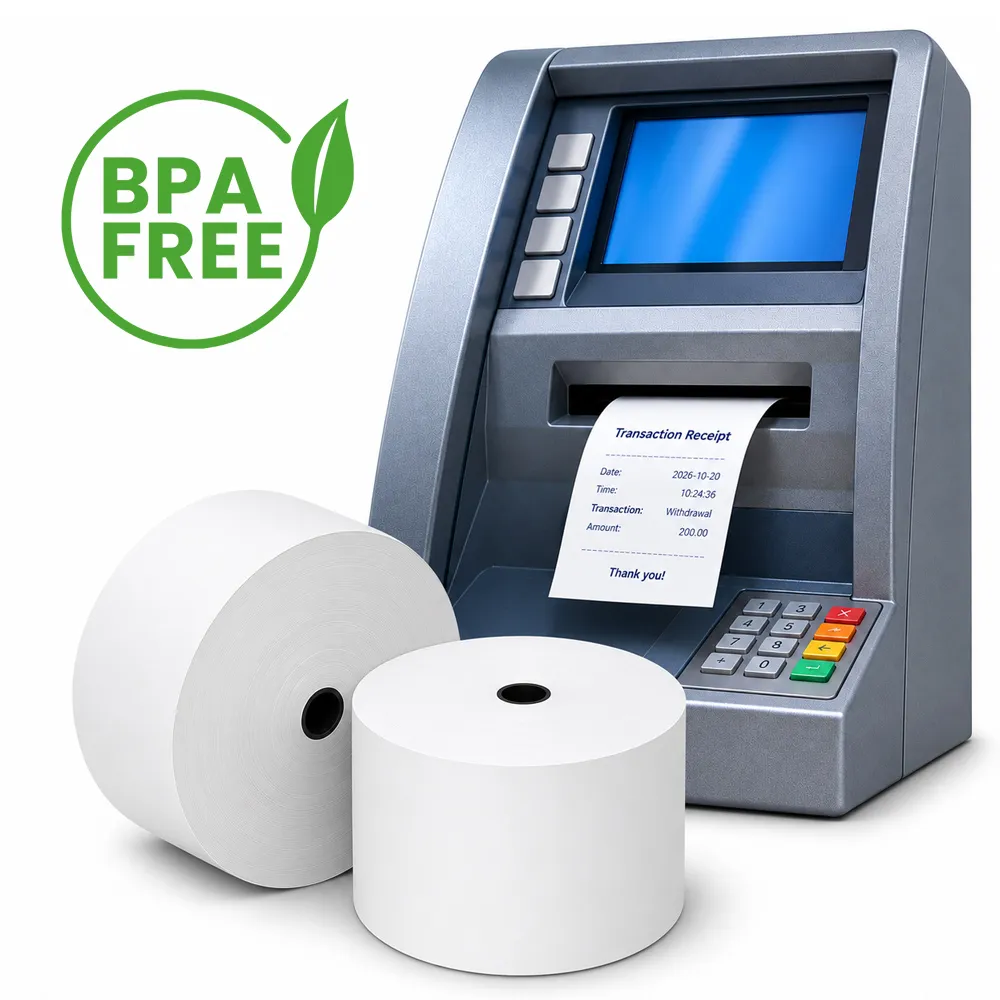
- ATMs
- Self-service kiosks
The term receipt paper covers different paper types and printing systems.
For modern transaction printers, however, thermal receipt paper is widely used.
What Paper Is Used for Receipts?
Most modern POS receipts use direct thermal paper.
Some older or specialized systems use non-thermal paper with ink or impact printing.
Therefore, check the printer technology before selecting the paper.
What Is Thermal Receipt Paper?
Thermal receipt paper has a heat-sensitive coating on its surface.
A thermal print head applies heat to selected areas of the paper.
The coating then changes color and creates the printed image.
The process is simple:
Thermal Print Head → Heat → Text & Images
Because the image comes from heat, direct thermal printing does not need:
- Ink cartridges
- Toner
- Printing ribbons
This makes thermal receipt paper suitable for fast transaction printing.
Common applications include POS machines, cash registers and compatible thermal printers.
Thermal Receipt Paper vs. Bond Paper
Thermal receipt paper and bond paper use different printing methods.
| Feature | Thermal Receipt Paper | Bond Paper |
|---|---|---|
| Printing Method | Heat | Ink or impact printing |
| Thermal Coating | Yes | No |
| Ink / Ribbon | Not required | May be required |
| Typical Equipment | Thermal printers | Non-thermal printers |
| Common Uses | POS, receipts, terminals | Selected legacy systems |
Thermal receipt paper is not a universal replacement for bond paper.
Always match the paper with the printer mechanism.
What Are the Common Receipt Paper Sizes?
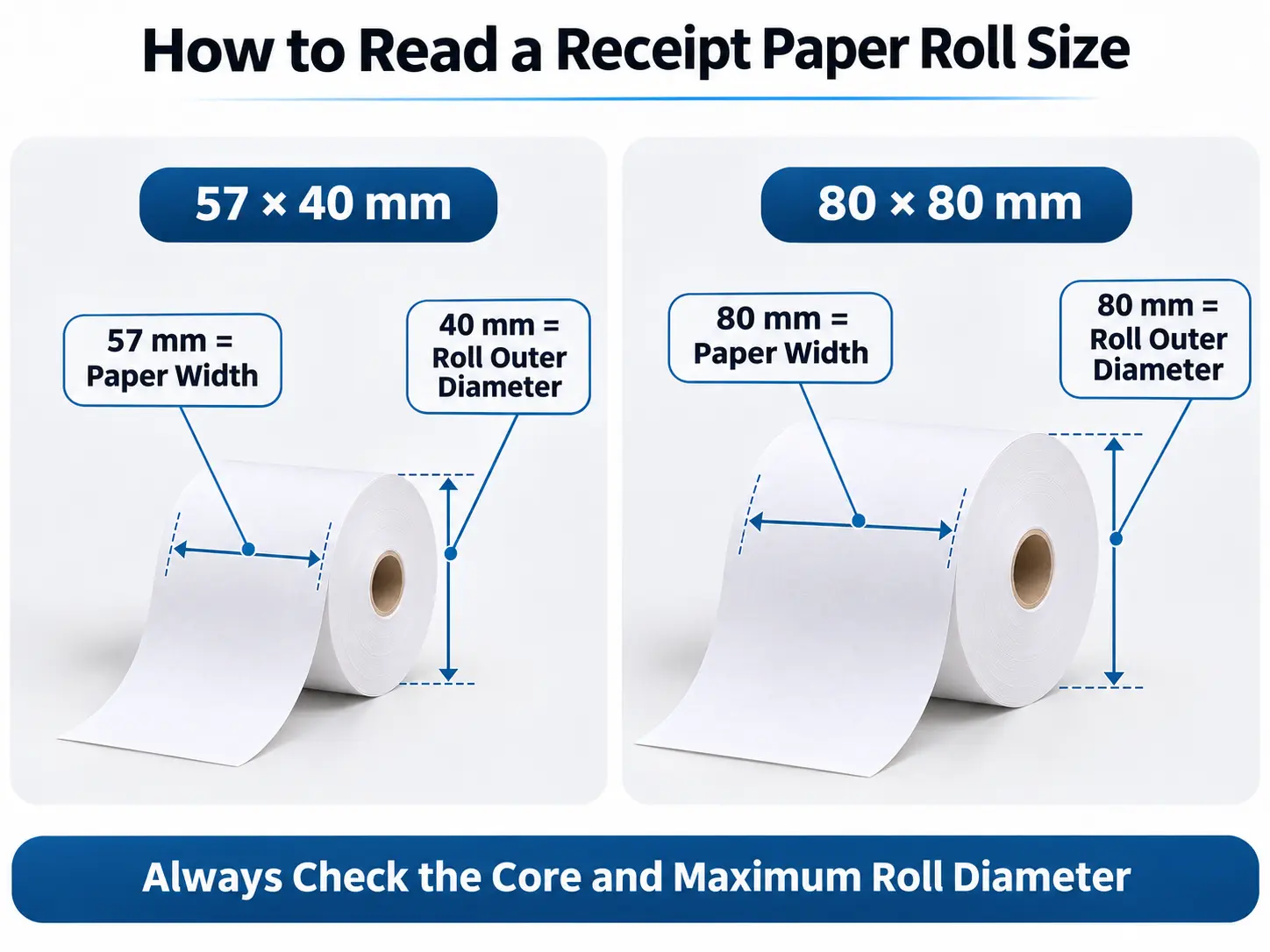
Receipt paper size is usually written as:
Paper Width × Roll Outer Diameter
For example:
80 × 80 mm
means:
- 80 mm paper width
- 80 mm roll outer diameter
Common widths include:
- 57 mm
- 80 mm
Common finished-roll sizes include:
- 57 × 40 mm
- 57 × 50 mm
- 80 × 70 mm
- 80 × 80 mm
However, these sizes are not universal.
The correct size depends on the printer.
What Else Should You Check?
Do not check paper width alone.
Also confirm:
- Roll outer diameter
- Core inner diameter
- Core outer diameter
- Paper grammage
- Maximum roll capacity
A roll can have the correct width but still fail to fit the printer.
What Paper Weight Is Used for Receipt Paper?
Thermal receipt paper comes in different paper weights.
YG Group offers thermal receipt paper options from 48 gsm to 80 gsm.
Available grades include 48, 50, 55, 58, 60, 65, 70 and 80 gsm.
The right paper weight depends on:
- Printer requirements
- Roll size
- Paper thickness
- Roll capacity
- Application requirements
- Market requirements
A heavier paper is not automatically better.
For compact printers, paper thickness can affect the amount of paper the printer can hold.
Therefore, confirm grammage together with the roll dimensions.
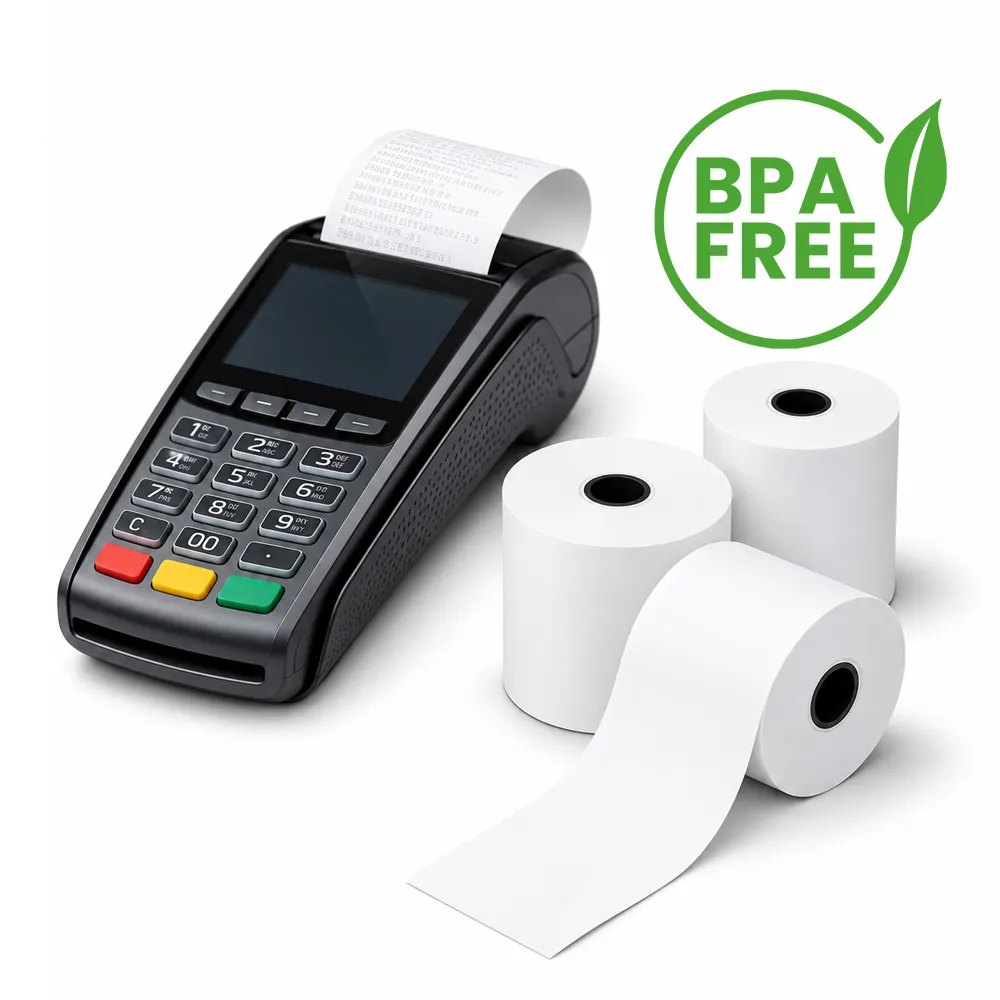
What Is BPA-Free Receipt Paper?
BPA free receipt paper is thermal paper formulated without BPA in the specified thermal coating.
BPA, or Bisphenol A, has been used in some thermal paper formulations.
Some buyers now specify BPA-free paper because of customer requirements, purchasing policies or market requirements.
However, an important distinction is:
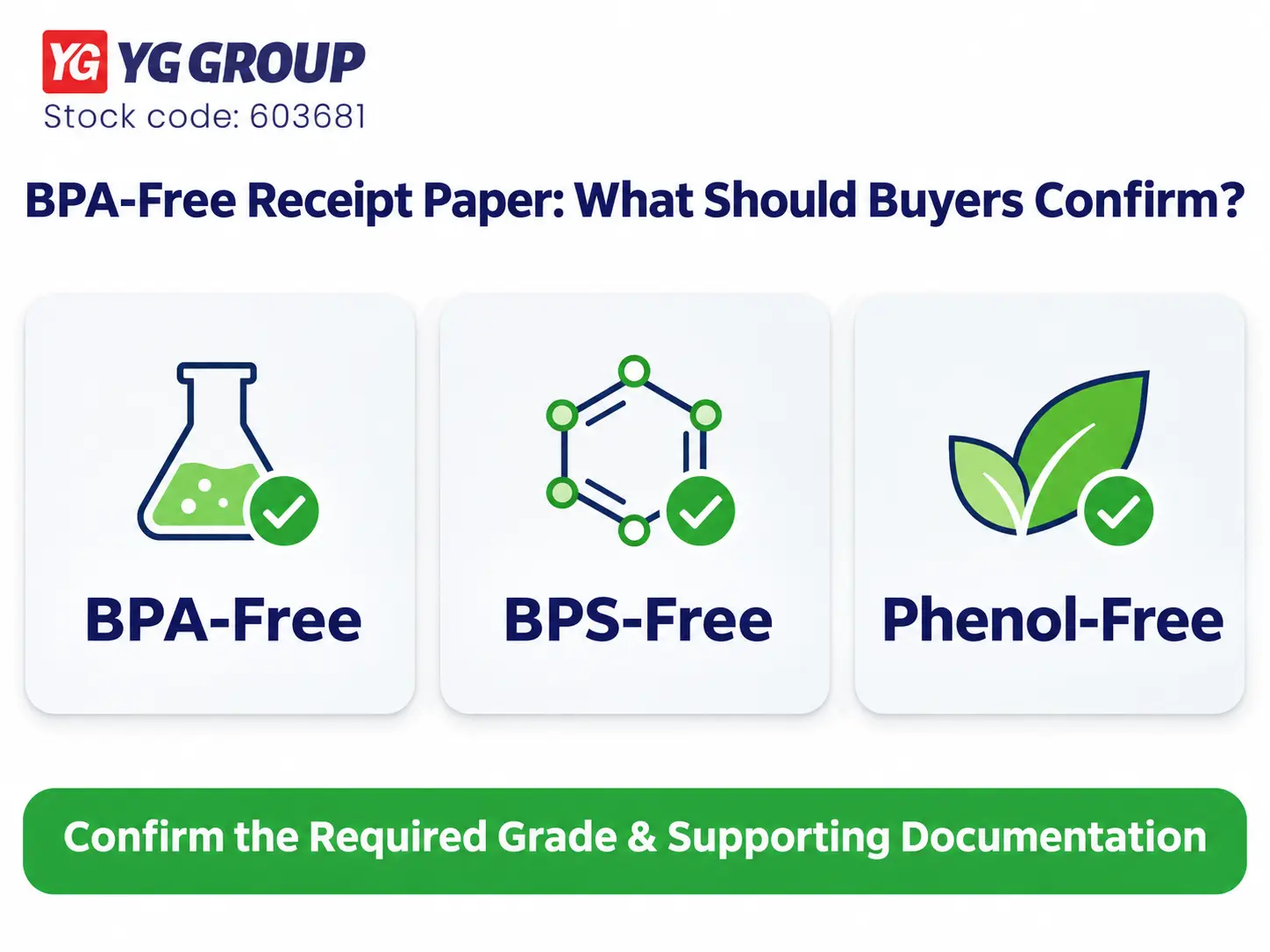
BPA-Free does not automatically mean BPS-Free or Phenol-Free.
These are different chemical requirements.
Therefore, buyers should specify the required grade when requesting a quotation.
BPA-Free vs. BPS-Free vs. Phenol-Free
| Requirement | Meaning |
|---|---|
| BPA-Free | Specified without BPA |
| BPS-Free | Specified without BPS |
| Phenol-Free | Specified without phenolic developers within the defined scope |
Do not treat these terms as interchangeable.
For B2B purchasing, confirm the selected grade and supporting documents.
You may need:
- Chemical declaration
- Test report
- Test method
- Detection limit, where applicable
- Destination-market requirements
If your project requires a specific chemical standard, confirm it before bulk production.
Where Is Thermal Receipt Paper Used?
Thermal receipt paper supports many transaction-printing applications.
However, each printer may require a different roll specification.
1. POS and Cash Registers
Retail stores and supermarkets use receipt paper for transaction records.
Key factors include:
- Paper width
- Roll diameter
- Core size
- Paper grade
2. Payment Terminals
Payment terminals often use compact receipt paper rolls.
Check the printer model and roll dimensions before ordering.
3. Restaurants
Restaurants use thermal paper for receipts and order records.
Printer compatibility and daily printing volume are important.
4. ATMs
ATM printers may require larger rolls or specific configurations.
Some systems also require black sense marks or specific winding requirements.
5. Self-Service Kiosks
Kiosks print receipts, tickets and transaction records.
Roll capacity matters because frequent replacement can affect machine operation.
How to Choose the Right Receipt Paper
Follow these five steps before purchasing.
1. Check the Printer Model
Start with the printer brand and model.
This helps identify the required paper type and dimensions.
2. Confirm the Roll Dimensions
Check:
- Paper width
- Roll outer diameter
- Core size
Do not select a roll based only on width.
3. Choose the Paper Grade
Depending on the application, you may need:
- Standard thermal paper
- BPA-free thermal paper
- Long-life thermal paper
- Other specified thermal grades
Availability depends on the selected specification.
4. Confirm Special Requirements
Check whether you need:
- Red end-of-roll warning line
- Reverse-side printing
- Custom logo
- Private-label packaging
- Custom core
- Custom roll dimensions
5. Test Before Bulk Ordering
Request samples for new specifications.
Check:
Feeding → Printing → Cutting → Sensor Detection → Roll Fit
Sample testing helps reduce compatibility problems before mass production.
What Should Buyers Provide When Requesting a Quote?
A clear specification helps suppliers recommend the right receipt paper.
Provide:
- Printer brand and model
- Paper width
- Roll diameter
- Core size
- Paper grammage
- Paper grade
- BPA / BPS requirements
- Printing requirements
- Packaging requirements
- Estimated quantity
If available, also provide:
Existing Roll + Printer Photo
This gives the supplier a better basis for product matching.
Receipt Paper Supply from YG Group
YG Group supplies thermal receipt paper for retail, POS, restaurant and other transaction-printing applications.
The receipt paper range includes:
- Thermal Receipt Paper Rolls
- POS Thermal Paper
- Cash Register Thermal Paper
- ATM Thermal Paper
- Credit Card Terminal Thermal Paper
- Restaurant Kitchen Order Paper
- Kiosk Thermal Paper
YG Group offers common 57 mm and 80 mm widths.
Standard finished-roll sizes include:
- 57 × 40 mm
- 57 × 50 mm
- 80 × 70 mm
- 80 × 80 mm
Paper options range from 48 gsm to 80 gsm.
Custom roll dimensions and core configurations can also be evaluated according to printer requirements.
Finished Rolls and Jumbo Rolls
YG Group supplies both finished thermal paper rolls and thermal paper jumbo rolls.
Jumbo rolls can support customers who need further slitting and converting.
This provides an additional sourcing option for distributors and converters.
Custom Printing and Packaging
For branded receipt solutions, available options include:
- Company logo printing
- Advertising messages
- Reverse-side printing
- Custom packaging
- Private-label packaging
For large-volume projects, buyers can provide an existing roll or printer model.
YG Group can then evaluate the required roll dimensions, core, grammage and other specifications before bulk production.
Explore the YG Group Receipt Paper range to compare application-specific products.
Receipt Paper vs. POS Thermal Paper
Receipt paper is a broad product category.
POS thermal paper is a more specific application.
| Term | Main Meaning |
|---|---|
| Receipt Paper | Broad category for transaction printing |
| Thermal Receipt Paper | Direct thermal paper for receipts |
| POS Thermal Paper | Thermal paper designed for POS systems |
| ATM Thermal Paper | Thermal paper designed for ATM printers |
| Kiosk Thermal Paper | Thermal paper designed for self-service equipment |
This distinction is useful when searching for or purchasing the right product.
A buyer should specify both the application and the printer requirements.
Frequently Asked Questions About Receipt Paper
What is receipt paper?
Receipt paper is used to print transaction records, payment information and order details.
Thermal receipt paper is widely used in modern POS and receipt printers.
Is all receipt paper thermal paper?
No.
Receipt paper can be used with different printing systems.
The correct choice depends on the printer mechanism.
What is thermal receipt paper?
Thermal receipt paper has a heat-sensitive coating.
A thermal print head creates the image through heat, so ink and ribbons are not required.
What size receipt paper do I need?
Check the printer model, paper width, roll diameter and core size.
57 mm and 80 mm are common widths, but the exact specification depends on the printer.
What is BPA-free receipt paper?
BPA-free receipt paper is thermal paper formulated without BPA in the specified thermal coating.
BPA-free does not automatically mean BPS-free or phenol-free.
Does BPA-free mean BPS-free?
No.
BPA and BPS are different chemical requirements.
If both matter for your project, specify both requirements.
Can receipt paper be customized?
Yes.
Depending on the specification, customization may include:
- Roll size
- Core
- Grammage
- Warning line
- Reverse-side printing
- Logo
- Packaging
- Private-label packaging
Can thermal paper be supplied in jumbo rolls?
Yes.
YG Group supplies thermal paper jumbo rolls for customers who require further slitting and converting.
How to Choose the Right Receipt Paper
The right receipt paper depends on the printer, application and purchasing requirements.
Before ordering, confirm:
Printer → Paper Type → Width → Diameter → Core → Paper Grade → Quantity
For most B2B buyers, sample testing should come before bulk production.
Whether you need standard receipt paper, custom rolls or branded packaging, clear specifications help reduce compatibility problems.
Request a Sample | Get TDS | Request a Quote