How We Test Washi Tape for Clean Removal on Different Surfaces


Does washi tape leave adhesive residue after removal?
It can, depending on the substrate, paint or coating, dwell time, UV exposure and removal conditions.
For masking and painting, tape needs to hold securely during use. It should also remove as cleanly as possible afterward.
YG Group tests washi tape under different surfaces and exposure conditions to evaluate:
Clean Removal + Adhesive Residue + Surface Changes
The evaluation compares:
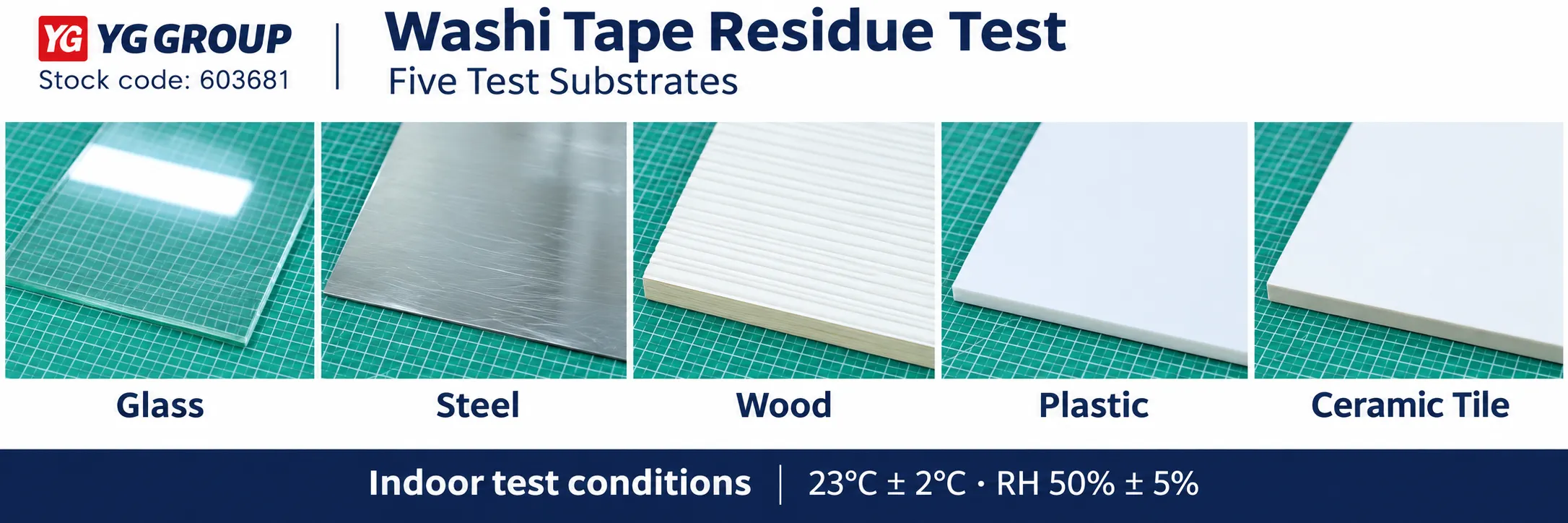
- Five substrate types
- Painted and unpainted groups
- Indoor and outdoor exposure
- A defined dwell time
- Consistent tape application and removal
The goal is to understand how tape removal changes under different application conditions.
Quick Answer: What Affects Washi Tape Residue?
Clean removal does not depend on the tape alone.
| Factor | Why It Matters |
|---|---|
| Substrate | Glass, steel, wood and plastic have different surface properties |
| Paint / Coating | Painting can change the tape-removal condition |
| Dwell Time | Longer contact may change adhesive behavior |
| Indoor / Outdoor Use | UV and weather can affect removal |
| Tape Grade | Indoor and UV-resistant grades suit different conditions |
| Removal Method | Peel angle and speed can affect the result |
Therefore, a tape that removes cleanly from glass may behave differently on wood, plastic or a painted masking application.
For important projects, evaluate the tape under conditions close to the actual use.
Watch the Washi Tape Adhesive Residue Test
This YG Group laboratory video compares clean-removal behavior on:
Glass · Steel · Wood · Plastic · Ceramic Tile
It also compares:
Painted vs. Unpainted
and
Indoor vs. Outdoor Exposure
After the defined dwell time, the tape is removed using a consistent method.
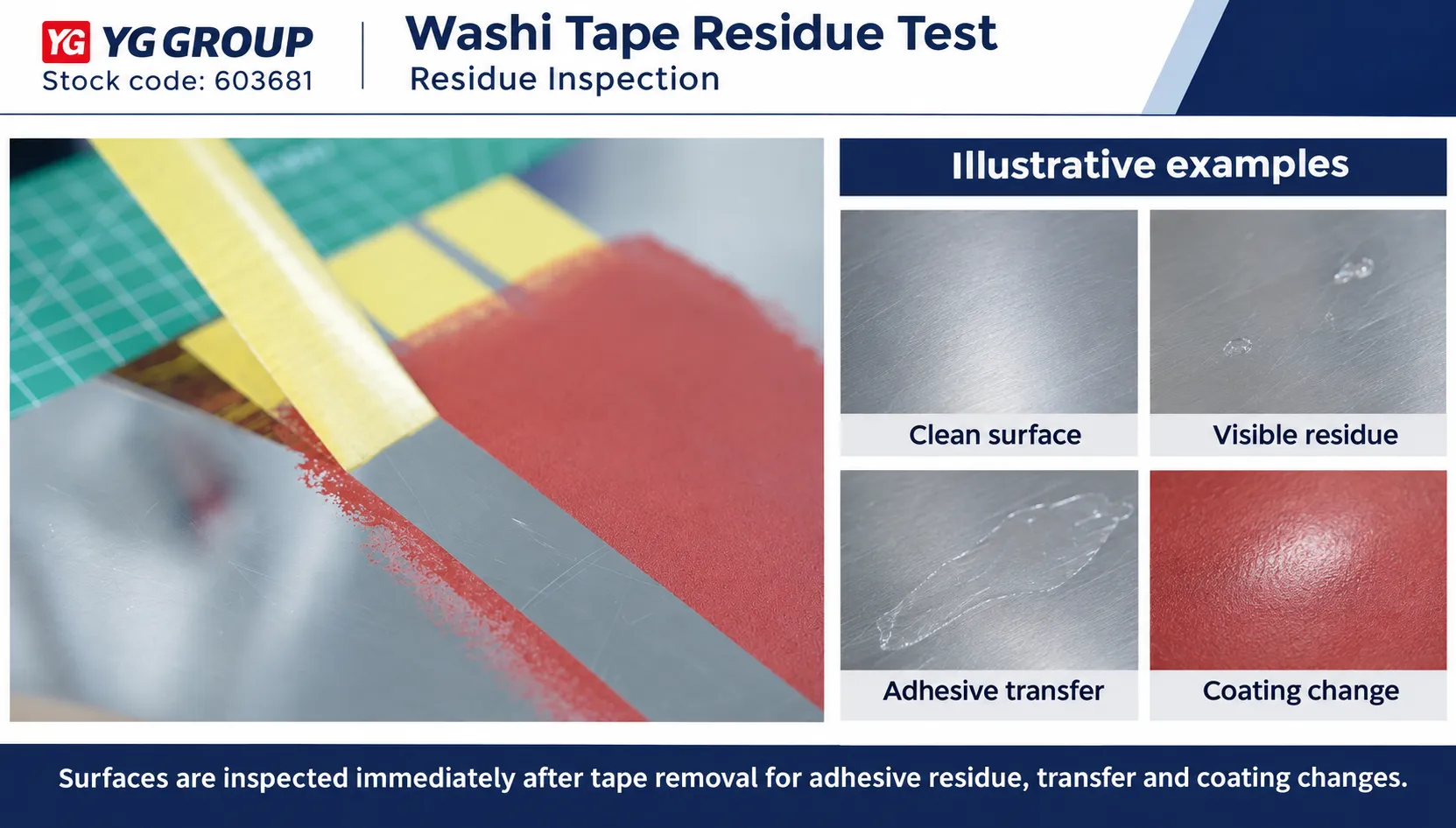
The surfaces are then checked for:
• Visible adhesive residue
• Adhesive transfer
• Surface damage
• Coating changes
How Is the Washi Tape Residue Test Performed?
The complete procedure is shown in the video.
For buyers, the evaluation can be summarized in five steps.
1. Prepare the Surfaces
Clean each substrate to remove visible dust, oil and other contamination.
Allow the surface to dry before applying the tape.
Use a consistent surface-preparation method for comparable samples.
2. Apply the Tape
Cut the tape specimens to a consistent size.
Apply them using the same pressure and method.
Multiple specimens are prepared for each substrate according to the test plan.
This helps make the comparison more consistent.
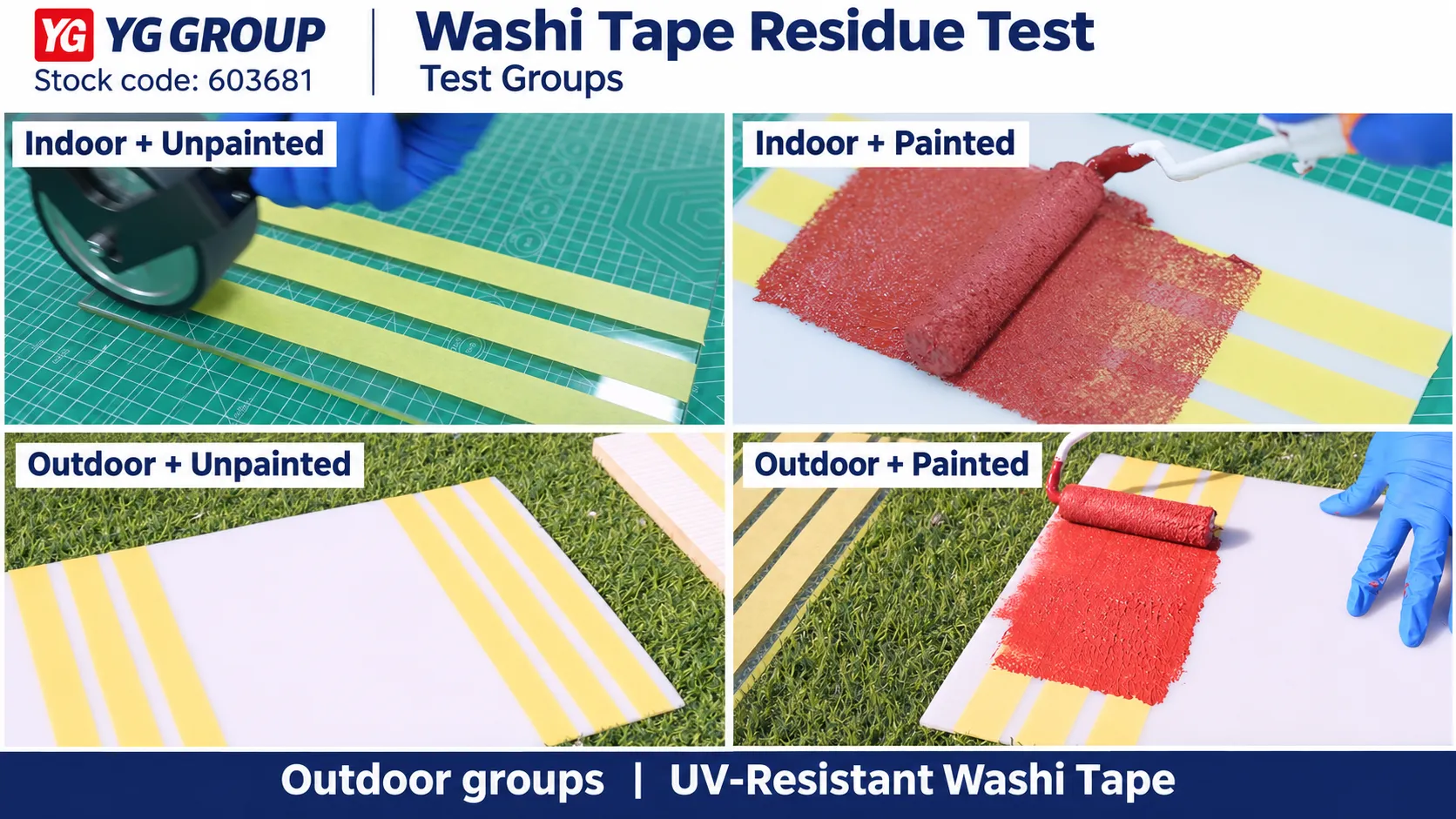
3. Create Painted and Unpainted Groups
After tape application, divide the specimens into two groups.
Unpainted Group: Tape remains on the substrate without additional painting.
Painted Group: Paint is applied according to the defined masking process after tape application.
For the painted group, record:
- Paint type
- Application method
- Drying conditions
This comparison helps evaluate tape removal after a painting or masking process.
4. Expose Samples Indoors and Outdoors
Place the specimens according to the test plan.
For indoor evaluation, maintain the defined laboratory environment.
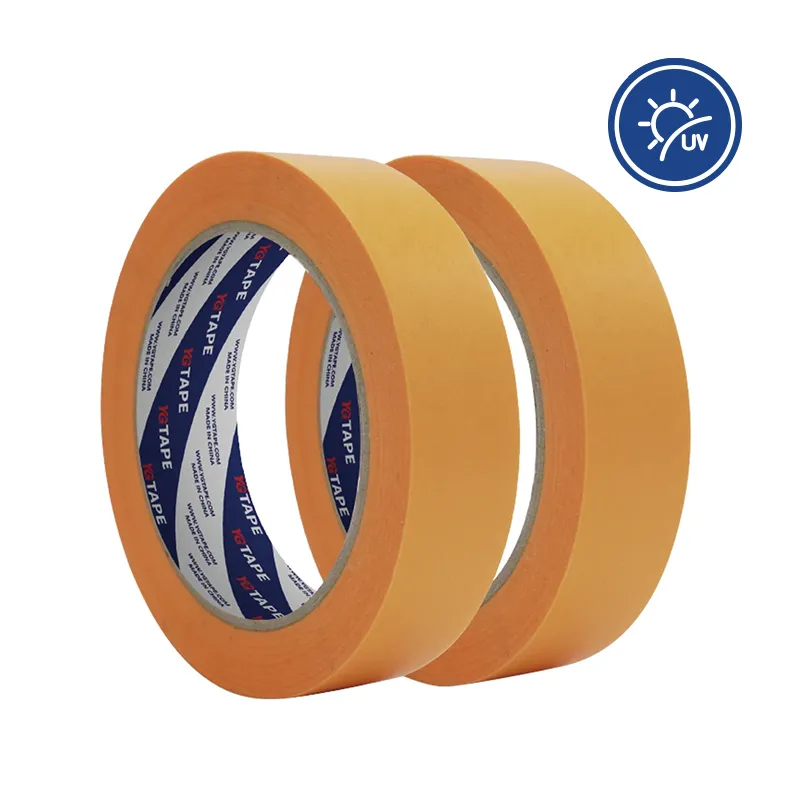
For outdoor evaluation, use a UV-resistant washi tape grade and record the actual exposure conditions.
Indoor and outdoor evaluations may therefore use tape grades designed for different exposure requirements.
5. Remove and Inspect
After the defined dwell time, remove the tape using a consistent method.
Keep the peel angle and speed as consistent as possible.
Inspect the surface immediately for:
- Adhesive residue
- Adhesive transfer
- Surface damage
- Paint or coating changes
Why Can Washi Tape Give Different Results Under Different Conditions?
Clean-removal behavior depends on the complete application.
The tape itself is only one part of the test.
Different Substrates
Glass and steel are usually smooth and non-porous.
Wood may be textured, porous or coated.
Plastic surfaces can also vary by polymer and surface condition.
Therefore, washi tape may not remove the same way from every substrate.
Painting Process
In this evaluation, the tape is applied first.
The painted group then goes through the defined painting process.
This creates a more realistic masking condition than simply applying tape to a pre-painted surface.
Paint type, drying conditions and coating behavior can all influence the final removal result.
Dwell Time
Adhesive behavior can change while the tape remains on the surface.
A short masking job and a 14-day application do not represent the same condition.
Always include dwell time when comparing clean-removal results.
Outdoor Exposure
Outdoor conditions add more variables, including:
- UV exposure
- Temperature changes
- Humidity
- Rain or moisture
- Weather changes
For this reason, outdoor evaluation should use a tape grade intended for the required exposure period.
YG Group offers Outdoor Washi Tape (30 Days) for outdoor masking applications.
Painted vs. Unpainted Groups
The painted and unpainted groups represent two different masking conditions.
Unpainted Group
The tape remains on the original substrate without an additional painting process.
This helps observe removal from the base surface under the defined exposure conditions.
Painted Group
The tape is applied first.
Paint is then applied according to the planned masking process.
After the defined dwell period, the tape is removed and the surface is inspected.
This comparison can help evaluate tape behavior in applications such as:
- Interior decoration
- Trim painting
- Wood finishing
- Renovation
- Professional masking
For delicate indoor masking, buyers can also review Indoor Low Tack Washi Tape.
Actual performance should still be checked under the real painting process.
Indoor vs. Outdoor Washi Tape
Indoor and outdoor masking do not always use the same tape grade.
Indoor conditions are easier to control.
Outdoor applications can add UV and weather exposure.
Therefore, outdoor tape selection should consider:
UV Resistance + Dwell Time + Surface + Temperature + Weather
A successful indoor evaluation does not automatically prove outdoor clean-removal performance.
For outdoor applications, select a washi tape grade intended for the expected exposure conditions.
How Should You Read a Residue Test Result?
A simple statement such as:
No residue
does not provide enough information.
A useful result should always include the test conditions.
For example:
Glass · Unpainted · Indoor · 14-Day Dwell → Surface inspected immediately after removal
This provides much more context.
Simple Rule
Residue Test Result = Substrate + Surface Condition + Exposure + Dwell Time + Removal Method + Surface Result
This is one of the most important principles in clean-removal evaluation.
Two tape results should only be compared when the test conditions are similar.
Does “Clean Removal” Mean Zero Residue on Every Surface?
No.
Clean-removal tape aims to reduce unwanted adhesive transfer under its intended conditions.
However, the final result can change with:
- Surface type
- Painting process
- Tape grade
- Application pressure
- Exposure time
- UV exposure
- Temperature
- Removal method
For this reason, avoid treating clean removal as a universal claim.
A more accurate statement is:
Clean removal under the stated test conditions
For sensitive or important surfaces, evaluate the tape before full use.
Why This Matters for Masking and Painting
Masking tape needs to balance several properties.
Adhesion → Holding → Paint Edge → Clean Removal
Too little adhesion may cause lifting or paint bleed.
Too much adhesion can make removal more difficult on sensitive surfaces.
Therefore, clean-removal evaluation helps determine whether the tape suits the actual masking condition.
YG Group Application Testing
YG Group evaluates adhesive materials under different end-use conditions.
For washi tape, application evaluation may compare:
- Different substrates
- Painted and unpainted groups
- Indoor and outdoor conditions
- Different dwell times
- Removal behavior
The goal is not to claim that one tape works on every surface.
Instead, testing helps match the tape grade to the real application.
This residue evaluation is an application-based test under defined YG conditions.
It is separate from standardized laboratory test methods unless a specific standard is stated.
YG Group also operates a CNAS-accredited laboratory for adhesive and material testing.
For more information, see YG Group CNAS Accredited Laboratory.
What Information Should Buyers Provide?
For a washi tape recommendation, provide:
- Application
- Substrate
- Painting or masking process
- Paint or coating type
- Indoor or outdoor use
- Required dwell time
- UV exposure requirement
- Application temperature
- Tape width and length
- Estimated quantity
For replacement projects, also provide:
Existing TDS + Tape Sample + Application Photo
This helps make the evaluation more relevant to the real project.
Frequently Asked Questions
Does washi tape leave adhesive residue?
It can.
The result depends on the tape grade, substrate, dwell time, exposure conditions and removal method.
Why test washi tape on different surfaces?
Glass, steel, wood, plastic and tile have different surface properties.
Therefore, removal behavior may change from one substrate to another.
How is the painted group tested?
The tape is applied first.
Paint is then applied according to the defined masking process before the tape is removed and the surface is inspected.
Can indoor washi tape be used outdoors?
Not automatically.
Outdoor applications may require a UV-resistant grade designed for the expected exposure period.
How long should washi tape stay on the surface during testing?
This demonstration uses a 14-day dwell time.
Other applications may require a shorter or longer evaluation period.
Is this an ASTM, ISO or other standardized residue test?
No specific ASTM, ISO or other standardized residue test method is claimed for this evaluation.
It is an application evaluation used by YG Group under defined conditions.
Does clean removal mean the surface cannot change?
No.
The inspection should check both adhesive residue and surface or coating changes.
Need Help Evaluating Washi Tape?
Send YG Group:
Substrate → Painting Process → Indoor or Outdoor → Dwell Time → UV Requirement → Tape Size → Quantity
YG Group can help narrow suitable washi tape grades and discuss sample evaluation for the actual application.