


Cold Lamination Film vs. Thermal Lamination Film: How to Choose



Cold lamination film and thermal lamination film both protect printed materials, but they work in different ways.
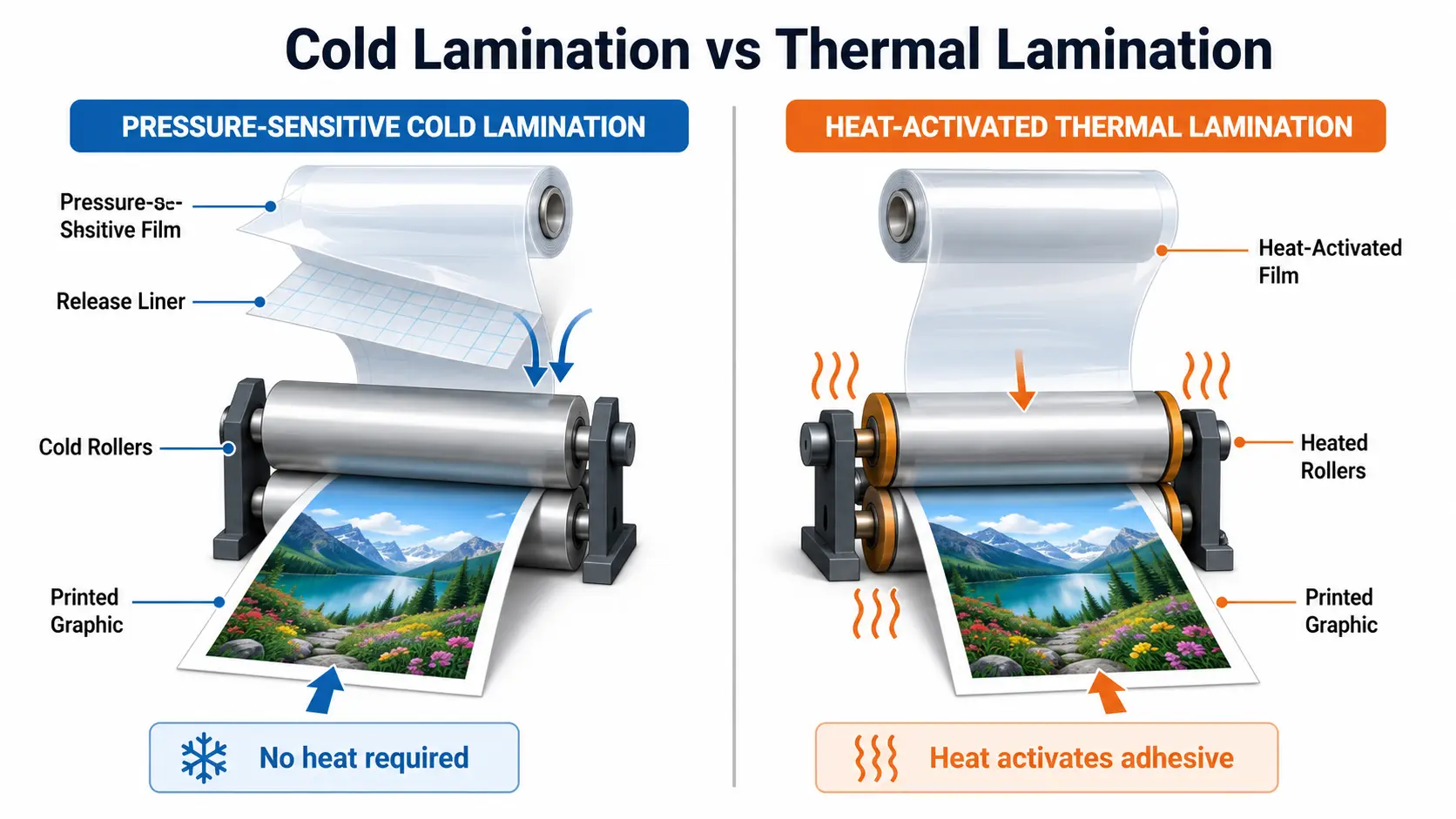
Cold lamination uses pressure-sensitive adhesive. Thermal lamination uses heat to activate the adhesive. This difference affects print compatibility, equipment, production settings and typical applications.
The two systems also serve different print-finishing markets. Cold lamination is widely used for flexible graphics and wide-format printing, while thermal lamination is more common for paper documents.
Quick Answer
Choose cold lamination film for heat-sensitive prints, printed self-adhesive vinyl, signs, posters, wide-format graphics and flexible decals.
Choose thermal lamination film for menus, certificates, teaching materials, cards and other paper media that can safely pass through a heated laminator.
Before making a decision, consider:
- Print and substrate type
- Heat sensitivity
- Required finish
- Indoor or outdoor use
- Laminating equipment
- Finished flexibility
- Roll specifications
What Is Cold Lamination Film?
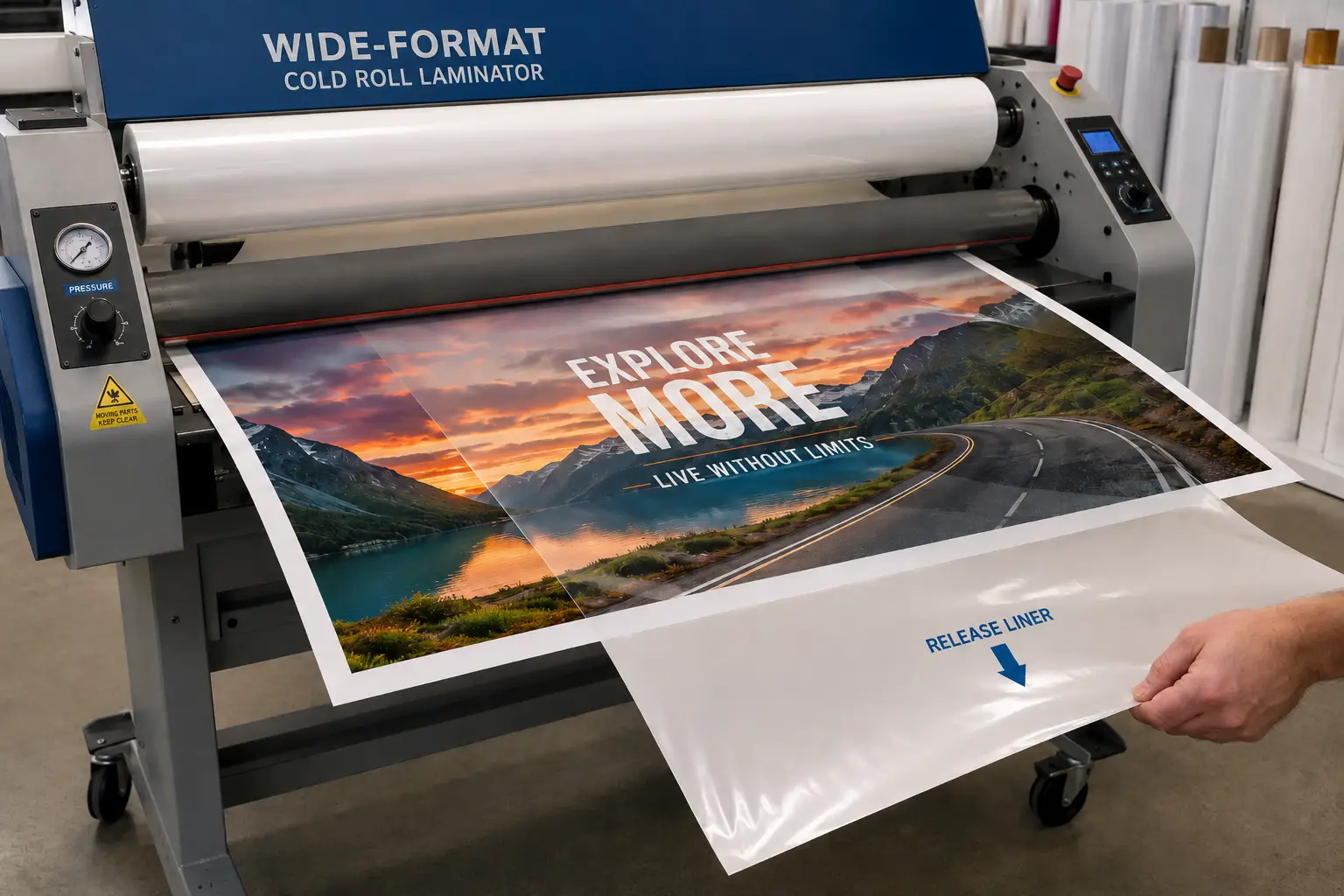
Cold lamination film is a pressure-sensitive protective film. It bonds to the printed surface through roller pressure rather than heat activation.
Many cold lamination films use a removable release liner. Linerless constructions are also available for selected machines and applications.
Cold lamination is commonly used for:
- Printed self-adhesive vinyl
- Posters and advertising graphics
- Photos and digital prints
- Signs and display graphics
- Vehicle and equipment decals
- Floor and wall graphics
- Heat-sensitive printed media
Depending on the construction, the film may provide a gloss, matte or textured finish.
For applications that require clear print protection, review YG Group's high-transparency cold lamination film.
For a broader introduction to pressure-sensitive lamination, read the cold lamination film guide.
What Is Thermal Lamination Film?
Thermal lamination film uses an adhesive that becomes active when heated.
The film and document pass through a heated roll or pouch laminator. Heat activates the adhesive, while roller pressure bonds the film to the printed media.
Thermal lamination is commonly used for:
- Menus
- Certificates
- Teaching materials
- Paper signs
- Instruction sheets
- Cards
- Book covers
- Office documents
It is generally selected for paper-based media that can tolerate the laminator’s operating temperature.
Thermal paper, some photographs, coated media and certain ink systems may be affected by heat. A small test can help identify possible color changes, distortion or poor bonding before production.
Cold Lamination Film vs. Thermal Lamination Film
| Comparison | Cold Lamination Film | Thermal Lamination Film |
|---|---|---|
| Adhesive | Pressure-sensitive adhesive | Heat-activated adhesive |
| Activation method | Roller pressure | Heat and pressure |
| Equipment | Cold roll laminator or compatible applicator | Heated roll or pouch laminator |
| Warm-up time | Usually not required | Required |
| Common media | Printed vinyl, posters, photos and graphics | Paper documents, cards and menus |
| Heat-sensitive prints | Common starting choice | May affect the print |
| Release liner | Common; linerless options also exist | Usually no removable release liner |
| Typical finished use | Flexible graphic protection | Protected paper documents |
| Final stiffness | Depends on film and media thickness | Depends on film and media thickness |
| Outdoor suitability | Available in selected constructions | Depends on the specific film |
| Main market | Signage and graphic finishing | Document and paper finishing |
These are general differences. Actual performance depends on the face film, adhesive, printed media, substrate and equipment.
Choose by Application
| Application | Recommended starting point |
|---|---|
| Printed self-adhesive vinyl | Cold lamination film |
| Wide-format poster or sign | Cold lamination film |
| Heat-sensitive photo or print | Cold lamination film |
| Flexible contour-cut decal | Cold lamination film |
| Menu or certificate | Thermal lamination film |
| Teaching or office document | Thermal lamination film |
| High-volume document lamination | Thermal lamination film |
The last option assumes that the document, ink and surface coating can tolerate heat. These recommendations are starting points rather than universal rules.
How to Choose the Right Lamination Film
1. Start with Heat Sensitivity
First, determine whether the print can safely tolerate heat.
Cold lamination is normally the safer starting point for heat-sensitive media. This may include some photographs, thermal prints, coated materials and heat-sensitive ink systems.
For thermal lamination, check the temperature limits of the substrate, ink and surface coating.
Do not judge heat resistance from the base material alone. The substrate may tolerate heat while the ink or coating does not.
2. Identify the Printed Media
Cold lamination is widely used with flexible graphic materials such as:
- Printable PVC vinyl
- Synthetic paper
- Wide-format posters
- Digital printing films
- Self-adhesive graphics
A compatible printable graphic film can be printed first and protected with a suitable cold overlaminate after the ink has dried or cured.
Thermal lamination is more commonly used with paper documents and cards.
Run a small trial using the actual print. Heavy ink coverage, uncured ink or an incompatible coating can affect bonding and appearance.
3. Consider the Finished Shape
Cold overlamination is often selected when the finished graphic needs to remain flexible.
Typical examples include:
- Rolled posters
- Vehicle decals
- Contour-cut stickers
- Flexible signs
- Graphics applied to slightly curved panels
Thermal lamination is commonly selected for protected paper documents.
However, the lamination method alone does not determine stiffness. The final result also depends on the thickness of the laminate and printed media.
4. Select the Finish
Both cold and thermal lamination films may be available with gloss, matte or specialty surfaces.
Gloss film can increase surface shine and color depth. Matte film can reduce glare and create a softer appearance. Textured films may be used for selected display or floor-graphic applications.
Consider:
- Transparency
- Glare level
- Surface texture
- Scratch protection
- Color change
- Cleaning requirements
Because the laminate may change the original print appearance, approve the visual result using the complete construction.
5. Check Indoor or Outdoor Requirements
Cold lamination does not automatically mean outdoor-grade protection.
For outdoor graphics, consider:
- Face-film material
- Adhesive type
- UV exposure
- Moisture
- Temperature changes
- Cleaning method
- Expected service period
- Compatibility with the printed media
A suitable pressure-sensitive overlaminate may help protect outdoor signs and vehicle graphics. It still needs to be matched with the print film, ink and service environment.
Thermal lamination should also be evaluated against the intended conditions. A film developed for indoor documents may not be suitable for extended outdoor exposure.
6. Match the Film to the Laminator
Cold lamination requires stable roller pressure, alignment and web tension.
Thermal lamination requires suitable temperature and machine speed. Insufficient temperature or excessive speed may prevent full adhesive activation. Excessive heat may cause rippling, distortion or changes in the printed surface.
When requesting a roll specification, share:
- Maximum laminating width
- Core size
- Maximum roll diameter
- Film thickness
- Machine speed
- Heated or unheated rollers
- Winding direction
Some laminators can process more than one film type, but this should be verified from the machine specification.
Heat-assisted cold lamination is not thermal lamination. Some pressure-sensitive films use mild roller heat to improve adhesive contact or reduce silvering. The adhesive remains pressure-sensitive rather than heat-activated.
Common Lamination Problems
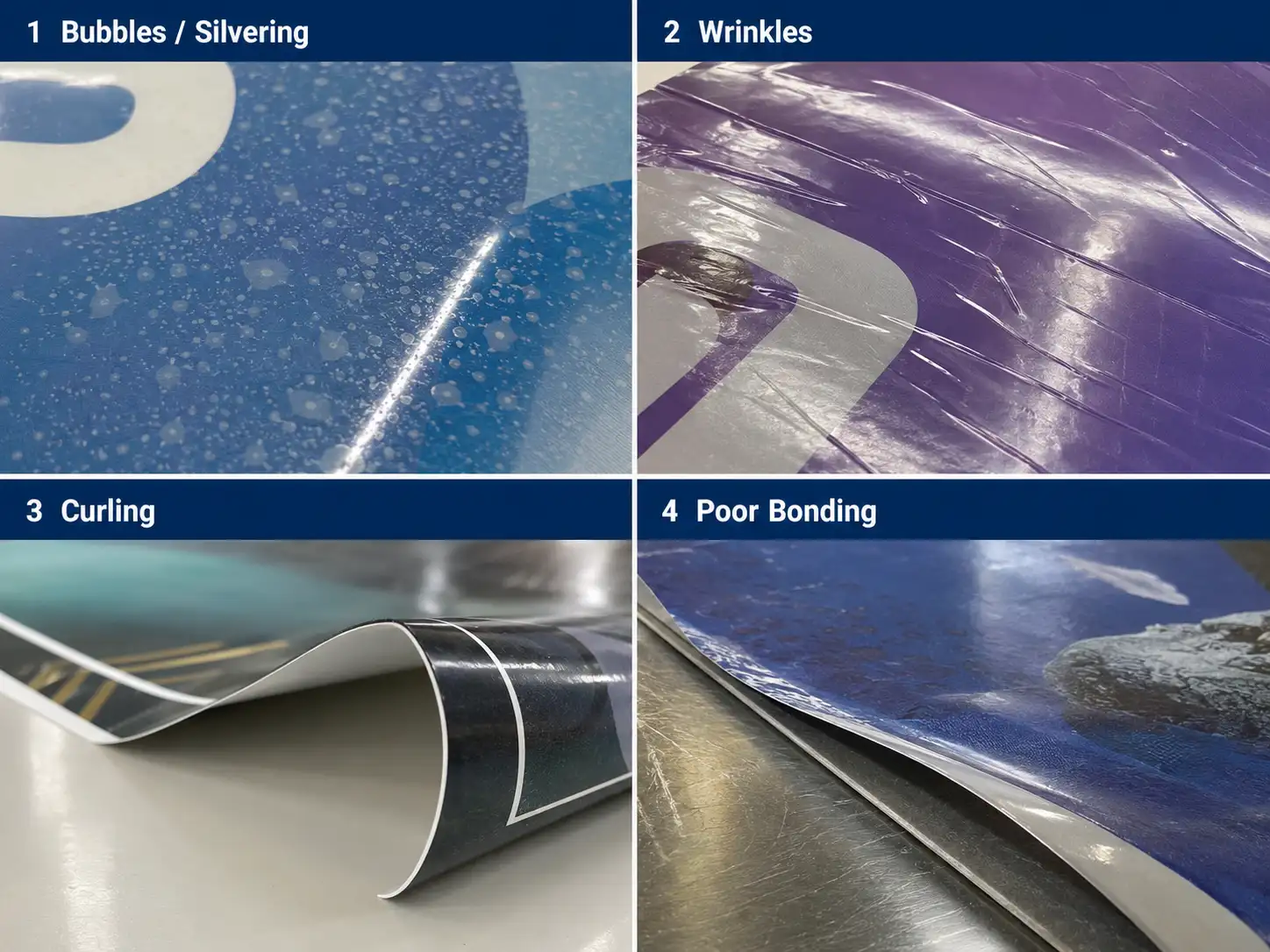
Bubbles or Silvering in Cold Lamination
These may result from insufficient roller pressure, rough print surfaces, trapped air, low application temperature or poor adhesive contact.
Wrinkles in Cold or Thermal Lamination
Common causes include uneven pressure, incorrect web tension, poor roller alignment or feeding the media at an angle.
Curling After Lamination
Curling may occur when the laminate and printed media have different tension, thickness or dimensional behavior.
Incomplete Bonding
For cold lamination, possible causes include uncured ink, contamination, incompatible coatings or insufficient pressure.
For thermal lamination, incorrect temperature or excessive machine speed may prevent full adhesive activation.
Color or Surface Changes
Heat, adhesive chemistry and laminate finish may change the appearance of the print. Review a completed sample before approving production.
For a more detailed troubleshooting guide, read Overlaminate Film Problems: Bubbles, Yellowing, Wrinkles and Roll Defects Explained.
Which Lamination Film Should You Choose?
Neither system is better for every application. Final selection should be confirmed with the actual print, laminate and laminating equipment.
Total production cost should consider the film, equipment, energy use, release-liner waste, processing speed and rejected output. Material price alone does not show the full production cost.
YG Group Cold Lamination Film Solutions
YG Group focuses on pressure-sensitive cold lamination films for digital print protection, signs, posters and other graphic applications.
Depending on the selected model, available constructions may include:
- PVC face film
- Water-based or solvent-based acrylic adhesive
- Release-liner or linerless construction
- Gloss or matte surface
- Customized roll width and length
- Finished roll or jumbo roll supply
YG Group can review the printed media, ink system, application, required finish, laminating equipment and roll dimensions to help identify a suitable construction for sample testing.
The thermal lamination information in this article is provided for product-selection comparison. YG Group’s product support focuses on pressure-sensitive cold lamination film.
What Information Is Required for a Quotation?
Please provide:
- Printed media or substrate
- Printing method and ink type
- Indoor or outdoor application
- Required gloss, matte or textured finish
- Lamination machine type
- Maximum roll width
- Required roll length
- Core size
- Release liner or linerless preference
- Estimated order quantity
- Packaging requirements
- Destination country or port
A printed sample, current laminate specification or production photo can help YG Group review the application more accurately.
Frequently Asked Questions
What is the main difference between cold and thermal lamination film?
Cold lamination film, also called cold laminating film, uses pressure-sensitive adhesive and does not require heat activation. Thermal lamination film, or thermal laminating film, uses an adhesive activated by heat. Selection depends on the print’s heat sensitivity, substrate, available equipment and finished application.
Is cold lamination better for printed vinyl?
Cold lamination is commonly used for printed self-adhesive vinyl because it protects the graphic without exposing it to high laminating temperatures. The laminate still needs to be compatible with the vinyl, ink and intended application.
Can thermal lamination damage a print?
Heat may affect certain photographs, thermal paper, coatings or ink systems. It can also change color, gloss or dimensional stability. Check the temperature limits of the media and ink before choosing thermal lamination.
How long should printed graphics dry before cold lamination?
Drying or outgassing time depends on the ink system, ink coverage, printer settings and media. Laminating too early may trap solvents and affect bonding or appearance. Follow the ink and media supplier’s instructions before testing the finished construction.
Does cold lamination require a machine?
Not always. Small graphics may be applied with a hand roller or squeegee. Wide-format production normally benefits from a cold roll laminator because stable pressure, alignment and web tension help reduce bubbles and wrinkles.
Is cold lamination film suitable for outdoor graphics?
Some cold lamination films are developed for outdoor graphics, but cold application does not automatically mean outdoor grade. Suitability depends on the face film, adhesive, printed media and exposure conditions.
Does cold lamination film always have a release liner?
Many pressure-sensitive cold lamination films have a removable release liner. Linerless PVC cold lamination film is also available for selected machines and applications. Check the equipment, roll format, unwind method and required finish before selecting a construction.
Discuss Your Cold Lamination Film Requirements
Send YG Group your printed media, ink type, application, required finish, laminator specifications and roll dimensions.
Our team will review the project and confirm the available cold lamination film, sample and quotation options.
Film compatibility and finished performance should be confirmed using the intended print, ink, laminating equipment and final application.