


Overlaminate Film Problems: Bubbles, Yellowing, Wrinkles and Roll Defects Explained



Quick Answer
Common overlaminate film problems such as bubbles, bubble marks, yellowing, wrinkles, groove marks, line marks, and uneven roll edges are usually caused by surface contamination, moisture, unstable lamination pressure, speed mismatch, improper tension control, film shrinkage, or poor storage conditions.
This guide is especially useful for label converters using BOPP overlaminate film or solvent-based BOPP gloss overlaminate film for printed label surface protection. Most issues can be reduced by keeping the printed substrate clean and dry, controlling lamination pressure and speed, adjusting slitting and rewinding tension, and storing materials properly.
Watch the On-site Troubleshooting Video
YG Group has prepared an on-site troubleshooting video to show common overlaminate film issues during label lamination, slitting, and rewinding.
Watch the video:
In the video, we explain how to identify bubbles, bubble marks, yellowing, wrinkles, groove marks, line marks, and uneven roll edges, and how to analyze these problems from material, equipment, process, and storage conditions.
Why Overlaminate Film Problems Matter
During label lamination, slitting, and rewinding, small surface defects can quickly become production problems.
Common issues such as bubbles, bubble marks, yellowing edges, wrinkles, groove marks, and uneven roll edges may affect finished label appearance, converting efficiency, rework rate, material waste, delivery schedule, and customer acceptance.
These problems may look like simple surface defects, but they are not always caused by the film itself. In many cases, the real cause is related to substrate cleanliness, machine tension, lamination pressure, operating process, or storage environment.
For converters working with different label materials, the same overlaminate film may perform differently depending on the printed surface, ink system, adhesive structure, facestock, and converting conditions. That is why troubleshooting should check four areas together: material, equipment, process, and storage conditions.
Quick Troubleshooting Table
| Problem | Common Appearance | Possible Causes | Recommended Solutions |
|---|---|---|---|
| Bubbles | Air pockets or raised spots after lamination | Dust, impurities, moisture, unstable pressure, improper speed | Keep surfaces clean and dry, control workshop cleanliness, adjust pressure and speed |
| Bubble Marks | Marks left after bubbles appear | Bubbles not treated in time, moisture or impurities before lamination | Rework bubbles in time and make sure the substrate is dry and clean |
| Yellowing / Yellow Edges | Film or edges turn yellow | Adhesive aging, film aging, heat, sunlight, humidity, long storage | Store away from heat, light, and moisture; follow first-in, first-out control |
| Wrinkles | Creases, folds, or uneven lines | Tension mismatch, speed mismatch, compressed film, uneven film surface | Adjust pressure, tension, and speed; flatten the film before lamination |
| Groove Marks / Line Marks | Long lines, grooves, or pressure marks on film surface | Film shrinkage, long storage after slitting, excessive rewinding tension | Control slitting tension, reduce rewinding tension, shorten storage time |
| Uneven Roll Edges / Flower-Shaped Rolls | Irregular roll end face with loose and tight areas | Low slitting or rewinding tension, loose winding, unstable roll alignment | Increase and stabilize slitting and rewinding tension |
1. Bubbles in Overlaminate Film
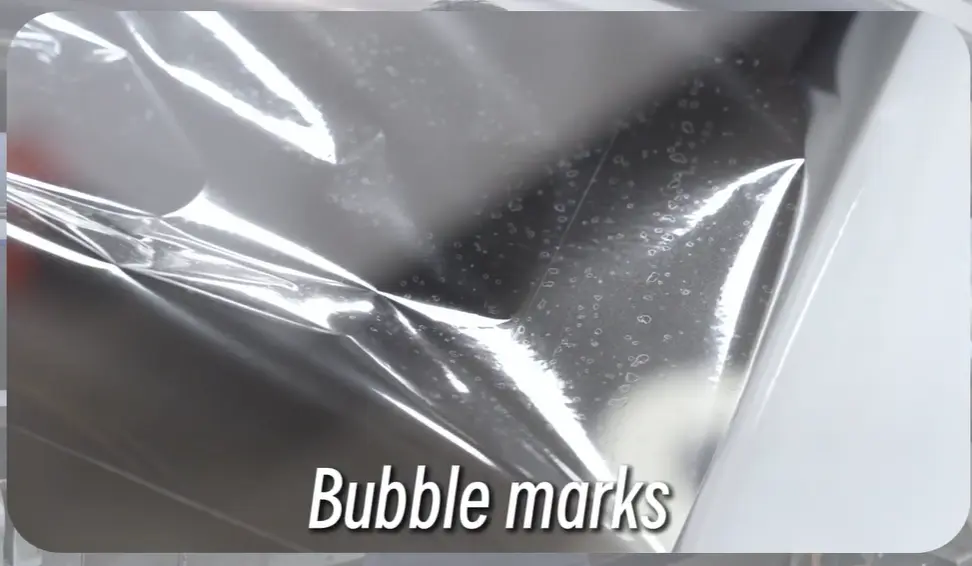
Bubbles are one of the most common issues in label lamination. They usually appear as small air pockets or raised spots between the printed label surface and the overlaminate film.
Bubbles may be caused by dust, impurities, moisture, unstable lamination pressure, improper speed, or contamination during the lamination process. If the printed substrate is not clean or dry enough, air or particles may become trapped between the film and the label surface.
To reduce bubbles, keep the overlaminate film and printed label surface clean before lamination, make sure the printed substrate is dry, reduce dust in the working area, and adjust lamination pressure and speed according to the material condition.
For some minor bubbles caused by temporary air entrapment, the laminated material can be left to rest for about two hours. If the bubbles remain, increase, or appear repeatedly, the lamination process should be checked and rework may be required.
2. Bubble Marks After Lamination
Bubble marks usually appear after bubbles are formed but not handled in time. They may also occur when the printed material is not clean or dry enough before lamination.
Common causes include delayed rework, moisture on the printed surface, dust, impurities, or ink and coating that are not fully dried or cured.
To prevent bubble marks, rework visible bubbles as soon as possible, keep the substrate dry and clean before lamination, and check whether the printed ink or coating is fully dried. Bubble marks are usually easier to prevent than to repair, so early inspection during lamination is important.
3. Yellowing or Yellow Edges
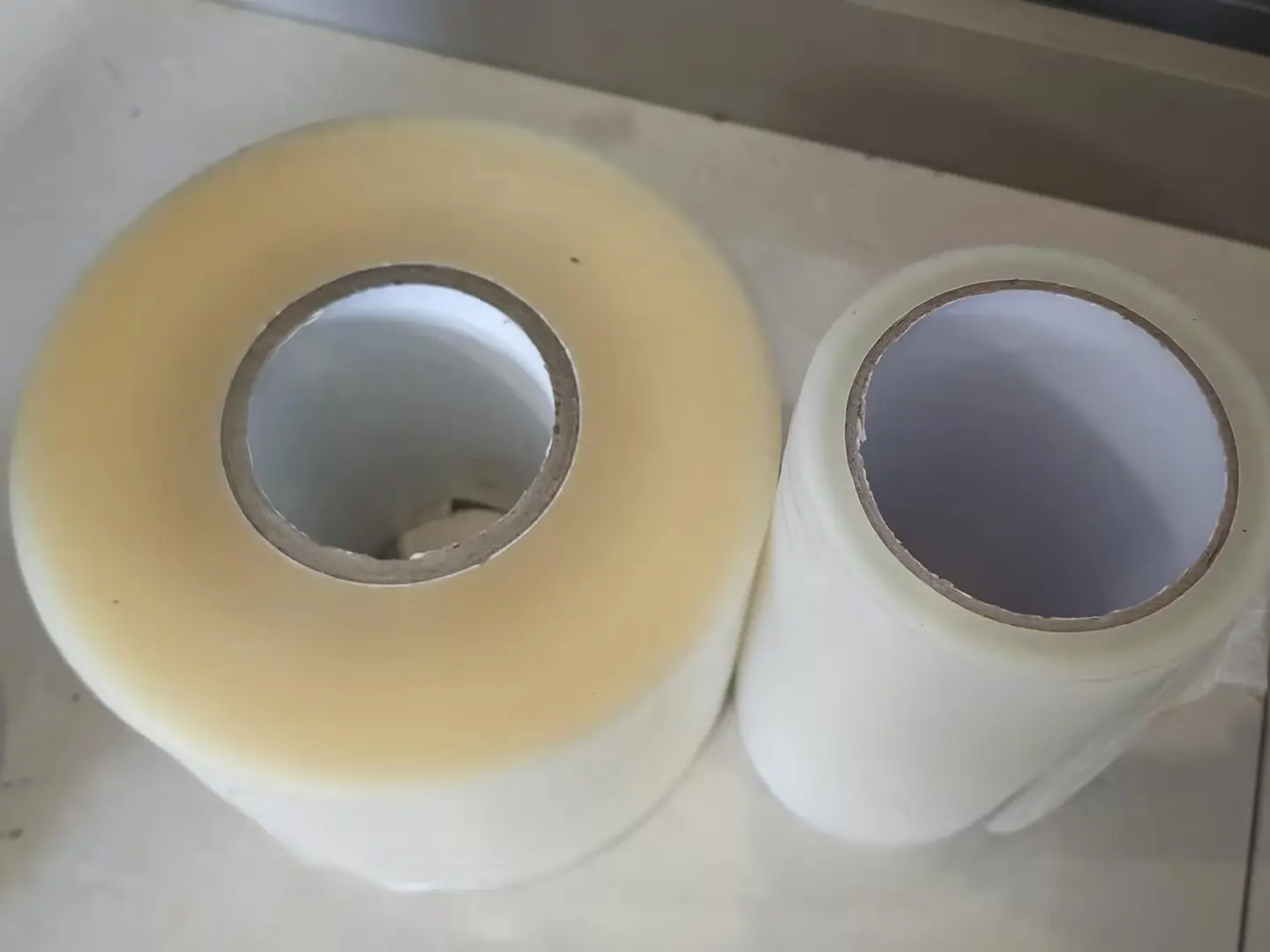
Yellowing may appear on the film surface or along the film edge. For transparent labels, light-colored labels, or high-gloss labels, yellow edges can directly affect the final appearance.
Yellowing is usually related to adhesive aging, film aging, long storage time, high temperature, high humidity, direct sunlight, or strong light exposure. Improper storage conditions may speed up color change, especially when materials are stored for a long period or after the package has been opened.
To reduce yellowing risk, store overlaminate film away from direct sunlight, high temperature, and high humidity. Keep materials in a stable storage area, follow the first-in, first-out principle, and avoid leaving opened or slit materials exposed for too long.
4. Wrinkles During Label Lamination
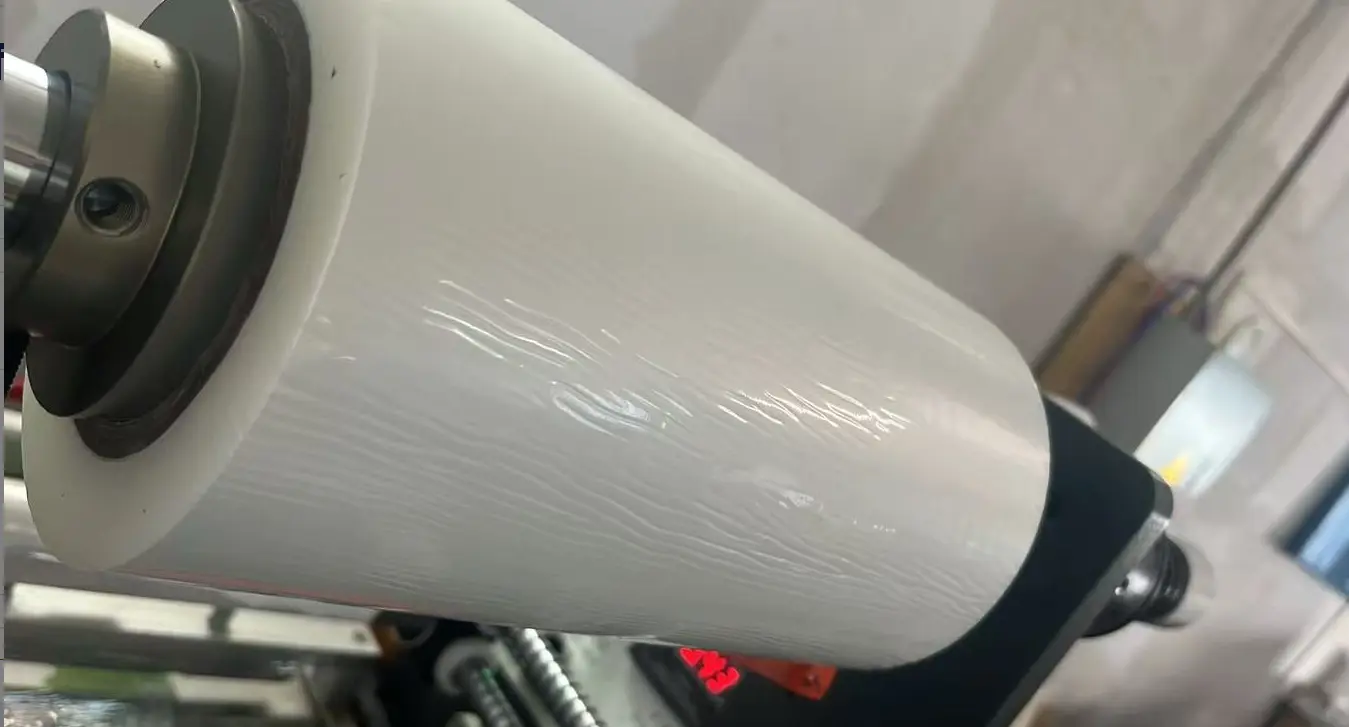
Wrinkles may appear as creases, folds, or uneven lines on the laminated label surface. They can affect label appearance and may also cause problems during die-cutting, slitting, or later label application.
Wrinkles may be caused by existing wrinkles in the film, film deformation during winding, compression during storage or transportation, mismatched lamination tension, speed mismatch, or film that is not fully flattened before lamination. Sudden changes in unwinding tension may also cause wrinkles during production.
To reduce wrinkles, adjust coating, winding, and rewinding tension according to the material condition. Keep rewinding pressure and tension balanced, increase or reduce film unwinding tension gradually, and match the paper feeding speed with the film feeding speed. If the film surface is uneven, cut off the affected section, then unfold and flatten the film before lamination.
5. Groove Marks and Line Marks
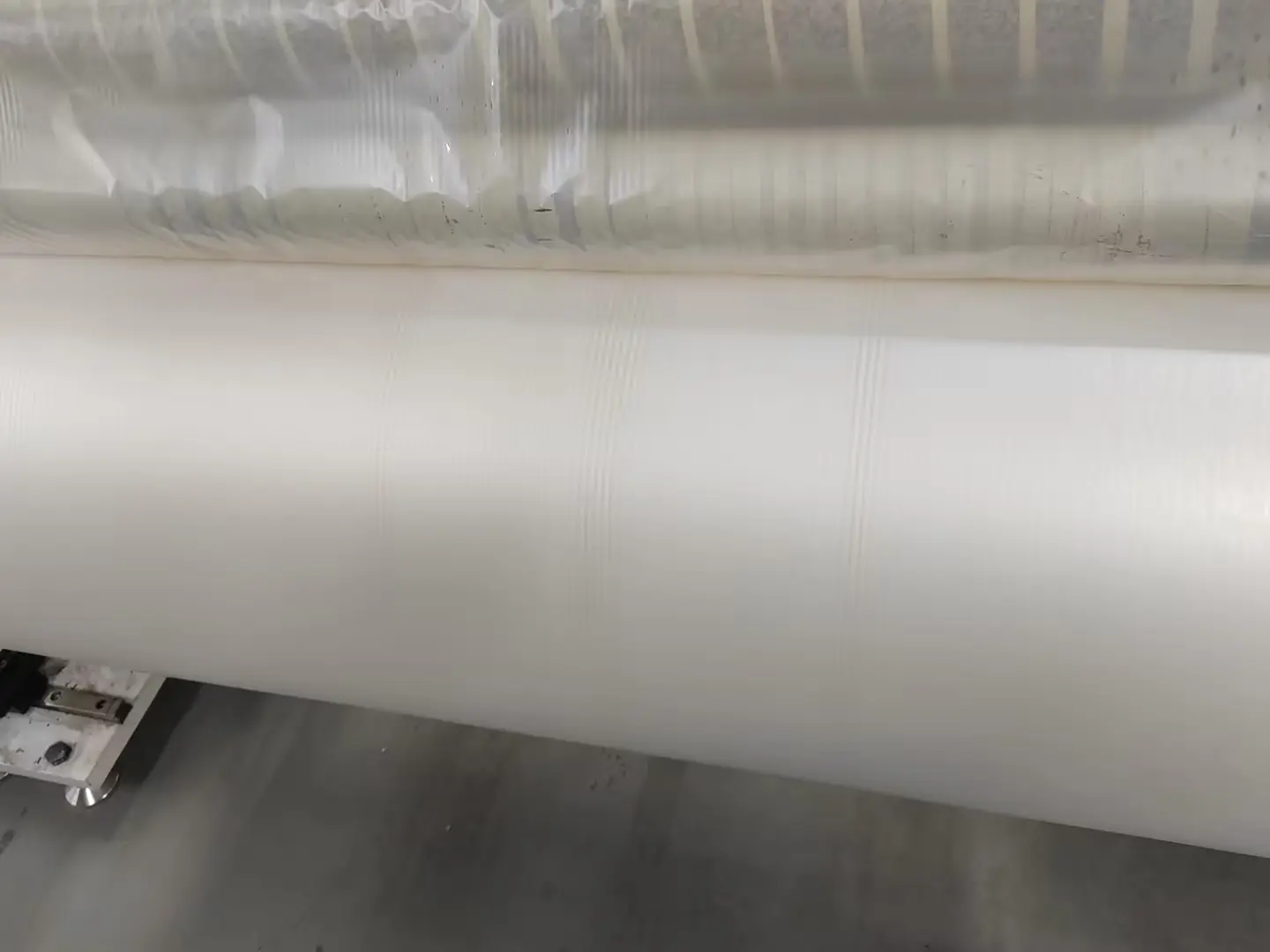
Groove marks are also described by customers as line marks, roll marks, or linear pressure marks on the film surface. They usually appear as long lines, grooves, or indentations before or after lamination.
Groove marks may be related to existing marks on the original film, film shrinkage after slitting, long storage time after slitting, excessive rewinding tension, improper slitting tension, or pressure during storage and rewinding.
To reduce groove marks or line marks, adjust the material to a suitable slitting tension, avoid excessive rewinding tension, shorten the storage time of slit original film, and check whether line marks already exist before lamination or rewinding. Stable slitting and rewinding control is important for reducing repeated line marks on the film surface.
6. Uneven Roll Edges / Flower-Shaped Rolls
Uneven roll edges, sometimes described in production as flower-shaped rolls, refer to an irregular roll end face caused by uneven winding tightness.
The roll edge may look loose in some areas and tight in others, creating an uneven or flower-like appearance. The most common cause is low slitting or rewinding tension. When the winding is too loose, the roll edge may become uneven and unstable.
To improve uneven roll edges, increase slitting and rewinding tension properly, adjust tension according to the actual roll condition, keep winding tighter and more stable, and check roll edge alignment during rewinding.
How to Prevent Overlaminate Film Problems
Most overlaminate film issues can be reduced through correct material selection, standard operation, and proper storage.
Choose the Right Overlaminate Film
Select the overlaminate film according to the label material, printing method, adhesive type, surface requirement, converting process, and end-use environment.
For label applications that require gloss finish and surface protection, YG Group’s solvent-based BOPP gloss overlaminate film can be used for printed label lamination and converting applications.
For projects involving special label structures, different facestocks, or adhesive systems, choosing the right label materials is also important before lamination.
Keep the Substrate Clean and Dry
Before lamination, remove dust and impurities, make sure the printed surface is dry, and check whether the ink or coating is fully dried or cured.
Control Lamination Settings
During lamination, keep pressure stable, match film speed with paper feeding speed, adjust tension gradually, and avoid sudden machine setting changes.
Improve Slitting and Rewinding Control
During slitting and rewinding, set suitable tension, keep roll alignment stable, and avoid both loose winding and over-tight winding.
Store Materials Properly
Store overlaminate film away from direct sunlight, high temperature, and high humidity. Keep packaging sealed before use and follow first-in, first-out inventory management.
What Information Should You Provide for Technical Support?
When an overlaminate film problem occurs, clear photos and videos can help the supplier or technical team identify the cause more efficiently.
For faster troubleshooting, please provide:
- Product name and specification
- Film type and roll size
- Substrate material
- Printing method
- Lamination speed
- Slitting or rewinding condition
- Defect photos or videos
- Whether the issue appears before or after lamination
- Whether the problem occurs in one roll or in batches
- Storage time and storage environment
- Temperature and humidity, if available
This information helps avoid judging the issue only from the surface and makes the troubleshooting process more accurate.
FAQ: Overlaminate Film Problems
What causes bubbles in overlaminate film?
Bubbles are usually caused by dust, moisture, unstable pressure, improper speed, or poor surface cleanliness before lamination. Keeping the substrate clean and dry can help reduce this issue.
Why do bubble marks appear after lamination?
Bubble marks often appear when bubbles are not treated in time or when moisture, dust, impurities, or loose ink remain on the printed surface before lamination.
Why does overlaminate film turn yellow?
Yellowing may be related to adhesive aging, film aging, long storage time, sunlight, high temperature, or high humidity. Proper storage and first-in, first-out control can help reduce the risk.
How can wrinkles be reduced during label lamination?
Wrinkles can be reduced by matching film speed with paper feeding speed, adjusting lamination tension gradually, and keeping the film flat before lamination.
What causes uneven roll edges during rewinding?
Uneven roll edges are usually caused by low rewinding tension, loose winding, unstable tension, or poor roll alignment. Increasing and stabilizing winding tension can help improve the roll shape.
Need Help Solving Overlaminate Film Issues?
Overlaminate film problems such as bubbles, bubble marks, yellowing, wrinkles, groove marks, line marks, and uneven roll edges may look like simple surface defects, but they are often related to multiple factors, including material selection, machine settings, operating process, slitting and rewinding control, and storage environment.
YG Group provides BOPP overlaminate film, including solvent-based overlaminate film solutions for label applications.
If you are facing similar overlaminate film issues, send us your defect photos, videos, roll specifications, and processing conditions. YG Group can help review the possible causes and recommend suitable BOPP overlaminate film solutions, including solvent-based BOPP gloss overlaminate film for label surface protection.
/1. BOPP Gloss Overlaminate Film (Solvent-based Adhesive).webp)
/1. BOPP Matte Overlaminate Film(Solvent-based Adhesive).webp)
/1. BOPP Matte Overlaminate Film(Water-based Adhesive).webp)
/1. BOPP Gloss Overlaminate Film(Water-based Adhesive).webp)