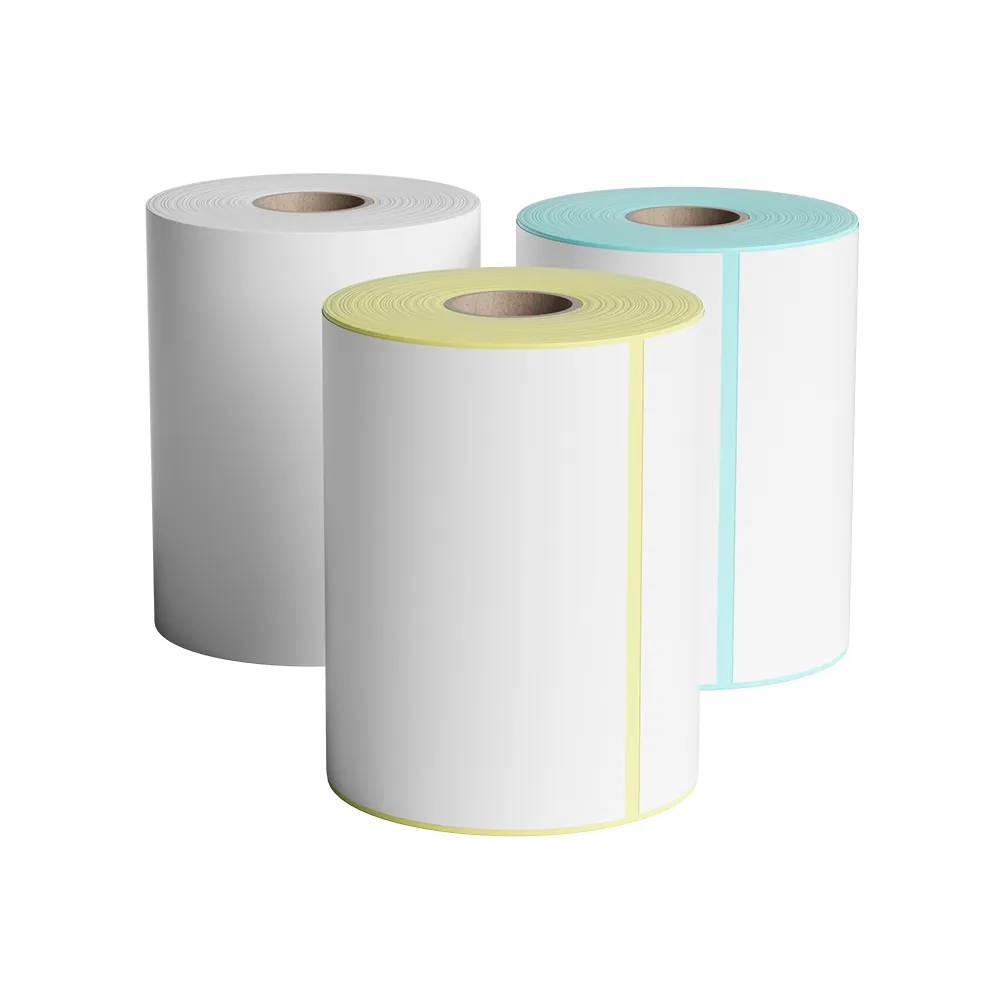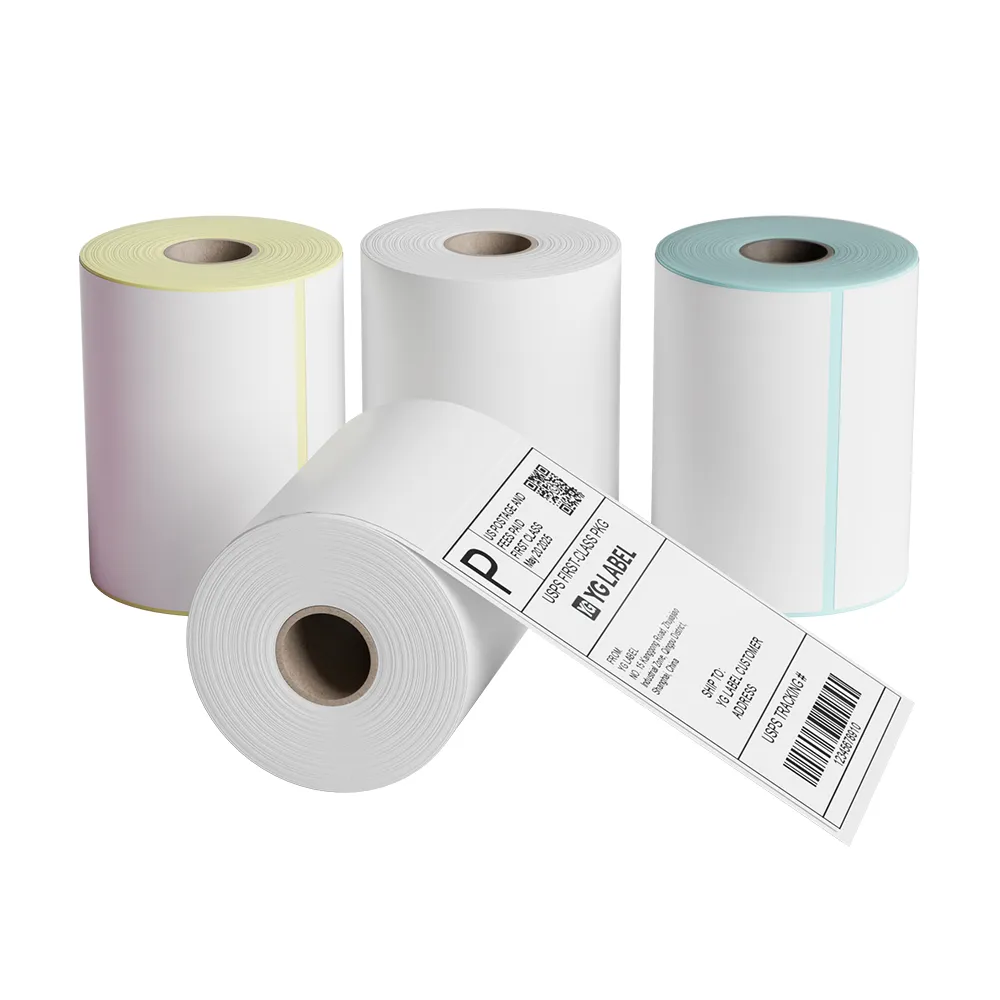


Types of Direct Thermal Label Materials: How to Choose



Direct thermal labels use a heat-sensitive surface that forms an image when heated by a thermal printhead. They require no ink, toner or printing ribbon, making them widely used for shipping, retail, weighing, food delivery and warehouse identification.
The three main material categories are:
- Non-top-coated direct thermal paper
- Top-coated direct thermal paper
- Direct thermal synthetic materials
Non-top-coated paper is generally used for basic, short-cycle applications. Top-coated paper adds surface protection for more demanding handling conditions. Direct thermal synthetic materials are considered when improved tear resistance or improved resistance to occasional moisture exposure is required.
The complete label construction must also match the printer, adhesive, release liner, application surface and operating environment.
For help choosing between the two main printing methods, read our Direct Thermal vs. Thermal Transfer Printing Guide.
Direct Thermal Label Materials: Quick Comparison
| Material Type | Main Characteristic | Typical Applications | Main Limitation |
|---|---|---|---|
| Non-top-coated paper | Cost-effective basic thermal material | Local delivery, weighing, retail and temporary labels | Limited surface protection |
| Top-coated paper | Additional protective surface layer | E-commerce, warehousing and extended logistics cycles | Resistance varies by coating formulation |
| Direct thermal synthetic material | Improved tear resistance and resistance to occasional moisture exposure | Flexible packaging and demanding handling | Higher cost and application testing required |
These recommendations are starting points. Actual performance depends on the complete construction and use environment.
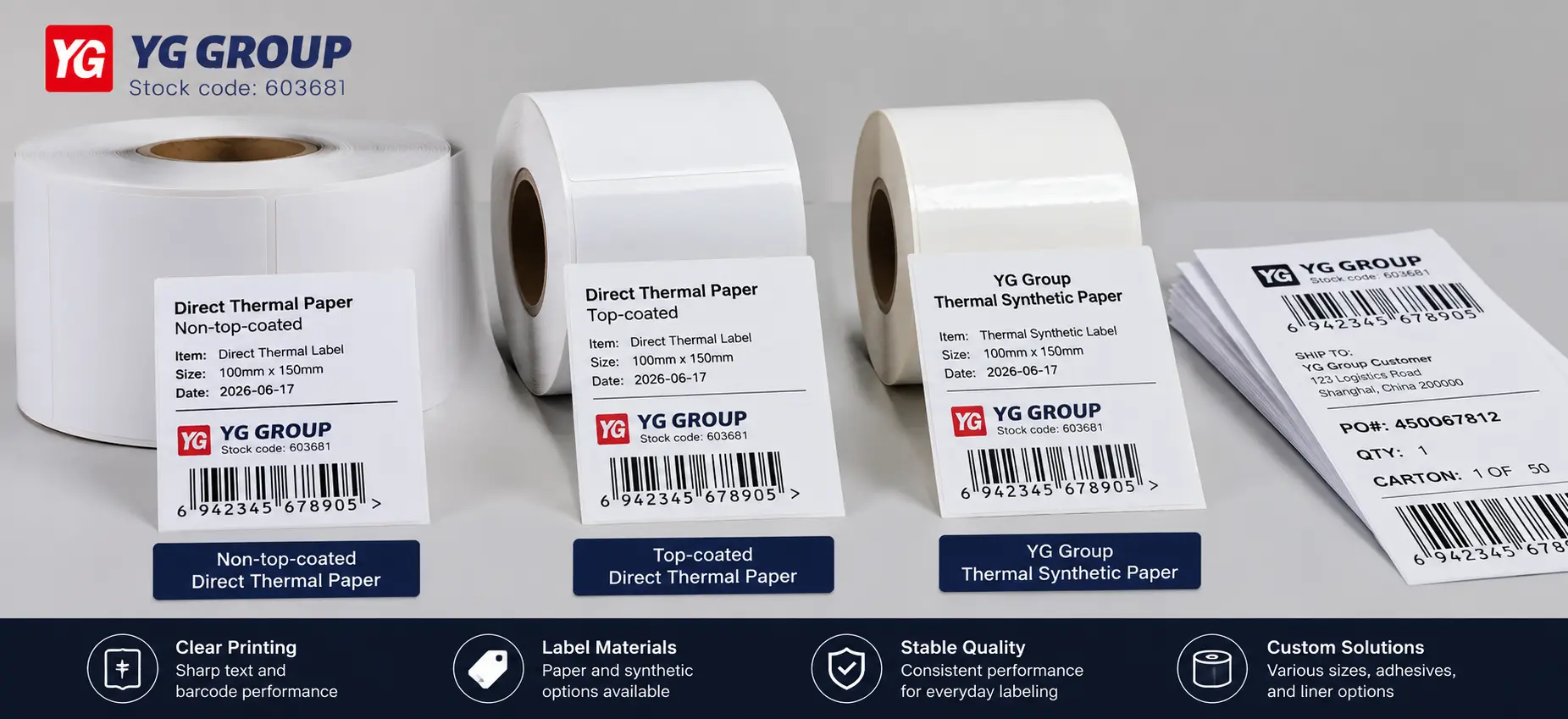
Direct thermal labels are available in paper and synthetic constructions for different use cycles and handling conditions.
How Do Direct Thermal Label Materials Work?
A direct thermal facestock contains a heat-sensitive imaging surface. When selected areas pass beneath a heated printhead, the surface reacts and creates text, barcodes or graphics, usually in black.
A typical pressure-sensitive direct thermal label includes:
- A heat-sensitive facestock
- An optional protective top coating
- An adhesive layer
- A release liner
Each component affects the finished label. Two labels using similar thermal paper may perform differently because they use different adhesives, coatings or liners.
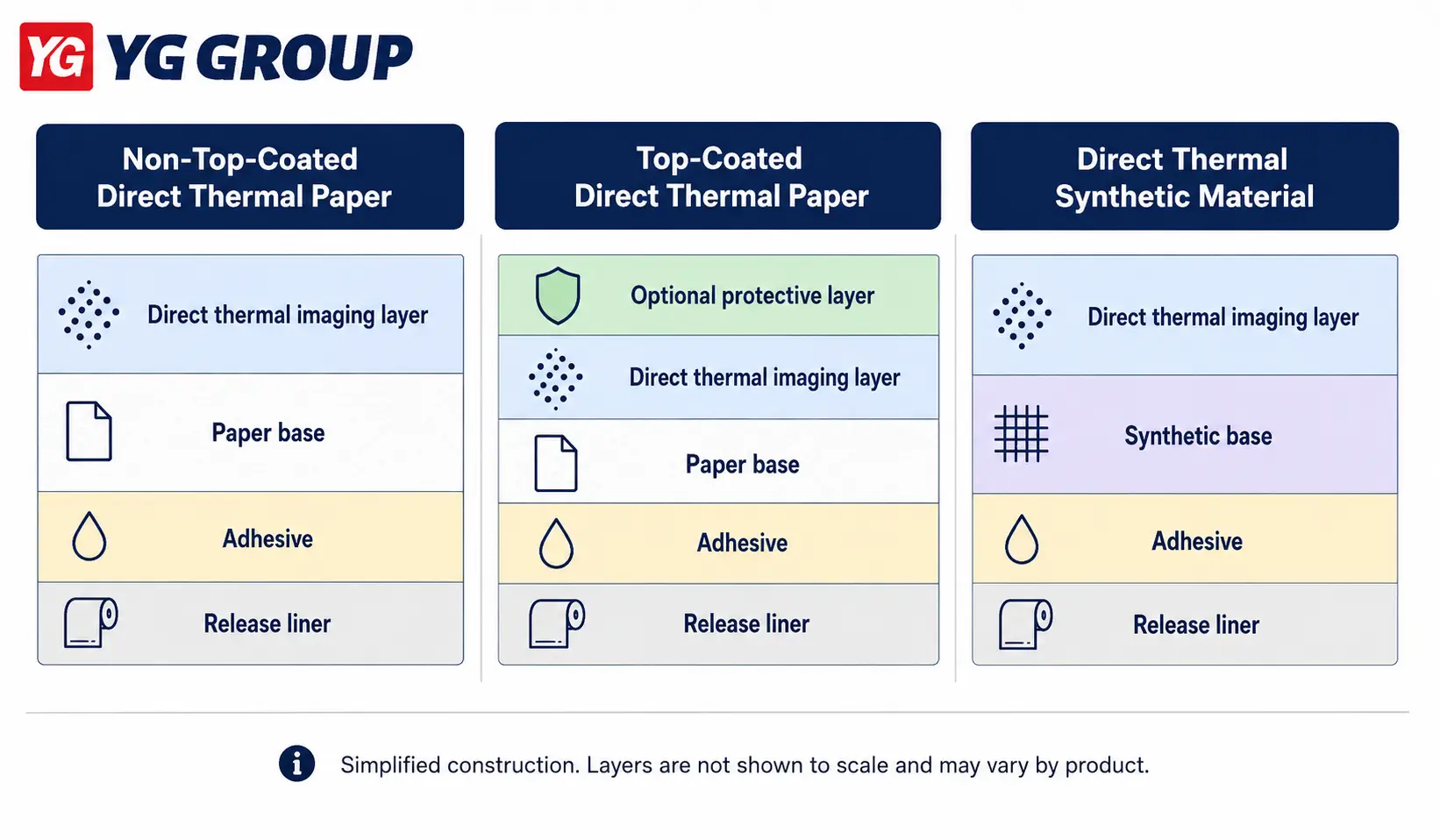
Top-coated paper adds a protective surface layer, while direct thermal synthetic materials use a more durable non-paper base.
1. Non-Top-Coated Direct Thermal Paper
Non-top-coated direct thermal paper does not have an additional protective layer above the thermal imaging surface.
It is generally suitable when:
- The label has a short use cycle
- The environment is dry and controlled
- Heavy abrasion is unlikely
- Cost efficiency is important
- Advanced moisture or oil resistance is unnecessary
Typical uses include local parcel delivery, retail price labels, weighing labels and temporary warehouse identification.
Its main advantage is cost-effective, ribbon-free printing. Its main limitation is reduced surface protection. Moisture, grease, friction, excessive heat or prolonged light exposure may affect the image more quickly than with a protected material.
Indoor use does not always mean controlled conditions. Labels can still encounter condensation, abrasion or heat during packing and transportation.
2. Top-Coated Direct Thermal Paper
Top-coated direct thermal paper includes an additional protective layer above the thermal imaging surface.
Depending on its formulation, the coating may provide added protection against moisture, oil, scratching, abrasion or transportation handling.
Typical applications include:
- E-commerce shipping labels
- Express-delivery labels
- Warehouse and pallet labels
- Extended logistics cycles
- Labels exposed to repeated handling
Top-coated grades may be offered at different performance and price levels. Descriptions such as economy, standard or high-protection grade are supplier-specific rather than universal industry classifications.
A top coating does not automatically guarantee waterproof performance, low-temperature adhesion, resistance to every chemical or a fixed image lifespan. Performance depends on the complete construction and exposure conditions.
3. Direct Thermal Synthetic Materials
Direct thermal synthetic materials use a durable non-paper facestock designed for direct thermal printing.
In this article, the term refers mainly to thermal synthetic paper and similar non-paper constructions. It should not be understood as covering every type of direct thermal film.
These materials are generally considered when standard paper may tear, absorb moisture or become damaged during handling.
Typical uses include:
- Moisture-prone logistics
- Warehouse identification
- Flexible packaging
- Baggage and transportation labels
- Labels requiring improved tear resistance
YG Group's thermal synthetic paper may be evaluated for applications requiring improved physical durability.
Direct thermal synthetic materials generally provide better tear resistance and improved resistance to occasional moisture exposure compared with standard paper. However, the facestock alone does not determine heat, UV, chemical or low-temperature performance.
For extended outdoor exposure, severe abrasion or aggressive chemical contact, thermal transfer printing may be more appropriate.
Other Requirements That Affect Material Selection
Some requirements describe label chemistry, format or application rather than the facestock itself.
BPA-Free, BPS-Free and Phenol-Free
BPA-free, BPS-free and phenol-free are separate thermal-chemistry specifications. They are based on the supplier's declaration or testing criteria and should not be treated as interchangeable.
A material described as BPA-free is not automatically BPS-free or phenol-free. Confirm:
- The exact supplier specification
- The substances covered
- The target market
- Customer requirements
- The final application
These terms do not indicate whether a material is top-coated, synthetic, water-resistant or suitable for low-temperature use.
Linerless Format
Linerless describes a label format without a conventional release liner. It is not a separate facestock category.
Linerless materials require compatible printing, cutting and dispensing equipment.
Application and Service Temperatures
Temperature suitability depends on the complete construction, particularly the adhesive, application surface and operating conditions.
Two temperatures should be distinguished:
- Application temperature: The temperature when the label is first applied
- Service temperature: The temperature the label experiences after application
A label applied at room temperature before entering a refrigerated area may require a different construction from one applied directly to a cold or frozen surface.
How to Choose the Right Direct Thermal Material
Use the following four-step process.
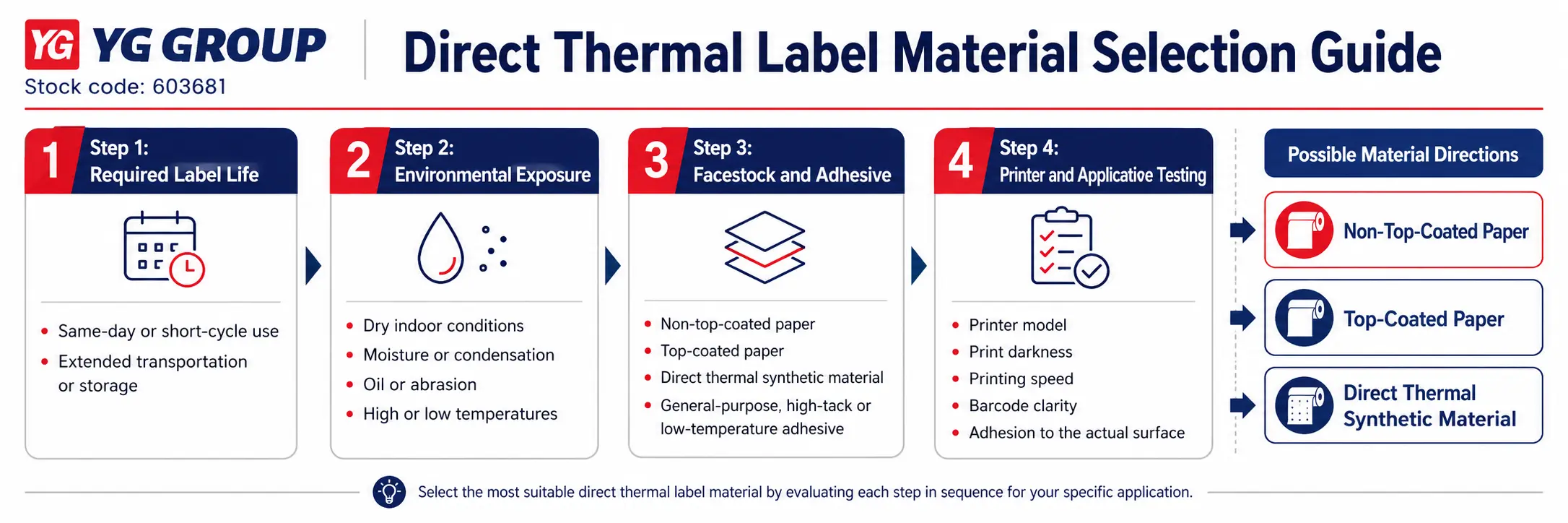
Evaluate the use cycle, environment, adhesive and printer compatibility before selecting a direct thermal material.
1. Define the Required Use Cycle
Non-top-coated paper may be sufficient for labels used within a short shipping, retail or inventory cycle.
Top-coated paper or direct thermal synthetic materials should be considered for extended transportation, repeated handling or longer storage.
Avoid fixed claims such as “this thermal label lasts one year.” Image life depends on the material, print settings, temperature, light, friction and chemical exposure.
2. Identify Environmental Exposure
Check whether the label may encounter:
- Moisture or condensation
- Oil or grease
- Repeated rubbing
- High or low temperatures
- Sunlight
- Cleaning agents
A top coating may improve surface protection, while a direct thermal synthetic material may improve physical durability. Neither should be treated as universally resistant without testing.
3. Match the Facestock and Adhesive
A practical starting point is:
- Non-top-coated paper: Short-cycle uses in controlled conditions
- Top-coated paper: Logistics and handling requiring additional surface protection
- Direct thermal synthetic material: Moisture-prone, tear-prone or physically demanding applications
The adhesive must then be matched to the actual surface and temperature. Important factors include the surface material, texture, contamination, application temperature, service temperature and adhesion requirements.
The facestock protects the printed information. The adhesive determines whether the label remains attached.
4. Test the Printer and Application
Direct thermal surfaces vary in sensitivity.
Settings that work with one material may produce faint images, excessive darkening or poor barcode edges on another.
Before bulk production, test the actual printer, print settings, label material, application surface and operating environment.
Application Guide
| Application | Suggested Starting Material | Main Selection Factor |
| Local parcel delivery | Non-top-coated paper | Short use cycle and controlled conditions |
| Food delivery | Application-specific direct thermal paper | Oil, moisture, temperature, duration and applicable requirements |
| E-commerce parcels | Top-coated paper | Transportation handling and moisture |
| Extended logistics cycles | Top-coated paper | Abrasion and extended transportation |
| Temperature-sensitive logistics | Validated top-coated paper or direct thermal synthetic material | Adhesive, condensation, application temperature and service temperature |
| Warehouse identification | Top-coated paper or direct thermal synthetic material | Repeated scanning and handling |
| Flexible packaging | Direct thermal synthetic material | Tear resistance and surface flexibility |
| Outdoor or chemical exposure | Evaluate thermal transfer printing first | UV, abrasion and specific chemical exposure |
These recommendations are general starting points.
Final material selection should be validated using the actual printer, packaging surface, adhesive and exposure conditions.
For more shipping and warehouse options, review YG Group's logistics label materials.
Common Selection Mistakes
Choosing Only by Price
A cheaper material may result in damaged labels, unreadable barcodes or repeated printing.
Compare the total application cost rather than only the price per roll.
Treating All Top-Coated Materials as Equal
Top coatings use different formulations and protection levels.
Confirm the conditions evaluated for the material instead of relying only on the term “top-coated.”
Ignoring Adhesive and Temperature
A durable facestock cannot compensate for poor adhesion on a rough, cold, wet or low-energy surface.
Confirm both the application temperature and service temperature.
Skipping Printer and Application Testing
Incorrect heat or speed settings may cause faint printing, over-darkening or poor barcode definition.
Test the material with the actual printer and application surface before bulk production.
Frequently Asked Questions
What is the difference between top-coated and non-top-coated thermal paper?
Top-coated paper has an additional protective surface layer. Non-top-coated paper is generally selected for basic, short-cycle applications.
Is top-coated direct thermal paper waterproof?
Not automatically. Water resistance depends on the coating, exposure time, label edges, adhesive and test conditions.
Is thermal synthetic paper better than thermal paper?
Not for every application. It generally provides better tear resistance and resistance to occasional moisture exposure, while paper may be more economical for standard short-cycle labels.
Which direct thermal material is best for shipping labels?
Non-top-coated paper may suit local or short-cycle delivery. Top-coated paper is generally more appropriate for e-commerce and extended logistics cycles. A direct thermal synthetic material may be considered when tearing or moisture is a concern.
Can direct thermal labels be used at low temperatures?
Yes, when the complete construction is selected for the actual conditions. Confirm the adhesive, application temperature, service temperature, condensation and packaging surface.
Request a Direct Thermal Material Recommendation
YG Group supplies non-top-coated direct thermal paper, top-coated direct thermal paper and thermal synthetic materials in jumbo-roll and finished-label formats.
Share your printer model, label size, application surface, temperature and exposure conditions, and estimated order volume. YG Group can recommend a suitable facestock and adhesive construction.
Samples can be provided for customer printing and application testing before bulk production.