

.webp)
.webp)
.webp)
.webp)
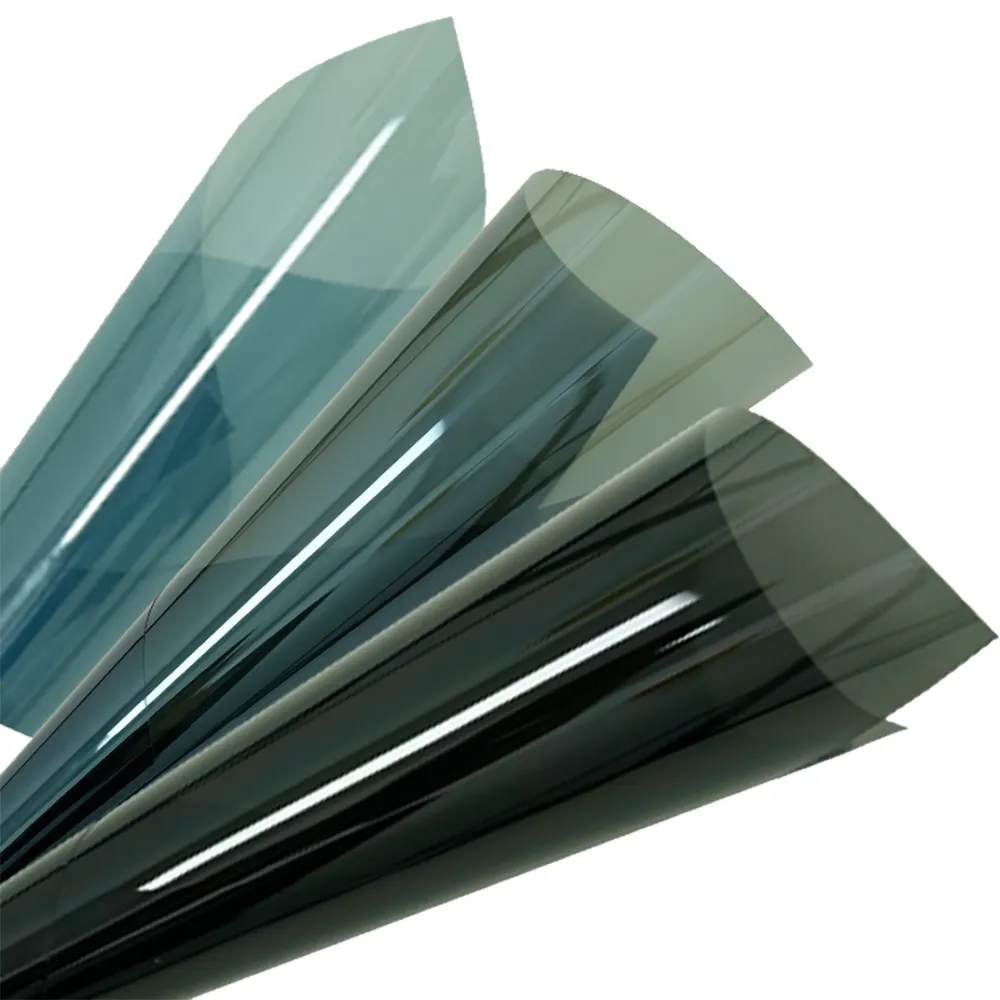
Laminated PET Automotive Window Film for Vehicle Heat Control
Features:
- Multi-Layer PET Structure – Laminated polyester construction designed for automotive window applications.
- Enhanced Infrared Control – Designed to reduce infrared energy passing through automotive glass.
- Heat Rejection Performance – Multi-layer construction supports improved solar heat-control performance.
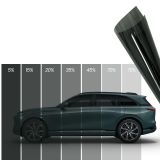
- Multiple VLT Options – Available in 30–40%, 45–55% and 68–72% VLT ranges.
- Optical & Automotive Performance – Designed for applications requiring tint appearance, visibility and solar-control performance.
Applications:
- Premium automotive window tinting
- Passenger vehicle side and rear windows
- Automotive heat-control applications
- High-end vehicle window protection
- Vehicle interior and UV-protection applications

Available Models and Specifications
| Model | Face Material | Face Film Thickness | Adhesive Layer Thickness | Release Liner Thickness |
Visible Light Transmittance (VLT) |
| VEN7095 | PET | 55μm | 7±1μm | 23μm | 68-72% |
| VEN5095 | PET | 55μm | 7±1μm | 23μm | 45-55% |
| VEN3595 | PET | 55μm | 7±1μm | 23μm | 30-40% |
*The three models use the same listed PET film, adhesive-layer and release-liner thicknesses. Their main difference in the current specification is Visible Light Transmittance (VLT).Infrared, UV and total solar-energy performance should be confirmed according to the applicable technical data sheet.
How Laminated PET Automotive Window Film Works
Laminated PET Automotive Window Film uses a multi-layer polyester structure rather than a single dyed PET layer.
The laminated construction is designed to provide a combination of:
- Automotive window tinting
- Infrared reduction
- Solar heat control
- UV protection
- Optical clarity
- Different VLT levels
The multi-layer design makes it suitable for automotive applications where heat-control performance is an important purchasing consideration.
Actual IR, UV and total solar-energy performance depends on the specific product construction and should be confirmed using applicable technical data.
How to Choose Laminated PET Automotive Window Film
1. Choose the VLT
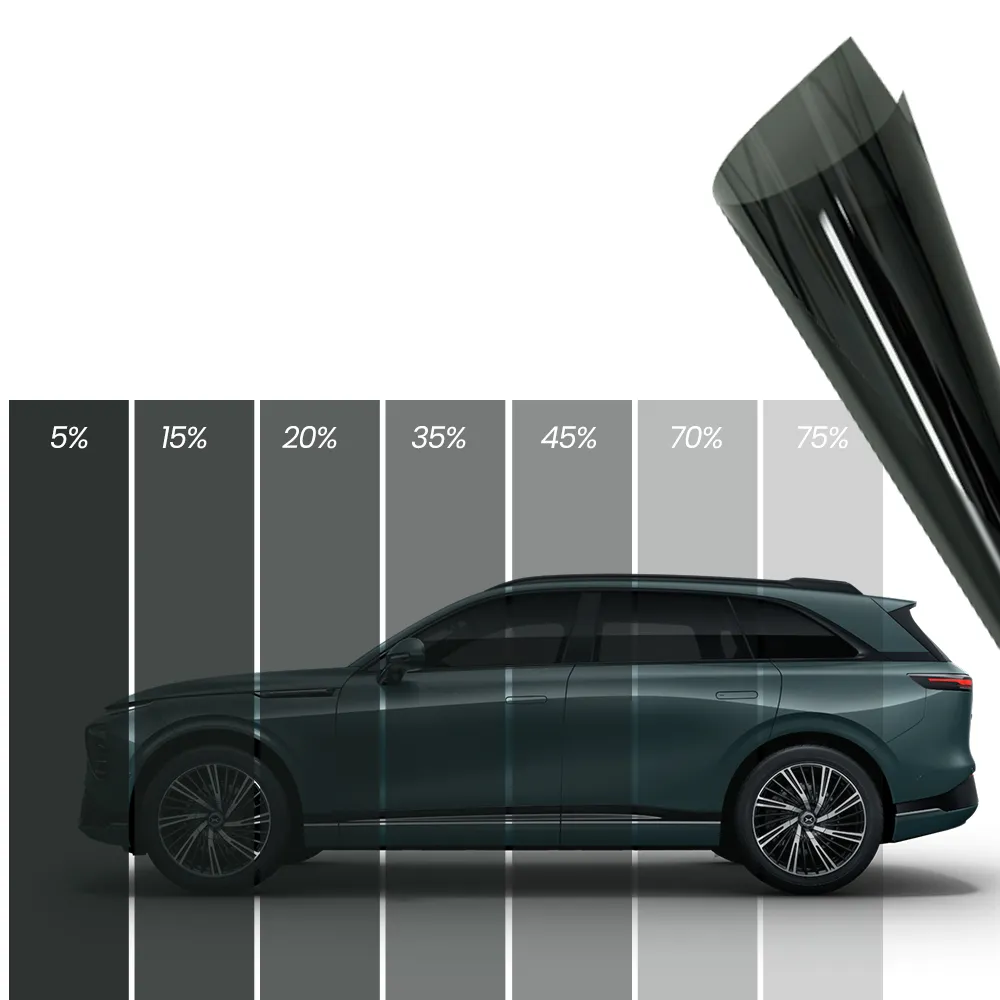
Select the tint level according to appearance, visibility and privacy requirements.
- VEN7095: 68–72% VLT — lighter tint
- VEN5095: 45–55% VLT — medium tint
- VEN3595: 30–40% VLT — darker tint
2. Check the Window Position
Confirm whether the film will be applied to side windows, rear windows or other automotive glazing. Legal VLT limits can vary by location.
3. Review Heat-Control Requirements
VLT describes visible-light transmission only. If heat control is important, also review available:
- Infrared rejection
- UV rejection
- Total solar energy rejection
- Visible light reflectance
4. Test Before Bulk Order
Sample testing is recommended to evaluate tint appearance, optical clarity, heat-control performance and installation behavior on the actual automotive glass.
FAQ
What is Laminated PET Automotive Window Film?
What is the advantage of Laminated PET Window Film compared with Dyed PET?
Does Laminated PET Automotive Window Film provide heat insulation?
Does Laminated PET Window Film provide UV protection?
Does lower VLT mean better heat rejection?
Can Laminated PET Window Film be used for premium vehicles?
How long does Laminated PET Automotive Window Film last?
How do I choose the right model?
Compare Window Film Options
.webp)
.webp)
Choose Dyed PET Window Film when the tint color is incorporated into the PET substrate.
Choose Dyed Adhesive PET Window Film when a clear PET film with a dyed adhesive construction is preferred.
Choose Laminated PET Automotive Window Film when a multi-layer PET construction and enhanced heat-control performance are important purchasing requirements.
Request Samples or a Quotation
News
View More
.webp)